
Garmin Forerunner 970 Black Bundle
4.1Editor score
Multi-band GPS navigation
Up to 42-hour GPS battery
Race-oriented training features
A triathlon watch must track far more than steps or a simple running route. The best smartwatch for triathletes needs dependable GPS, long endurance, multisport profiles, recovery guidance, and an easy-to-read display for use during swimming, cycling, running, and transitions.
We compared the ten models below using the supplied specifications, focusing on battery life, navigation, training and recovery tools, sports profiles, health sensors, display size, ruggedness, connectivity, and practical smartwatch features. The list includes purpose-built performance watches, rugged multisport models, and more affordable training options.
Each selection shows where it stands out and where compromises may apply. The top choices include a premium Forerunner 970 configuration, another Forerunner 970 bundle, and the budget-friendly Amazfit Bip 6, while the remaining reviews cover runners, fitness-focused users, and adventure-oriented triathletes. Prices and availability change, so verify current listings.
4.1Editor score

4.6Editor score
4.2Editor score
As an Amazon Associate we earn from qualifying purchases.
This side-by-side comparison highlights each watch's strongest features for multisport training, including endurance, navigation, sports tracking, health monitoring, and everyday convenience.


The Garmin Forerunner 970 Black Bundle is positioned as a premium, race-oriented option for triathletes who want detailed training information and dependable navigation without constantly handling a phone. Its 4.1 rating reflects a capable performance package, particularly attractive for athletes balancing a bike route, a run, and a demanding schedule of sessions across several sports. The combination of mapping, training readiness, long GPS endurance, and physical button controls makes it especially practical in motion.
We may earn a commission when you buy through this link, at no additional cost to you.
One of its most useful strengths is the combination of full-color built-in maps, multi-band GPS, and multiple satellite systems. That navigation package can help a triathlete follow unfamiliar roads, trails, or course segments without depending entirely on a phone. Training readiness, daily suggested workouts, course details, and the race widget extend the value beyond simple route recording. They help connect a planned session with the athlete's current condition, giving the watch a more useful role throughout a multisport training week.
Battery life is the feature most likely to appeal to endurance competitors. The supplied specifications list up to 15 days in smartwatch mode, 42 hours in GPS mode, and as much as 80 hours in UltraTrac mode. Those numbers leave room for a long ride, a full marathon-distance run, and continued use afterward without a daily charging routine. The responsive touchscreen improves map and menu interaction, while traditional buttons offer a reassuring alternative when wet, sweaty, or when an athlete wants quicker control without waking the display.
The bundle also includes Wearable4U earbuds and a power pack, adding listening convenience and a charging solution for training or travel. That makes it appealing to someone who wants one coordinated setup rather than separately sourcing accessories. The trade-offs are the watch's advanced nature and the fact that the listing itself includes some inconsistent wording about the included Garmin model. Nevertheless, buyers prioritizing mapping, endurance, and race preparation should examine the Forerunner 970 Black Bundle closely and verify the package contents on the current listing.
Full-color maps and multi-band positioning are particularly useful when a triathlon route leaves familiar streets. The race widget, course details, and suggested workouts also help transform the watch from a passive recorder into a useful pre-session and in-race planning tool.
A long GPS runtime is especially valuable during race week, when multiple sessions and travel can make charging inconvenient. The specified 42-hour GPS endurance and 80-hour UltraTrac runtime provide considerable flexibility for long rides and sustained multisport preparation.
We may earn a commission when you buy through this link, at no additional cost to you.
The Soft Gold Garmin Forerunner 970 is this guide's most versatile all-around recommendation, combining the 4.6 rating with navigation, advanced training metrics, premium materials, and a bright AMOLED display. It is particularly well suited to triathletes who run often, train on the bike, and want a watch that remains comfortable and polished beyond race day. The 1.4-inch screen is large enough for glanceable data without placing the watch in the bulky category occupied by rugged adventure models.
We may earn a commission when you buy through this link, at no additional cost to you.
Navigation is one of the decisive strengths. Full-color built-in maps, multi-band GPS enhanced by SatIQ, and turn-by-turn directions can provide confidence on unfamiliar routes or mountain switchbacks. The navigation benefits extend naturally to cycling, trail running, and multisport travel. For training, the watch offers running economy, endurance score, training readiness, adaptive coaching, recovery time, and suggested workouts. Together, these features can help an athlete decide when to push, when to ease off, and how a particular session fits into a broader plan.
The physical design also makes a persuasive case. A titanium bezel, sapphire lens, and built-in LED flashlight combine durability with a relatively refined appearance. Smart notifications and phone calls make the device useful between sessions, while safety tracking provides additional peace during outdoor activities. The 26-hour GPS battery is shorter than the Black bundle's listed 42 hours, but it remains suitable for a full long ride, a marathon run, and the surrounding day without needing constant charging. Some athletes may also find the expanded training tools unnecessary, but triathletes often appreciate a detailed performance picture.
This is the recommendation for an athlete seeking a high-end watch that covers navigation, training, recovery, and daily wear in one package. The Soft Gold Forerunner 970 bundle also includes a charging adapter, USB-C adapter, microfiber cloth, and P-Bank, making it convenient to begin use. It earns the Editor's Choice position because its feature balance is especially convincing: rugged enough for endurance sport, polished enough for daily wear, and sophisticated enough to support a structured multisport program.
Training readiness, adaptive coaching, recovery time, and endurance score are useful for balancing demanding sessions. The watch does more than record activity; it gives context that can help a triathlete adjust intensity and plan the next workout.
The titanium bezel, sapphire lens, and slim 1.4-inch AMOLED display make this model more refined than most rugged sports watches. That balance works well for athletes who want one device for training, navigation, notifications, and normal daily use.
We may earn a commission when you buy through this link, at no additional cost to you.
The Garmin Instinct 3 AMOLED is a rugged 45mm watch for triathletes who treat their training gear like equipment that must withstand demanding conditions. Its 4.6 rating reflects a well-received combination of construction, navigation, health features, and endurance. The fiber-reinforced polymer case and metal-reinforced bezel prioritize toughness, while the 1.2-inch AMOLED display provides a clear view of training information in bright or difficult conditions.
We may earn a commission when you buy through this link, at no additional cost to you.
Navigation receives particular attention. A three-axis compass, barometric altimeter, and multi-band GPS with SatIQ provide a useful collection of tools for open routes, changing terrain, and activities where dependable orientation matters. The built-in flashlight adds another layer of outdoor practicality, with variable intensity and strobe modes. For triathlon training, that combination can be reassuring on an early run, an unfamiliar trail route, or a ride through an area with limited street lighting.
The battery specification is a major advantage over watches that need frequent charging during GPS use. Up to 18 days in smartwatch mode gives the Instinct 3 the feel of a dependable everyday device, although the supplied information does not list a separate GPS runtime. Health features include wrist-based heart rate, advanced sleep monitoring, and Pulse Ox, with Garmin noting that the readings are close estimates and that Pulse Ox is not available everywhere. As with all wrist-based measurements, those estimates should inform habits rather than replace clinical equipment.
The Instinct 3 AMOLED makes sense for an athlete who values battery, durability, and navigation over a slim profile or polished design. It is well suited to brick-based training, open-water approaches, trail running, and outdoor cycling. A triathlete who prefers understated hardware and expects frequent contact with dirt, water, and changing weather may appreciate it even more than a higher-end Forerunner. Verify the current specifications for individual sport modes, especially if precise open-water or multisport behavior is central to the purchase decision.
The reinforced case and metal bezel are designed for a rough sporting life. Combined with the flashlight and navigation sensors, they make the watch feel ready for trail sections, early starts, and equipment-heavy training environments.
The stated 18-day smartwatch runtime reduces charging friction during a demanding training block. That is useful for athletes who also want sleep, stress, heart rate, and everyday notifications from the same device.
We may earn a commission when you buy through this link, at no additional cost to you.
The Garmin Forerunner 165 is a compact, approachable option for triathletes whose training is primarily run-led or who want a capable running watch without a large adventure-style case. It carries a 4.6 rating and offers an AMOLED touchscreen, traditional buttons, built-in GPS, wrist-based heart rate, and more than 25 activity profiles. The 43mm size makes it lighter and less imposing than several premium alternatives, which can be valuable during long sessions.
We may earn a commission when you buy through this link, at no additional cost to you.
Training support is stronger than the modest case size might suggest. Personalized daily workouts adapt to recent performance and recovery, while Garmin Coach and race adaptive plans can provide session ideas. Training effect and its labels explain the main benefit of a completed workout, and recovery time helps indicate how long before another high-effort session. A morning report brings together sleep, recovery, training outlook, weather, and HRV status, offering a convenient daily summary without requiring several separate screens.
The listed 19-hour GPS battery is sufficient for a full marathon-distance run and many long rides, although an ultra-endurance athlete may want to carry a backup charging option. Smart notifications, incident detection, Assistance, and Garmin Pay add daily utility, but incident-related features require a compatible phone, network coverage, and proper setup. Unlike the Forerunner 970, the 165 does not advertise full-color onboard maps or turn-by-turn navigation, so it is best for familiar routes or phone-assisted direction.
For a new triathlete, this watch provides a sensible balance of running analytics, multisport activity support, safety features, and a manageable physical footprint. It is also a logical choice for someone who wants modern Garmin training tools but does not need advanced mapping or rugged titanium construction. Check the activity profiles relevant to your race, especially swim and bike use, and confirm smartphone compatibility before making the final decision.
Daily suggested workouts, Garmin Coach, and race adaptive plans help turn training availability into a more structured routine. Training effect labels and recovery time make it easier to understand what each session contributes and when another hard effort makes sense.
The lightweight 43mm design and familiar button-plus-touchscreen layout make this easier to wear throughout the day. It also remains more discreet than a large multisport watch, which can be helpful during work and recovery periods.
We may earn a commission when you buy through this link, at no additional cost to you.
The ivory Garmin vívoactive 5 is a balanced health, fitness, and smartwatch option for triathletes who want more than dedicated performance tracking. Its 4.3 rating and 42mm AMOLED design make it an appealing everyday choice, particularly for athletes who split time among swimming, running, cycling, strength work, and recovery. The watch supports more than 30 indoor and GPS sports apps, including running, cycling, and swimming.
We may earn a commission when you buy through this link, at no additional cost to you.
Health and recovery are central to the proposition. Body Battery combines information such as sleep, naps, stress, and workouts to estimate daily energy. A sleep score, personalized sleep coaching, HRV status, and automatic nap detection help the wearer understand patterns over time. The morning report and additional metrics including stress, fitness age, meditation, and menstrual or pregnancy tracking make it a broader wellness device. Garmin notes that these readings are intended as close estimates rather than medical measurements.
Training support includes workout benefit, recovery time, preloaded workouts, custom Garmin Connect workouts, and free adaptive Garmin Coach plans. That is enough structure for a recreational triathlete, though the more sophisticated endurance metrics found in higher-end Forerunner watches are not the focus. Offline music from Spotify, Amazon Music, or Deezer adds value during a run or ride, and the AMOLED screen remains clear in bright conditions.
This vívoactive 5 configuration is best for someone who wants triathlon-compatible sports profiles and meaningful recovery insight without carrying a large endurance watch everywhere. The 11-day smartwatch battery supports an easier charging routine, with five days stated for always-on display use. Its understated aesthetic also works well in casual settings. It is less compelling for athletes who demand detailed course navigation, race widgets, or high-end stamina analysis, but it covers the essential activities and recovery priorities well.
Body Battery, HRV status, sleep coaching, and nap detection can help show when a hard training day is appropriate. These features make the watch useful between workouts as well as during a session.
Downloading playlists directly to the watch reduces reliance on a phone during a run or ride. Pairing wireless headphones creates a simpler setup for athletes who prefer music without carrying another device.
We may earn a commission when you buy through this link, at no additional cost to you.
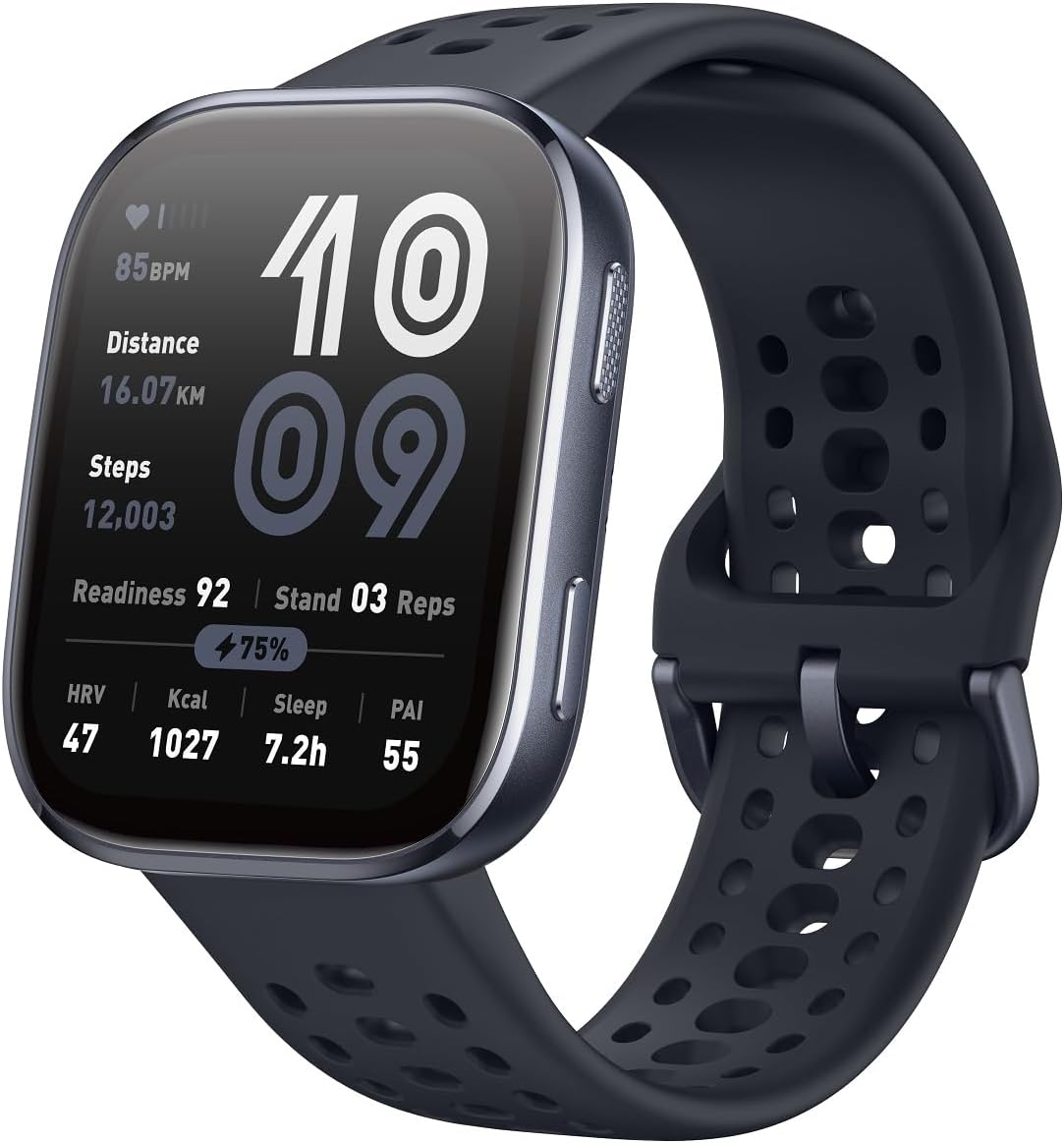
The Amazfit Bip 6 is a value-focused smartwatch for triathletes who need broad workout coverage, GPS tracking, and long battery life without moving into premium price territory. Its 4.2 rating indicates a generally solid balance of functions. The lightweight aluminum body and 1.97-inch AMOLED screen create a modern appearance, and the large display is easy to read when an athlete is moving quickly or checking a transition checklist.
We may earn a commission when you buy through this link, at no additional cost to you.
The breadth of activity tracking stands out. More than 140 workout modes include running, cycling, strength training, and HYROX Race, while personalized AI coaching adds a basic form of training guidance. Built-in GPS supports tracking without a phone, and support from five satellite systems is intended to improve positioning and connection speed. Free downloadable maps and turn-by-turn directions add navigational value that many basic fitness watches do not provide.
Battery life is a major strength, with up to 14 days stated in smartwatch mode. For a recreational triathlete, that means the watch can cover a full training week and beyond with less charging attention than many sports watches. The stated 50-meter water resistance should be checked against the manufacturer's guidance and the requirements of the athlete's swimming sessions, particularly when considering pool and open-water use.
Health tracking includes heart rate, sleep, blood oxygen, and stress monitoring. These features make the Bip 6 useful for recovery awareness, although a triathlete focused on race planning may want to compare its training metrics with those of a dedicated performance watch. Its compatibility with both iOS and Android is also convenient. Overall, it is the best budget entry in this guide for athletes who value screen size, workout variety, maps, and battery life over elite endurance analytics.
Free downloadable maps and turn-by-turn directions make the Bip 6 more useful on unfamiliar routes than a basic step tracker. Five-system satellite support adds further appeal for athletes training in areas with complex visibility.
The claimed 14-day smartwatch runtime is especially helpful for someone trying to establish a consistent training habit. It removes the need to recharge every night simply to keep basic activity and health tracking active.
We may earn a commission when you buy through this link, at no additional cost to you.
The Samsung Galaxy Watch 8 is a compact smartwatch that emphasizes intelligent coaching, sleep, and running analysis. Its 4.4 rating reflects a well-rounded feature set, while the 40mm cushion design and lighter, snug fit offer comfort for continuous wear. A quick button provides an additional way to control the watch, and the improved interface aims to keep essential information concise during training and daily use.
We may earn a commission when you buy through this link, at no additional cost to you.
Running Coach stands out as the most relevant feature for a triathlete who wants feedback during sessions. It analyzes performance and supplies real-time guidance, while event-specific programs cover distances such as 5Ks and marathons. That makes the watch more than a passive recorder for athletes building toward a run goal. Its role is strongest in running, so a competitor should verify how its broader swim and bike tracking aligns with a specific race plan.
Sleep and recovery are unusually prominent. Advanced Sleep Coaching, Bedtime Guidance, and Energy Score bring together previous-day sleep, activity, and heart rate to produce a daily overview. The health suite also includes a blood-pressure monitoring workflow. A compatible cuff is sold separately, and readings are intended to help users track lifestyle changes rather than diagnose medical conditions. The watch pairs with Samsung phones and other Android phones through Galaxy Wearable and Samsung Health apps.
The Galaxy Watch 8 is a good selection for a triathlete embedded in the Samsung or Android ecosystem who values compact design, sleep coaching, and real-time running prompts. Its personal assistant and Now Bar make it useful for daily organization, while the two-year warranty adds reassurance. Those who need detailed onboard maps, triathlon-specific course planning, or rugged outdoor construction may prefer a dedicated Garmin multisport watch, but this is a polished training and wellness alternative.
Running Coach evaluates performance and provides feedback during the session. Specific programs for popular race distances help convert the watch into a structured preparation tool rather than simply a tracker.
Energy Score summarizes sleep, activity, and heart rate from the previous day. Combined with sleep coaching and bedtime guidance, it gives a triathlete a convenient way to connect recovery habits with the day's training intentions.
We may earn a commission when you buy through this link, at no additional cost to you.
The Garmin fēnix 9 Pro is the expedition-scale choice in this guide, built for triathletes who train in remote places, value rugged materials, and want communications beyond ordinary Bluetooth range. Its 4.1 rating reflects a specialized device rather than a conventional minimalist running watch. The 51mm titanium case is large, but it creates room for a 1.5-inch AMOLED display, a sapphire lens, and the built-in LED flashlight with white, red, and green settings.
We may earn a commission when you buy through this link, at no additional cost to you.
Connectivity is the major differentiator. LTE allows the watch to exchange messages, make voice calls, and share LiveTrack locations without the phone. Garmin Messenger supports location check-ins, while inReach enables satellite messaging and interactive SOS response in eligible areas. These features require an active subscription, and coverage or regulatory limitations can affect availability. They are best treated as safety and communication tools rather than guaranteed connectivity everywhere.
Training is well covered for multisport athletes. More than 100 activity profiles include enhanced rowing and rucking modes, and the indoor rowing profile adds VO2 max when used with a suitable rowing machine. Rucking workouts can estimate the additional calories associated with carrying a pack and allow that weight to be changed during an activity. Stamina curves, stamina zones, and other fitness tools help visualize sustainable performance, while Garmin Epic can organize multi-day adventures and share photos alongside performance data.
This is the premium choice for an athlete whose races and training extend into genuinely demanding terrain or remote environments. The titanium case, sapphire lens, flashlight, satellite capability, LTE, and extensive profiles justify a dedicated device. The trade-off is size: 51mm is substantial, and some wrists may find it uncomfortable for everyday wear. Triathletes who mostly train on roads and rails may find more focused performance watches easier to manage.
LTE and inReach connectivity can keep the watch useful when a phone is absent or ordinary service is unreliable. The safety value is meaningful in remote terrain, provided the athlete understands subscription requirements and coverage limitations.
A titanium case, sapphire lens, large AMOLED display, and built-in flashlight are built for demanding outdoor use. The construction adds confidence for riders, trail runners, and racers training far from support.
We may earn a commission when you buy through this link, at no additional cost to you.
The Garmin Venu 3 is a polished fitness smartwatch for triathletes who want comfortable daily wear, comprehensive health features, and useful phone-free conveniences. Its 4.4 rating reflects a well-rounded design, and the 45mm case offers a larger display than the vívoactive 5 without adopting the extreme proportions of the fēnix 9 Pro. The bright, colorful screen and up to 14-day smartwatch battery make it practical for continuous use.
We may earn a commission when you buy through this link, at no additional cost to you.
Body Battery energy monitoring combines sleep, naps, stress, and workouts to offer a personalized view of readiness. Sleep scoring and coaching, HRV status, and sleep-improvement tips support a more deliberate recovery routine. These features do not replace professional medical advice, but they can help an athlete notice patterns. Morning reporting and the 45mm display also make quick daily checks easier, which is valuable during a busy training schedule.
For sport, the watch includes more than 30 indoor and GPS apps covering running, cycling, swimming, walking, HIIT, and golf. That range is broad enough for a triathlete's core disciplines and supporting strength sessions. The standout everyday feature is wrist-based calling: with a compatible iPhone or Android phone, the wearer can answer calls, use the phone's voice assistant to respond to messages, and, for Android users, send text replies directly from the watch.
The Venu 3 suits an athlete who wants a fitness watch to do more than record workouts. It is less oriented toward detailed multisport navigation, advanced endurance load, or satellite safety than the dedicated Forerunner and fēnix choices in this list, making it a natural fit for someone who trains on familiar routes and values wellness, comfort, and connectivity. Verify swim-related specifications, app compatibility, and phone functions before ordering.
Body Battery, sleep coaching, and HRV status make the watch useful before and after training. Because the design is aimed at everyday wear, recovery information remains accessible throughout the day rather than being hidden in a specialist performance menu.
Wrist-based calls and voice-assistant responses are convenient during travel, work, or transitions. The functions still depend on a compatible paired phone, but they reduce the need to remove a larger device repeatedly.
We may earn a commission when you buy through this link, at no additional cost to you.
The black Garmin vívoactive 5 is a discreet, all-round fitness watch for triathletes who want solid sports tracking and recovery information in a traditional Garmin shape. Its 4.3 rating is supported by a bright AMOLED display, a 42mm case, and up to 11 days of stated smartwatch battery. It is essentially a different color option of the vívoactive 5, but the dark finish may appeal to athletes who prefer a more understated appearance.
We may earn a commission when you buy through this link, at no additional cost to you.
Its health features are the main attraction. Body Battery tracks energy patterns using sleep, naps, stress, and workouts, while a sleep score, personalized coaching, and HRV status offer deeper context. Automatic nap detection and nap logging add useful information for athletes who rest during the day. The morning report, stress tracking, fitness age, meditation, and menstrual cycle and pregnancy tracking create a broad wellness framework, all described by Garmin as close estimates rather than medical measurements.
The sports catalog includes more than 30 indoor and GPS apps, with running, cycling, swimming, strength, walking, and HIIT among the options. Wheelchair mode tracks pushes and includes specialized activities and workouts, demonstrating that the watch can serve a wider range of users within a household. Workout benefit and recovery time add a modest training layer, while preloaded and Garmin Connect workouts plus adaptive Garmin Coach plans support structured routines.
Offline music from Spotify, Amazon Music, or Deezer can be downloaded to the watch and played through wireless headphones. That makes the vívoactive 5 useful for training without a phone, although the 42mm display is less suited to detailed route exploration than larger premium models. It is a strong recommendation for a recreational triathlete who prioritizes a comfortable, attractive, health-oriented watch. Advanced racers may prefer a Forerunner with deeper endurance metrics and onboard navigation.
The combination of sleep coaching, HRV status, nap detection, and Body Battery provides a useful daily picture. Its smaller case can be easier to wear during sleep and recovery periods, supporting consistent use.
More than 30 sports apps cover the main triathlon disciplines and many supporting workouts. The 42mm size remains practical for everyday use while still providing a bright, touch-friendly AMOLED display.
We may earn a commission when you buy through this link, at no additional cost to you.
The right triathlon watch depends on race demands, training volume, navigation needs, recovery priorities, comfort, and the smartphone ecosystem you already use. Comparing these factors before buying is more useful than choosing solely by appearance or the longest listed runtime.
GPS accuracy determines whether pace, distance, and route data are dependable in the conditions where you train. Multi-band systems, SatIQ, multiple satellite support, full-color maps, and turn-by-turn directions are valuable for open routes or race courses you have not run before. The Forerunner 970 configurations, Instinct 3 AMOLED, and Amazfit Bip 6 provide particularly strong navigation specifications, while the Forerunner 165 relies more heavily on its built-in GPS for basic route and pace data.
Choose advanced mapping for unfamiliar or technical courses, but do not assume every listed navigation feature applies equally to every sport. Confirm pool swimming, open-water tracking, and bike routing behavior for your intended training locations.
A triathlon watch must survive long rides, full-distance runs, and ordinary smartwatch use without becoming another item to charge every night. The listed battery figures span from 19-hour GPS performance in the Forerunner 165 to 42-hour GPS endurance in the Black Forerunner 970 bundle. Smartwatch runtimes of 11 to 18 days provide a different kind of convenience, benefiting athletes who also track sleep and wear the device continuously.
Prioritize the battery mode that matches your actual use. A runner who records one long session may prioritize GPS endurance, while a wellness-focused user may care more about how long the watch works between charges. Race week is the best practical test of whether the capacity feels comfortable.
Triathlon training combines running, cycling, and swimming, and a useful watch should handle transitions between them without excessive manual adjustment. The reviewed models include activity profiles for these core disciplines, along with strength, HIIT, walking, and other sports. Features such as automatic sport detection, open-water support, pool-lap metrics, and transition workflows can matter greatly, so athletes should verify the exact activity behavior rather than relying on a general sports-app count.
The most detailed options in this list are not automatically the best for every athlete. A recreational triathlete may value lightweight tracking and health tools, while a competitive athlete may need deeper multisport metrics, course data, and race widgets.
Training readiness, recovery time, training effect, HRV status, sleep coaching, and endurance metrics can help an athlete balance intensity across a demanding schedule. The Forerunner 970 is strongest in advanced readiness, coaching, endurance, and running economy, while the Amazfit Bip 6 and Samsung Galaxy Watch 8 provide more accessible coaching concepts. Garmin's vívoactive 5 and Venu 3 emphasize Body Battery, sleep, and recovery routines.
Look for metrics you will actually use. A large dashboard of unfamiliar numbers does not improve a training plan. Choose a watch whose guidance matches your decision-making style, whether that means adjusting a hard session, planning recovery, or following a structured coach program.
A triathlete may check the watch in bright sunlight, during a transition, in the poolside area, or at night. AMOLED screens provide vivid output, and the Forerunner 970's 1.4-inch display offers generous room for maps. The Amazfit Bip 6 has an even larger 1.97-inch screen, while the 42mm Forerunner 165 and vívoactive 5 favor compactness. Physical buttons remain valuable in wet conditions and offer faster interaction than touching a screen.
Choose readability before display size alone. A watch that feels crowded or blocks sleep is less useful, especially if you want to wear it continuously. Consider wrist size, band fit, button placement, and whether you prefer touch, buttons, or a combination.
Training near water, on rough roads, or in changing weather calls for a watch that can tolerate the environment. The Instinct 3 AMOLED uses a fiber-reinforced polymer case and metal-reinforced bezel, while the fēnix 9 Pro uses titanium, a sapphire lens, and an integrated flashlight. These designs suit athletes who train in demanding places, although lighter running-focused models may be more comfortable for daily use.
Durability should be weighed against comfort and size. The largest watches tend to be the most rugged, but they can be tiring to wear through a long workday. Pick the construction that matches your actual training environment rather than assuming the heaviest model is best.
Most of these watches rely on a paired phone for setup and some advanced features. The Forerunner 165 supports incident detection and Assistance when the paired smartphone has network coverage. The Samsung Galaxy Watch 8 works with Samsung phones and other Android phones, while the Amazfit Bip 6 supports both iOS and Android. The fēnix 9 Pro goes further with LTE and inReach, although those services require active subscriptions and have coverage limitations.
Check the phone model, operating system, app permissions, and service costs before buying. A watch that fits your existing ecosystem will be more convenient and may provide a more consistent day-to-day experience than one that introduces unnecessary friction.
A watch that works for training but is uncomfortable to sleep in may not provide the recovery insight its owner wants. The compact Forerunner 165 and vívoactive 5 suit athletes who dislike large cases, while the Forerunner 970 Soft Gold combines a premium finish with relatively balanced proportions. The Instinct 3 and fēnix 9 Pro make a more rugged visual statement that some athletes prefer.
Try on a watch or study its dimensions before ordering, and consider whether you want it to blend into professional clothing or stand out as sports equipment. Continuous wear is often the most important factor for a health-oriented smartwatch.
Begin by charging the watch fully, installing the appropriate companion app, and completing the recommended setup. Choose the activity profiles for running, cycling, swimming, and strength work that best match your training. Set units, display preferences, data fields, and notification preferences before an important workout. If safety tracking, payments, or phone-based features matter to you, configure them early and test them with a companion or emergency contact.
Wear the watch securely but comfortably, following its guidance for position and fit, particularly during swimming. Check that the strap is tight enough not to move while the watch remains comfortable over long periods. Keep the device clean and dry after pool sessions or muddy rides, rinse it as the manufacturer permits, and dry the case and strap fully. Avoid exposing the watch to extreme heat, solvents, or impacts beyond its stated construction.
Review recorded activities and recovery information after each major session, but avoid turning every metric into a judgment. Look for trends in readiness, recovery, training effect, sleep, and route performance instead of reacting to a single reading. Keep the software and firmware current, maintain adequate storage for maps and music, and periodically confirm that your paired phone, apps, notifications, and connectivity still work before race day.
The most suitable watch depends on navigation, multisport analytics, recovery features, and battery needs. The Forerunner 970 is a strong all-around performance choice, while the fēnix 9 Pro favors athletes who need rugged construction, LTE, and satellite communication. Recreational athletes may find the Forerunner 165 or vívoactive 5 easier to manage.
Onboard maps are most useful when training on unfamiliar roads, trails, or race courses. A basic built-in GPS can still record distance and pace, but turn-by-turn guidance and full-color route detail provide more independence from a phone. Athletes who stick to familiar routes may prioritize smaller size and battery instead.
For a long ride, a full marathon run, and race-week convenience, at least a full day of GPS use is desirable. The reviewed models list GPS runtimes ranging from 19 to 42 hours, depending on the model. Longer smartwatch runtimes also help with continuous sleep and health tracking.
All ten models list running and cycling support, and most also list swimming. Athletes should still verify pool versus open-water behavior, the fields each profile records, and water-resistance guidance. For formal race use, check the current manufacturer specifications and test the watch in conditions matching the planned event.
It depends on wrist size and personal preference. A 45mm case can feel substantial during sleep, typing, or extended wear, while some athletes prefer the larger screen for quick workout and navigation reads. The 40mm to 43mm options are generally more discreet, and the 51mm fēnix is intentionally the largest choice in this list.
Basic activity tracking, timers, and many onboard features work without continuous phone connection. However, setup, detailed analysis, notifications, and some safety functions require a paired smartphone. The fēnix 9 Pro also supports LTE and inReach services, but those require compatible service plans and remain subject to coverage limitations.
The answer depends on the athlete's goals and training habits. Running economy and endurance metrics can help experienced performers assess efficiency, while recovery, sleep, and readiness information may be more actionable for someone managing a busy schedule. A good purchase should support the decisions you already need to make.
Install current software, review every sport profile, and test offline maps where required. Charge the watch fully, verify pairing and notification settings, and confirm the display is readable in bright conditions. If using safety or satellite features, test them under the documented conditions and understand their service requirements.
The Soft Gold Garmin Forerunner 970 is the strongest all-around recommendation because it combines full-color maps, SatIQ navigation, advanced readiness and recovery tools, a bright AMOLED display, premium materials, and solid endurance. The Black Forerunner 970 bundle is an equally compelling premium choice, particularly for athletes who prioritize its listed GPS battery life and included accessories. The Amazfit Bip 6 provides the most accessible package, with extensive workout modes, downloadable maps, and a long stated battery runtime.
The right secondary choice depends on your priorities. The Forerunner 165 is compact and training-focused, the Instinct 3 AMOLED is rugged, the Galaxy Watch 8 offers intelligent running and sleep coaching, and the fēnix 9 Pro serves athletes who need advanced connectivity and extreme-condition construction. The vívoactive 5 models and Venu 3 are strongest for athletes who value recovery insight, comfortable wear, health features, and everyday smartwatch convenience alongside multisport tracking.
Before purchasing, verify the current listing, exact bundle contents, sport profiles, phone compatibility, mapping features, water-resistance guidance, and any paid connectivity requirements. Prices, promotions, and availability change over time, so check the current Amazon listing before making a final decision. The right watch is the one that delivers the training and recovery information you will use without becoming a distraction.