
Delamu Cord Hider Kit
4.5Editor score
Conceals two to four wires
Cuttable and paintable
Includes matching connectors
Cord hiding tubes and wall raceways transform an untidy cable run into a cleaner, safer installation. A good solution matches the cable count, available space, mounting surface, and routing needs while concealing wires without making future adjustments difficult.
We compared ten options across flexible braided sleeves, rigid PVC raceways, and self-adhesive silicone channels. The guide considers capacity, length, installation method, cutability, temperature and flame resistance, cable access, and suitability for homes, offices, vehicles, and other environments.
Each pick highlights a different practical advantage, from protecting several cords in one sleeve to creating a discreet wall-mounted route behind a television. Product configurations and availability can change, so shoppers should verify dimensions and current listings before purchasing.
4.5Editor score

4.7Editor score

4.6Editor score
As an Amazon Associate we earn from qualifying purchases.
The comparison below covers ten cord-hiding solutions with different installation methods, capacities, and materials. It highlights the route each product supports, its cable capacity, the ease of adding or removing wires, and the most notable material or design feature.
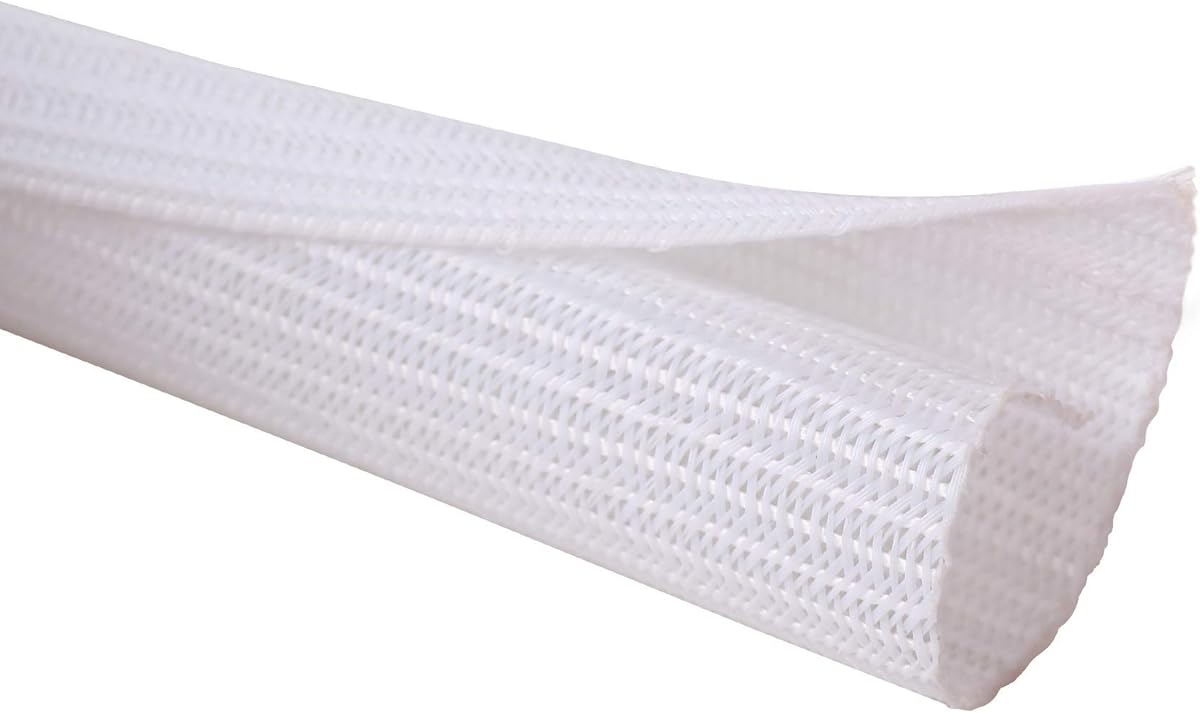


The Alex Tech 10ft Cord Protector is a versatile split sleeve for people who want to bundle loose USB, power, audio, video, or automotive wiring. Its 4.7 rating is the highest among the selected products, while the 10-foot length and half-inch diameter make it useful for both short and extended cable runs.
We may earn a commission when you buy through this link, at no additional cost to you.
The key benefit is the self-closing design. After the wires are placed inside, the sleeve closes around them, producing a cleaner bundle than loose cable or exposed hook-and-loop ties. Its operating range is listed as -103 to 257 degrees Fahrenheit, and the product is also described as UL Recognized, giving it a useful combination of material and thermal characteristics.
The sleeve also offers insulation around the cables and can help discourage pet chewing. It is not a substitute for keeping every power cable completely inaccessible, and its white surface can collect dust or marks. In addition, it is a flexible sleeve rather than a wall raceway, so it does not conceal a cable along a wall in the same way as the snap-together options in this guide.
This is the strongest all-around recommendation for users who want one product to organize several kinds of wires. Choose it for a desk, entertainment center, vehicle, or equipment run where bundled, protected cables are the priority rather than a completely flush wall installation.
The 10-foot length provides enough material for several device connections or a longer section of wiring. Its half-inch opening also gives it more flexibility than the narrow, single-cord wall channels designed specifically for slim television leads.
The broad stated operating range makes the sleeve suitable for home, office, automotive, and industrial cable organization. It also creates a more physical barrier around bundled wiring, which can be useful around curious pets.
We may earn a commission when you buy through this link, at no additional cost to you.
The Delamu Cord Hider Kit is a 157-inch wall-mounted raceway designed to conceal two to four wires behind a television or around another electronics area. Its 4.5 rating reflects a well-regarded approach to cable concealment, and the wider 0.95-by-0.55-inch profile gives it more capacity than most one-cord silicone channels.
We may earn a commission when you buy through this link, at no additional cost to you.
Its attach-and-snap structure simplifies joining sections and reopening the route when a cable needs adjustment. The kit is made from PVC and has passed the stated UL94 V-0 flammability test. It also includes matching connectors and can be cut with appropriate tools, making it useful for installations that turn corners or need a custom route.
The most important limitation is installation. Adhesive products generally perform best on smooth, clean, dry walls, and textured surfaces can reduce adhesion. A rigid raceway also leaves a visible profile compared with a soft sleeve, though painting the surface can help it blend into a light-colored wall. Its design is more permanent than a loose cable bundle.
The Delamu is a sensible selection for households that need to route several television or entertainment wires along a wall. It offers more routing flexibility and capacity than the narrow single-cord products, making it one of the most practical choices for a complete visible cable-management installation.
The channel can accommodate two to four wires, which is useful for power, network, audio, and other television connections. That makes it more suitable for a complete media-center cleanup than a channel intended for only one slim lead.
The minimalist white channel can be cut to fit and painted to coordinate with a wall. Matching connectors help create a more continuous-looking run while preserving access to the concealed cables.
We may earn a commission when you buy through this link, at no additional cost to you.
The 6.6ft White Cable Sleeve is a roomy braided option for desk, computer, television, home-office, automotive, marine, and industrial wiring. It carries a 4.6 rating and is specified to hold approximately four to eight cables within its four-fifth-inch-diameter opening.
We may earn a commission when you buy through this link, at no additional cost to you.
Its self-closing wrap is especially useful when a bundle contains a mixture of power, data, and peripheral cables. Users can open the sleeve, add or remove a lead, and close it again without needing a separate fastener. The polyethylene construction is described as thermostable and flame-retarding, with a listed operating range of -40 to 302 degrees Fahrenheit.
The trade-off is bulk. A sleeve wide enough for four to eight cables will not sit as discreetly against a wall as a slim raceway or create the same flush visual effect. The shorter 6.6-foot length also makes it less appropriate for a lengthy wall route, but it remains convenient for a workstation or entertainment-center bundle. Buyers should measure their cables and available space before ordering.
This sleeve is the best option for people who value protection, easy cable access, and high bundle capacity. It is especially attractive for offices, computers, and other setups where several functional cables need to travel together without forming a tangled mass.
The wide opening distinguishes this sleeve from products limited to a single narrow wire. It can consolidate a sizable group of desktop, computer, or entertainment cables while still allowing each one to be removed when needed.
The sleeve can be cut with scissors to suit a shorter installation. Its self-wrapping construction also makes routine changes simpler than permanently sealing cables inside a fixed channel.
We may earn a commission when you buy through this link, at no additional cost to you.
The 39-inch Silicone Cord Hider is a flexible, self-adhesive route for slim cords beneath a wall-mounted television. It has a 4.6 rating and a side-opening buckle that allows a cable to be added, removed, or adjusted without removing the entire channel from the wall.
We may earn a commission when you buy through this link, at no additional cost to you.
Made from soft silicone, the product is described as waterproof and flame retardant. Its low-profile shape is less conspicuous than a rigid raceway, while the flexible construction can follow moderate curves. It can be used in homes, offices, garages, and warehouses, although the stated cable diameter must not exceed one-quarter inch.
Surface preparation and patience are essential. The wall should be clean and free of dust, and the installation instructions call for pressing the cover into place and waiting twelve hours before inserting the wire. Textured or dusty walls are not recommended because they can impair adhesion. Removal may require slow peeling or careful use of a thin blade to avoid wall damage.
This channel is best for a short, clean television run with slim power, network, or charging leads. It is less suitable for thicker cords, long professional routes, or surfaces where a strong adhesive bond would be inconvenient.
The side clasp opens along the length of the channel, giving users a direct way to reposition a lead. This is useful when a television or connected device is moved and its cable path needs to change.
Waterproof silicone construction broadens the range of suitable installations. The channel can tidy wiring in an office, garage, or utility area while presenting a softer profile than a hard plastic raceway.
We may earn a commission when you buy through this link, at no additional cost to you.
The YesBes Cord Hider Kit is a 116-inch raceway system with an internal width of 0.96 inches and height of 0.57 inches. Its 4.4 rating makes it a solid choice for wall-mounted television wiring, particularly when the route needs to turn, branch, or connect several separately cut sections.
We may earn a commission when you buy through this link, at no additional cost to you.
The kit includes six couplings, two L-shaped elbows, one T-fitting, and installation instructions. These components make it easier to build a continuous-looking network around furniture, corners, and multiple device locations. The material is described as UL94 V-0 rated, and the channel can be cut to a custom length before or during installation.
Installation uses strong adhesive rather than screws. The manufacturer advises against using the tape on textured walls, so smooth, clean surfaces provide the most reliable result. Although the white finish can be painted to match a wall, frequent removal may affect the surface or adhesive. Buyers should plan the entire route before peeling the backing.
The YesBes kit is most useful for installers who want elbows and branches included in the package. It combines a reasonably wide internal profile with a modular layout, making it more flexible than a simple straight strip while remaining less comprehensive than a larger multi-piece raceway set.
The included L-elbows and T-fitting allow the channel to follow more than a straight line. These fittings are especially helpful behind entertainment centers, desks, and wall-mounted televisions where cables approach from more than one direction.
Paintable construction lets the white raceway coordinate with a wall instead of remaining visually prominent. The result is most effective on smooth walls where the adhesive can sit flush.
We may earn a commission when you buy through this link, at no additional cost to you.
The One-Cord Silicone Raceway Kit is a 39-inch channel made for a single television or power cable. It has a 4.4 rating and a particularly compact 0.55-by-0.39-inch profile, making it less conspicuous than wider raceways when the goal is to remove one visible wire from a wall.
We may earn a commission when you buy through this link, at no additional cost to you.
Its flexible silicone body has a side buckle that allows a wire to be added or removed after installation. Pre-applied adhesive makes the product quick to install without screws, while the material can be cut with a saw for a custom length. The white finish is designed to blend naturally with many interior walls.
Capacity is the principal limitation. This product is specifically designed for one cable, so it will not serve a grouped power, network, and audio run unless each lead is given a separate channel. Removing the raceway may also pull at the wall, and the instructions recommend peeling slowly or carefully lifting the tape with a knife.
This is a good fit for a single short wire beneath a television or along a desk. Buyers who want minimal visual impact and do not need to conceal several leads at once will find its narrow shape particularly convenient.
The narrow dimensions help the channel occupy less space than a broad cable-management box. This makes it useful where visual restraint matters and only one cord needs to disappear from view.
The flexible buckle allows the cable to be repositioned without removing the channel. That access is valuable if a device is moved, replaced, or disconnected during the life of the installation.
We may earn a commission when you buy through this link, at no additional cost to you.
The 39-inch Side Open Cord Hider is a flexible silicone channel intended for one cable up to one-quarter inch in diameter. It has a 4.4 rating and a single-side opening that lets users add or remove a wire while a snap mechanism helps keep it from falling out.
We may earn a commission when you buy through this link, at no additional cost to you.
Potential applications include television, lamp, monitor, telephone, network, charging, and speaker wires. The smooth silicone surface is easy to clean, and the material is described as flame retardant. Unlike paintable raceways, this one is intended to retain its natural finish and should not be painted.
The adhesive installation requires a clean, dry wall, and textured or rough surfaces are explicitly unsuitable. The recommended sequence is to measure and cut the channel, including a 45-degree cut for corner splicing, apply it to the wall, press it down, wait one hour, and then insert the wire. A careful cut is important for a clean joint.
This product works well for a straightforward single-cord route where flexibility and easy access matter. It is less appropriate for thicker cables, multiple wires, or installations that need to blend into a painted wall.
The stated one-quarter-inch limit covers many power and signal leads used around televisions, lamps, monitors, and network equipment. Measuring the cable first prevents shoppers from selecting a channel that is too narrow.
The smooth silicone body is simple to wipe clean and remains flexible during normal handling. Its side opening also provides more direct access than a fully enclosed traditional raceway.
We may earn a commission when you buy through this link, at no additional cost to you.
The AGPTEK Cable Management Sleeve is a two-pack of five-foot, 1.2-inch self-closing sleeves with a wood-colored finish. Its 4.6 rating and generous diameter make it a useful option for grouping several cables or covering thicker wiring bundles that will not fit a slim wall channel.
We may earn a commission when you buy through this link, at no additional cost to you.
Each sleeve can be cut with scissors and is designed to hold cables of different sizes. The manufacturer recommends treating the cut edge with fire to help prevent fraying. Its material is listed as flame retardant with a temperature range of -50 to 150 degrees Celsius, and the product is also described as free of chemical odor.
The brown wood appearance is unusual for cord management and may coordinate better with furniture or rustic decor than with a white wall or office. The large 1.2-inch diameter is visually substantial, so this is a bundled-cord solution rather than a flush raceway. As with any sleeve, exposed cables remain a potential chewing target even though the covering adds a deterrent.
This two-pack is most appealing when the goal is to conceal a large collection of home-office, automotive, or computer wires while adding a decorative touch. It is particularly suitable for users who want several lengths rather than one continuous wall-hugging route.
The one-point-two-inch diameter is considerably wider than the compact single-cord channels. It provides room for a large group of wires or a few substantial cables that would overwhelm a narrow raceway.
Two separate five-foot lengths allow a single purchase to serve two areas of a home or office. The wood-style finish helps the sleeves blend into warm interiors where plain white plastic would look more utilitarian.
We may earn a commission when you buy through this link, at no additional cost to you.
The Yecaye Cord Hider is an eight-piece kit totaling 113 inches of one-cord raceway. Each channel has an internal width of 0.59 inches and height of 0.4 inches, making it suitable for a low-voltage power cord, one Cat5 cable, one speaker wire, or one lamp cord.
We may earn a commission when you buy through this link, at no additional cost to you.
Multiple sections are useful because a television installation may require several short routes around a mount, along a baseboard, or behind furniture. The kit includes mounting tape and components, allowing users to position each section according to the available wall space rather than relying on one long, inflexible strip.
This is a dedicated one-cord system. Trying to place multiple leads in a single channel could leave the cover unsupported or prevent the lid from closing properly. The adhesive performs best on a clean, smooth surface, and the sections should be placed carefully because removal can sometimes leave marks or affect the wall finish.
The Yecaye kit is a good choice for a multi-section single-cord installation around a television or desk. It offers more layout freedom than a single strip, but shoppers needing several cables in one route should choose a wider multi-wire raceway instead.
Eight pieces can be distributed around corners, furniture, and mounting hardware. This gives installers more control than attempting to maneuver one long channel into a complicated television setup.
The narrow profile is made for individual power, network, speaker, or lamp cables. It is an efficient way to remove one conspicuous wire without committing wall space to a larger raceway.
We may earn a commission when you buy through this link, at no additional cost to you.
The ESUFEIR Mini Cord Hider is unusual in this group because it is offered in small and medium configurations. The small version is intended for a single wire under five-sixteenths of an inch, while the medium version can organize two or three wires in parallel and help prevent them from being squeezed.
We may earn a commission when you buy through this link, at no additional cost to you.
Its side-opening buckle provides quick access for adding, removing, or adjusting a cable. The semi-circular shape creates a relatively discreet profile, and the flame-retardant silicone body is described as compliant with UL94 V-0 standards. These characteristics make it appropriate for homes and offices where a small, decorative channel is preferred.
Installation requires cleaning the wall and removing the oil-proof film before pressing the channel into place. Users are instructed to wait twelve hours before routing wires. Highly rough or powdery walls are not recommended, and removing the product may require slow peeling or assistance from a thin-blade tool.
This is a versatile final recommendation because the size choice can match different cable counts. Select the small version for one slim lead or the medium version for a small parallel group, particularly when future adjustments are likely.
The small and medium options provide flexibility that most one-cord products do not. This lets users match the channel to the actual number and thickness of cables instead of forcing several leads into an undersized cover.
The rounded silicone profile avoids the industrial look of a hard cable-management box. It can tidy a visible lead while adding a soft, unobtrusive element to a living room or office.
We may earn a commission when you buy through this link, at no additional cost to you.
The right cord hiding tube depends on where the cable travels, how many wires must be concealed, and whether the appearance or future accessibility matters most. Measure both the route and the cables before choosing an installation style.
A flexible sleeve surrounds a bundle of wires and is best when the goal is protection, pet deterrence, or organizing cables in an open area. A wall raceway follows a fixed route and is better for hiding a television lead or power cord along a wall. Sleeves generally provide more bundle capacity, while raceways create a cleaner, more directional installation.
Choose a sleeve for a desk, entertainment center, vehicle, or equipment rack. Choose a raceway for a wall-mounted television, lamp, or network connection.
Capacity depends on both the number of cables and their diameter. Some products are explicitly limited to one wire, while others hold two to four wires or as many as four to eight cables. A channel intended for a slim charging lead may not accommodate a thicker power cord even if the overall length appears adequate.
Measure the widest cable and check the listed internal dimensions. If several cables will share a route, choose a wider profile or bundle them in a separate sleeve.
Self-adhesive installation performs best on smooth, clean, dry walls. Textured, dusty, powdery, or rough surfaces can prevent the backing from forming a reliable bond. Rigid raceways may offer more mounting options, although the featured adhesive designs are primarily intended for smooth surfaces.
Clean the intended area and test the surface before committing to a long run. If the wall is textured, consider a screw-mounted raceway or use a sleeve rather than a wall cover.
A side-opening buckle or snap cover makes it easier to add, remove, or reposition a cable after installation. Permanently enclosed channels can look tidier but may be inconvenient when equipment is moved. Self-closing braided sleeves balance these needs by opening for changes and closing around the bundle afterward.
Prioritize easy access if devices are likely to move. Choose a more enclosed finish only when the cable route is expected to remain unchanged.
A long sleeve can cover a complete bundle, while wall channels should equal the length of the intended route. Most options can be cut, but the appropriate tool varies: scissors work with braided plastic sleeves, while saws or similar tools may be needed for rigid PVC or silicone channels.
Measure the complete route before cutting and add a little extra for angled corner joints. Avoid trimming too early, since an incorrect cut can make a section too short to install.
Material specifications can matter near heat, pets, children, or electrical equipment. Relevant details include operating temperature, flame-retardancy standards, insulation, waterproofing, and whether the product is non-toxic or free of noticeable chemical odor. These claims do not replace proper electrical practices, but they help indicate the intended environment.
For a pet area, select a durable sleeve that resists chewing. For heat exposure, verify the temperature range. For a public or shared space, a stated flame-resistance rating provides additional reassurance.
White raceways and sleeves blend with light walls, desks, and entertainment furniture. The AGPTEK option offers a wood-colored alternative for warmer interiors. Paintable channels can be colored to match a wall more closely, while non-paintable silicone should retain its supplied finish.
Consider how visible the route will remain after installation. A larger sleeve can look intentional in a media area, while a narrow white channel is often less noticeable along a baseboard.
Begin by mapping the cable route and measuring both its length and the diameter of the wires. For a sleeve, cut the material with the appropriate tool, open the split or buckle, and place the cables inside evenly. Avoid forcing a lead into an undersized channel because pressure can damage the cable or prevent the cover from closing.
For a wall-mounted raceway, clean and dry the surface, remove the protective film, and apply the channel in the planned position. Press firmly along the adhesive area. Follow the stated waiting period before inserting wires, and use corner fittings or carefully cut angles when the route changes direction.
Periodically inspect the installation for lifted edges, trapped dust, pinched cables, or discoloration. Remove a loose channel slowly, and use a thin-blade tool carefully if necessary. Keep sleeves and channels clear of concentrated heat, and never route a cable through a product in a way that compromises its insulation or bends it beyond the manufacturer's guidance.
A cord hiding tube is a flexible sleeve that wraps around a bundle of cables, while a wall raceway is a channel mounted along a wall. Sleeves are useful for desks, vehicles, and equipment bundles, whereas raceways are intended to create a fixed, less visible route for individual leads around a television or other wall-mounted device.
It depends on the material. The Delamu and YesBes wall raceways are specifically described as paintable, while the 39-inch Side Open Cord Hider is not intended for painting. Always confirm the product instructions before applying coatings, and test the finish away from the visible installation when possible.
Most of the featured adhesive products perform best on smooth, clean, dry walls. Several manufacturers explicitly warn against textured, rough, dusty, or powdery surfaces because the backing cannot make full contact. A screw-mounted raceway may be more reliable on those surfaces, although it requires a different installation method.
Compare the cable's diameter with the product's stated maximum and the raceway's internal dimensions. For a sleeve, consider both the number of cables and their combined bulk. For a single-cord channel, measure the cable rather than relying only on the width of the product image.
Yes, when the product has a side buckle, snap closure, or self-closing split. The silicone and braided sleeve products in this guide are designed to be opened for adjustments. Before installing, route and test the cables so future changes are as simple as possible.
A sleeve can create an additional physical barrier and may discourage curious pets, but it is not a guarantee that a determined animal will not chew. Power cables should still be routed out of reach, and any damaged insulation should be replaced rather than hidden by a protector.
Only products explicitly designed for outdoor use should be considered in exposed locations. The 39-inch Silicone Cord Hider is described as waterproof and suitable for indoor or outdoor applications, while most wall raceways are better suited to protected interiors. Installation instructions and local electrical guidance remain important.
Peel it back slowly at a shallow angle to reduce the chance of lifting paint or leaving residue. The instructions for several products also recommend using a thin-blade tool to lift the adhesive carefully. Avoid pulling sharply and test an inconspicuous edge if the wall finish is delicate.
The Alex Tech 10ft Cord Protector is the most versatile overall choice because it combines a generous length, self-closing construction, and broad environmental compatibility. The Delamu kit stands out for a complete multi-wire wall route, while the 6.6ft White Cable Sleeve is ideal when a large group of desktop or computer cables needs protection and organization.
Prioritize the installation context. Choose a flexible sleeve for a movable bundle, a multi-wire raceway for an entertainment center, and a narrow single-cord channel when visual impact and cable access matter most. Measure carefully, check the surface requirements, and confirm that the product's capacity matches both the number and thickness of the wires.
Ratings, dimensions, included fittings, and product configurations can change, and current prices should always be checked on the listing. Comparing the latest product details against the route and cables in your space will help you choose a cord hiding solution that remains tidy, accessible, and practical.

