
Level 2 Fast EV Charger 50Amp 240V NEMA 14-50P 25FT J1772 Cable
4.8Editor score
Five adjustable current levels
NEMA 14-50 plug
25-foot charging cable
ETL and FCC certified
Explore our 50 Amp Ev Charger guide, comparing ten 240V home EVSEs for charging speed, safety, smart controls, installation flexibility, cable length, and
A 50 amp EV charger is a high-power Level 2 charging option intended for drivers who want faster home charging than a standard 120V outlet can provide. The best units balance 240V power, adjustable amperage, protective electronics, flexible installation, and dependable cable and connector design for everyday use.
We compared the ten chargers in this guide using their stated power, current controls, connector type, cable length, safety certifications, weather protection, installation requirements, app features, and user feedback. The list includes plug-in portable models, hardwired stations, and dual-installation designs for different homes and vehicles.
Each pick reveals what makes a particular charger suitable for a specific need, from portable road-trip flexibility to permanent smart-home charging. Ratings, availability, and pricing can change, so readers should verify current product details, electrical requirements, and connector compatibility before purchasing.
4.8Editor score

5.0Editor score
4.4Editor score
The table below compares the chargers by their maximum current, installation method, cable and connector arrangement, and connected features. It highlights the important differences among portable plug-in models, permanent hardwired stations, and flexible dual-installation designs.

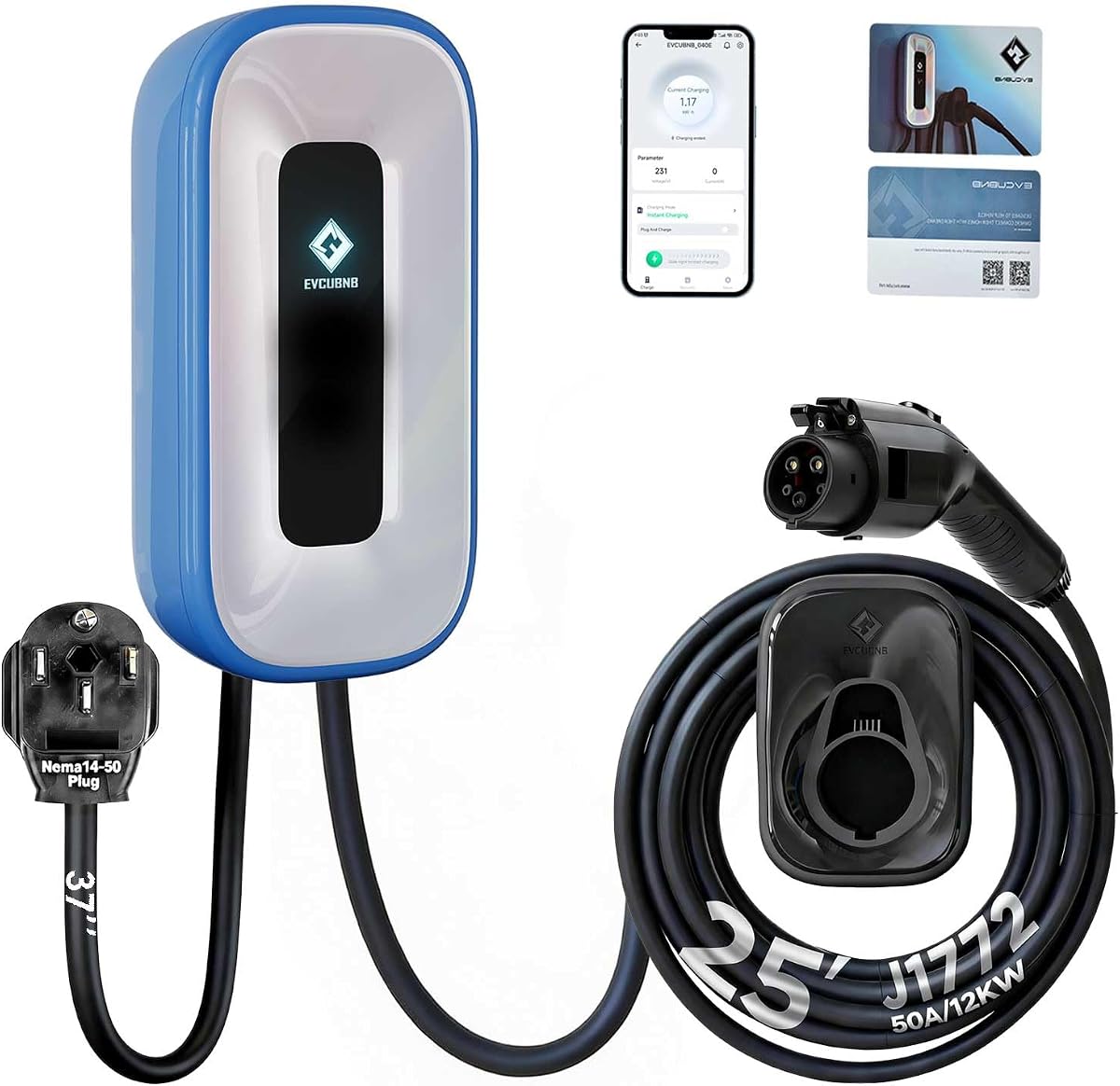



The TopAutoGear Level 2 EV Charger combines a portable 240V format with a maximum output of 50 amps and a user rating of 4.1. Its standout qualities are flexibility and straightforward operation: a NEMA 14-50 plug, a 25-foot cable, adjustable current, and a display that provides charging information without requiring permanent installation.
We may earn a commission when you buy through this link, at no additional cost to you.
Current can be set across 16A, 24A, 32A, 40A, and 50A, allowing the charger to accommodate different electrical arrangements. The LCD reports voltage, current, power, charging duration, range-related information, and error codes, while the timer can delay charging for off-peak use. Its stated charging estimate reaches up to 45 miles of range per hour, although actual results vary by vehicle and conditions.
The main compromise is that the product information provided does not clearly identify an independent safety certification, even though it describes protective functions and a flame-retardant approach. The J1772 connector also requires an adapter for Tesla vehicles. Those points deserve careful verification, particularly for anyone expecting a permanently installed home station.
This charger makes the most sense for renters, travelers, or homeowners who already have an appropriate NEMA 14-50 outlet and want portable 240V charging. It is also a useful option for campsite, job-site, and secondary-vehicle use, provided the electrical supply and connector match the vehicle.
The NEMA 14-50 plug and extended cable allow the charger to move between locations without complicated hardwiring. Adjustable amperage and a delay timer add useful control once it is connected.
The LCD keeps important operating details visible, including current, voltage, power, timing, and error codes. That visibility can simplify troubleshooting and routine charging decisions.
We may earn a commission when you buy through this link, at no additional cost to you.
This Level 2 Fast EV Charger pairs 50 amp capability with a 4.8 rating, making it one of the strongest all-around choices in the list. It delivers up to 11.5kW through a NEMA 14-50 plug, supports five current settings, and includes a 25-foot SAE J1772 cable.
We may earn a commission when you buy through this link, at no additional cost to you.
Its standout feature is a clearly described ten-layer safety system covering overvoltage, overcurrent, overcharge, overheating, and leakage. The housing is ETL and FCC certified, flame retardant, and rated IP54 for indoor or outdoor use. A delay timer offers start delays of up to eight hours, while the LCD shows voltage, current, power, and charging status.
The trade-offs are practical rather than fundamental. The NEMA 14-50 connection requires a suitable 240V outlet, and Tesla drivers need a J1772 adapter, which is not included. A storage bag and wall mount are also useful, but the unit is not as discreet as a purpose-built permanent station.
Buyers who want genuine 50 amp portability without giving up multiple amperage settings, a long cable, and a substantial safety package should give this model serious consideration. It suits households with more than one compatible vehicle, road-trip users with suitable outlets, and drivers who want a capable backup charger.
Protection against common charging faults is among the most persuasive features. The stated safeguards cover heat, leakage, voltage, current, and overcharging conditions.
Adjusting output from 16A through 50A gives owners flexibility across different vehicles and electrical setups. Lower settings can also be useful when a full-capacity circuit is unnecessary.
We may earn a commission when you buy through this link, at no additional cost to you.
This charging station supports both a NEMA 14-50 plug and professional hardwiring, giving it unusual flexibility for a 50 amp model. It carries a 4.2 rating and combines a J1772 connector with smart charging controls, a slim enclosure, and a stated 50 amp hardwired capability.
We may earn a commission when you buy through this link, at no additional cost to you.
Its mobile app supports off-peak scheduling, real-time status, charging history, and remote management, including control of unauthorized use in shared spaces. Internal thermal sensors monitor temperatures, while the flame-retardant shell and automatic power cutoff add layers of protection. The connector uses ultrasonic welding and is stated to withstand more than 10,000 plug cycles.
The hardwired maximum still depends on a correctly configured circuit and professional installation, so the product's headline capability does not remove the need for a proper electrical assessment. A compact enclosure and clean cable management are positives, although the design may not satisfy buyers seeking a fully integrated wall unit.
This is a strong selection for drivers who may move homes or want one product to support both rental flexibility and permanent installation. It also appeals to shared-garage users who value remote monitoring and scheduled charging enough to configure the accompanying app.
The ability to use a NEMA 14-50 outlet initially and move to professional hardwiring later makes the station adaptable. The appropriate electrical path should be chosen before installation.
Remote status, history, and scheduling are particularly relevant for apartments, condominiums, and shared parking areas. These tools can improve visibility and make energy use easier to manage.
We may earn a commission when you buy through this link, at no additional cost to you.
The WOLFBOX WE50 is a permanently installed, 240V home charger rated at 4.3 stars. It supports up to 50 amps, provides a 25-foot J1772 cable, and offers three ways to authorize use: app control, an RFID card, and plug-and-charge operation.
We may earn a commission when you buy through this link, at no additional cost to you.
Its app can organize up to four groups of charging sessions with three time slots in each group, calculate rate-based costs, and adjust amperage. The unit is CSA and FCC certified, meets UL2594 standards, and includes eight protections, including leakage, overcurrent, and short-circuit detection. A NEMA 4X housing is designed for dustproof and waterproof outdoor resilience.
Installation is the largest commitment. The product information calls for a circuit breaker rated at 70A or greater and describes manual dial-code matching to the home's distribution panel. That requirement makes the WE50 less suitable for renters and for homes without suitable electrical capacity, even though its access controls are impressive.
The charger is best for homeowners with a properly planned 240V circuit who value multiple authorization options and detailed scheduling. Drivers with multiple EVs can also appreciate plug-and-charge convenience, while shared or multi-user households may find the RFID function especially useful.
App, RFID, and plug-and-charge options allow the household to select the most convenient authorization method. RFID can help distinguish authorized users in a shared setting.
The NEMA 4X housing and eight listed electrical protections support dependable use in exposed locations. Certification and environmental ratings should remain central considerations for permanent outdoor installations.
We may earn a commission when you buy through this link, at no additional cost to you.
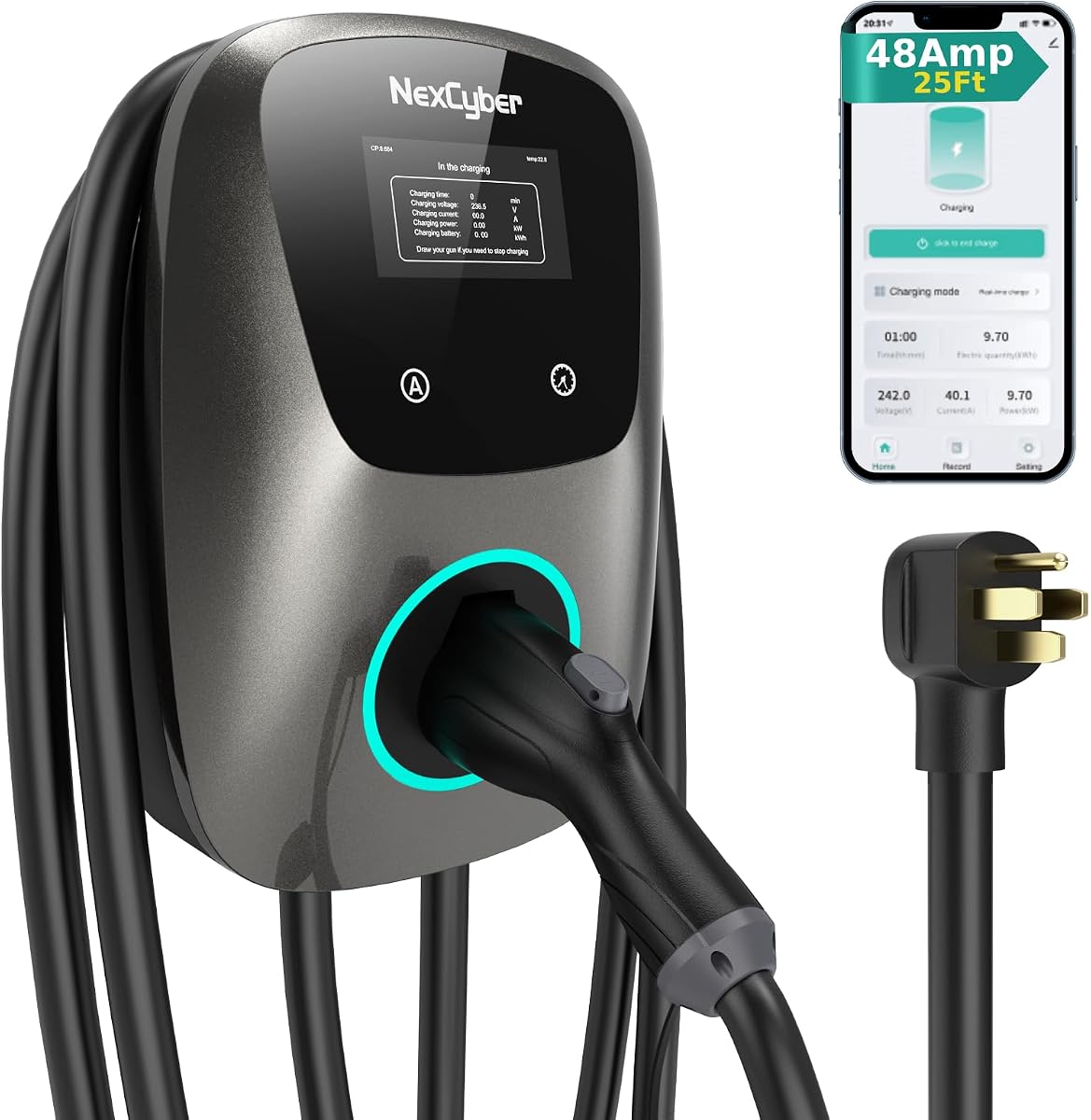
This 48 amp Level 2 EVSE combines plug-and-play operation with optional WiFi app control, earning it a 4.5 rating. It offers a 25-foot J1772 cable, a touchscreen interface, and the choice of a NEMA 14-50 connection or a hardwired setup for higher output.
We may earn a commission when you buy through this link, at no additional cost to you.
The product is certified against numerous EVSE safety criteria and listed as ETL and FCC certified. Its app can show charging cost, history, full-charge notifications, and live status, while also scheduling charging periods. The local touchscreen remains useful when a network connection is unavailable, with current adjustable from 16A to 48A.
Compatibility needs attention. The product information does not list Tesla NACS connector vehicles, and certain newer Kia models are specifically excluded. It also advises against direct sunlight and rainy exposure despite its NEMA Type 3 and partial IP65 protection, making sheltered outdoor placement preferable.
This EVSE fits a driver who wants smartphone scheduling but does not want to depend on an app for every setting. It is also a flexible option for renters using a proper 14-50 outlet, provided the vehicle uses a J1772 connection and the charger is installed in a protected location.
WiFi scheduling and cost tracking add value for connected homes, while the touchscreen preserves direct access to current and timer settings. Both control paths are useful in different situations.
The default NEMA 14-50 arrangement favors convenience, while hardwiring can unlock the stated 48 amp maximum. The required conductor size and circuit design should be handled by a qualified electrician.
We may earn a commission when you buy through this link, at no additional cost to you.
The EVIQO wall charger prioritizes clean design, strong connected features, and dependable everyday operation. It has a 4.7 rating, supports up to 40 amps at 240V, and uses a standard NEMA 14-50 plug on a dedicated 50A circuit.
We may earn a commission when you buy through this link, at no additional cost to you.
A stronger built-in antenna is designed to maintain a network connection in garages and basements. The app supports remote start and stop, adjustable output from 6A to 40A, reminders, energy tracking, cost monitoring, and off-peak scheduling. It also uses over-the-air updates so firmware can improve without manual intervention.
The fully sealed IP66 and NEMA 4 housing provides strong indoor and outdoor protection. A glow-in-the-dark holster, internal steel shielding, a side reset button, and a three-year warranty improve ownership convenience. Its ceiling is 40 amps rather than 50, so drivers prioritizing the highest possible rate may need to look elsewhere.
This model is a compelling choice for a garage or driveway installation where appearance, connectivity, and maintenance ease matter. It is especially attractive for non-Tesla J1772 owners with a dedicated 14-50 outlet and a reliable 2.4 GHz WiFi signal.
The enhanced antenna is intended to keep the charger online in less accessible spaces. Reliable 2.4 GHz coverage is still important when deciding where to place the unit.
Remote controls, automatic updates, and an external reset button reduce the need to open the enclosure. The illuminated holster also makes the connector easier to find at night.
We may earn a commission when you buy through this link, at no additional cost to you.
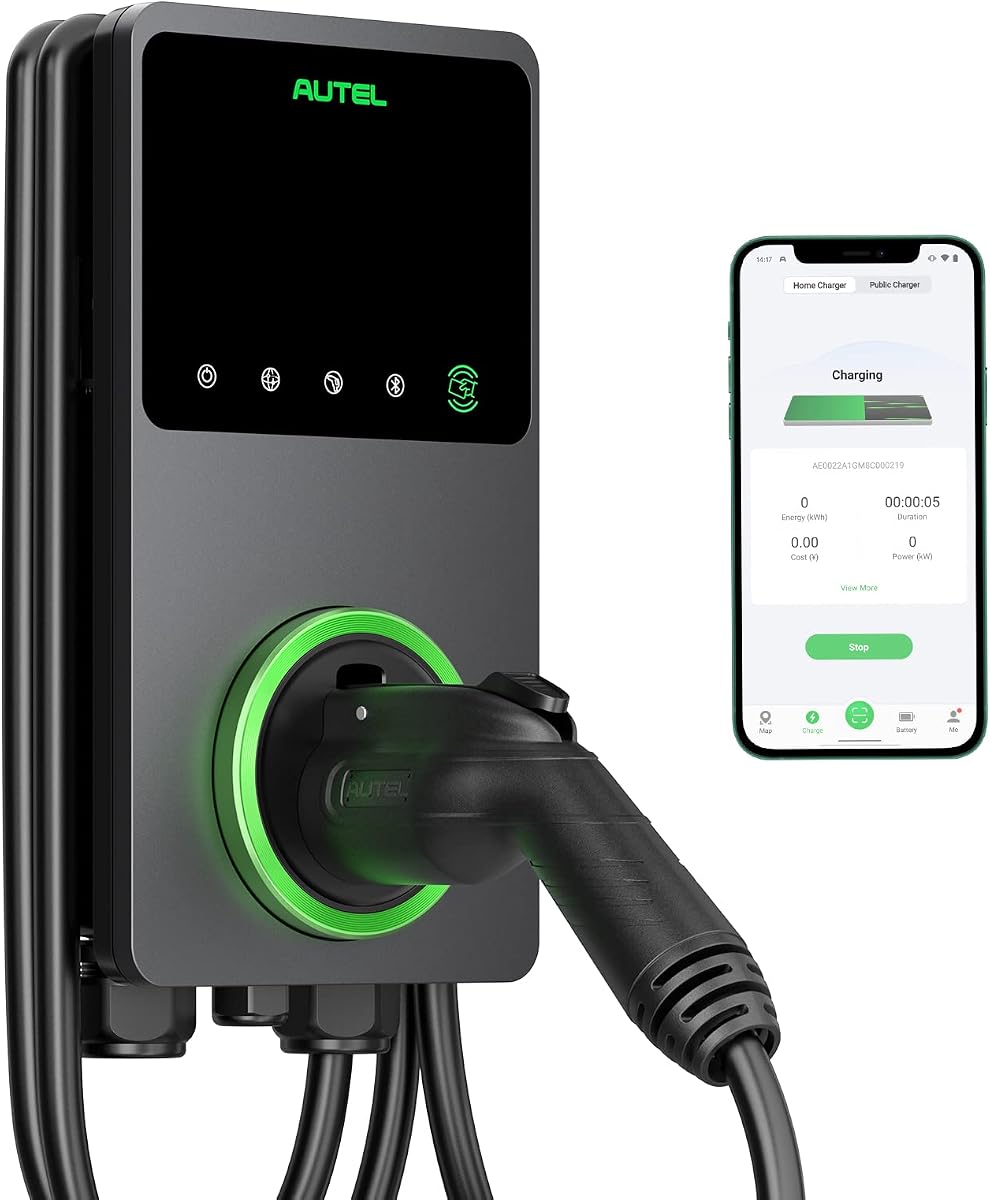
The Autel 50A Level 2 EV Charger is the strongest overall recommendation in this guide, combining a 5.0 rating with 240V hardwired charging, WiFi, and a 25-foot J1772 cable. Its output can be adjusted from 6A to 50A, making it adaptable to different vehicle and electrical requirements.
We may earn a commission when you buy through this link, at no additional cost to you.
Its standout feature is AI-powered charging optimization based on time-of-use electricity rates. The Autel Charge app can monitor, schedule, and optimize sessions, while voice-assisted questions provide a convenient troubleshooting layer. Real-time temperature monitoring, flame-retardant materials rated to 950°C, LED status lights, and a stated 10-year lifespan reinforce the focus on dependable home use.
As a hardwired product, it is less flexible than the portable plug-in alternatives. Installation must be planned around the vehicle's charging load, the home's electrical service, local rules, and the charger's instructions. The quoted ten-year lifespan describes the engineering target rather than a guaranteed service life for every owner.
Homeowners seeking a permanent, high-output station with sophisticated energy management should prioritize this Autel. It is particularly attractive for daily commuters, drivers with larger batteries, and households already equipped for 50A hardwired Level 2 charging.
Time-of-use analysis can help the charger align charging with less expensive electricity periods. The app adds visibility, history, and remote control for owners who want active oversight.
Real-time thermal monitoring, flame-retardant materials, and adjustable current work together to support routine sessions. The five-year warranty and continuous support add confidence after installation.
We may earn a commission when you buy through this link, at no additional cost to you.
The Autel MaxiCharger AC Home combines up to 50 amp charging with a polished design and a 4.5 rating. This hardwired 240V station includes a 25-foot J1772 cable, a separate holster, Wi-Fi, Bluetooth, and Ethernet connectivity.
We may earn a commission when you buy through this link, at no additional cost to you.
Autel states that the charger can add up to 37 miles of range per charging hour and uses a flexible cable designed to remain usable in temperatures as low as minus 40°C. The NEMA Type 4 enclosure is intended to withstand snow, rain, hail, and sleet, while listed protections cover fire resistance, overcurrent, overvoltage, and excessive temperature.
The app supports remote control, scheduling, and off-peak optimization, while automatic over-the-air updates maintain connectivity. The fixed design and separate holster create a clean permanent setup, but renters and owners without a suitable hardwired circuit will find it less convenient than a plug-in model.
This charger is a strong fit for a finished garage, carport, or sheltered outdoor wall where appearance and dependable connectivity matter. Drivers who value brand support, a separate holster, and cold-weather cable flexibility may prefer it over more utilitarian models.
The updated cable is specifically designed to remain flexible in severe cold. That consideration is valuable for owners who charge outdoors through winter.
A separate holster keeps the connector neatly stored when not in use. Wi-Fi, Bluetooth, Ethernet, and over-the-air updates provide several paths for managing a permanent station.
We may earn a commission when you buy through this link, at no additional cost to you.
The Autel 50A Level 2 EV Charger delivers up to 12kW on a 240V hardwired circuit and carries a 4.4 rating. It provides adjustable output from 6A to 50A, a flexible 25-foot J1772 cable, and an integrated holster for a tidy permanent installation.
We may earn a commission when you buy through this link, at no additional cost to you.
The app can start or stop charging, establish schedules, monitor sessions, and optimize energy use, with both Wi-Fi and Bluetooth for connected control. A NEMA 4X enclosure and CSA certification support dependable indoor or outdoor use, while the enclosure is designed to resist rain, dust, splashing water, hose-directed water, and external ice formation.
The trade-off is installation permanence and connector limitations. This is not a portable EVSE, and Tesla owners would need an appropriate adapter. In addition, a hardwired 50A setup may require electrical service upgrades depending on the home's existing capacity.
Buyers who want high charging power, a clean integrated cable system, and comprehensive remote control should consider this as a premium home option. It is well suited to owners of J1772-equipped electric vehicles and plug-in hybrids who plan to keep the charger in place for years.
The 12kW ceiling serves larger battery systems well, while lower amperage settings provide more flexibility. Owners can tune charging rather than operating at one fixed rate.
The integrated holster reduces cable clutter, while the NEMA 4X housing is suited to exposed residential environments. A qualified installer should verify circuit and conduit requirements.
We may earn a commission when you buy through this link, at no additional cost to you.
The Autel Home Smart EV Charger in Sierra Blue combines a 4.4 rating with up to 50 amp, 240V Level 2 charging. It is a hardwired unit with a 25-foot J1772 cable, Wi-Fi, Bluetooth, and Ethernet connectivity.
We may earn a commission when you buy through this link, at no additional cost to you.
The charger is stated to add up to 37 miles of range per charging hour. Its cable remains flexible at temperatures down to minus 40°C, while the NEMA Type 4 enclosure provides protection against weather. Fire-resistant construction and protections for overcurrent, overvoltage, and excessive temperature round out the safety features.
Autel Charge app support includes remote control, session scheduling, and off-peak optimization. The product is also described as eligible for a federal rebate program, although eligibility can depend on the buyer, location, installation date, and current program rules.
The Sierra Blue finish gives this model a more distinctive appearance than many utilitarian wall chargers. It is best for owners who want a permanent, connected installation and appreciate Autel's established automotive-electronics brand, provided their vehicle and electrical system support the unit.
Sierra Blue separates this model visually from conventional black or gray EVSEs. It suits owners who want functional equipment to coordinate with a finished garage.
Wi-Fi, Bluetooth, and Ethernet provide flexible options for connecting the station. Remote scheduling and off-peak controls help align charging with household routines.
We may earn a commission when you buy through this link, at no additional cost to you.
Choosing a 50 amp EV charger involves balancing vehicle capabilities, electrical capacity, connector standards, weather exposure, installation permanence, and smart-control preferences. The most important step is to match the charger to both the car and the home rather than focusing only on the largest advertised output.
A 50 amp EVSE is usually associated with a 240V Level 2 connection, but the home's electrical service, breaker size, conductor gauge, outlet location, and local code all have to support the intended setup. Some products specify a 70A breaker, while others operate at lower current through a NEMA 14-50 outlet on a dedicated 50A circuit. The vehicle's onboard charger may also accept less than 50 amps, so the actual rate can be lower than the charger's maximum.
A portable plug-in model offers the easiest relocation and can make sense for renters, travelers, or homes with an existing NEMA 14-50 outlet. A hardwired station usually provides a cleaner permanent appearance and removes the need to plug and unplug the main connector. Dual-installation designs bridge the gap but may add complexity. Whichever format you choose, cable routing and parking-space distance should be considered before finalizing.
Most North American EVs and plug-in hybrids use the SAE J1772 connector, while many Teslas use NACS. Products in this guide primarily use J1772, and several explicitly state that Tesla drivers need an adapter. Adapter availability and quality should be verified before purchase, and buyers should also check model-year exceptions because some newer vehicles use connector arrangements that are not universally supported.
Maximum-current capability is useful, but adjustable output is often more valuable day to day. A charger offering settings from 6A or 16A upward can operate at lower power for an older vehicle, a smaller circuit, or a shared electrical arrangement. The control method matters too: local buttons and a display are convenient during outages or network changes, while app-based controls are better for remote scheduling and energy history.
Look for relevant EVSE safety standards and recognized certification marks, such as ETL, UL, or CSA listings, rather than relying only on generic safety claims. Environmental ratings matter for exposed outlets: IP54, IP65, IP66, NEMA Type 4, and NEMA 4X indicate different levels of dust and water protection. A charger may also include temperature monitoring, leakage protection, overcurrent safeguards, overvoltage protection, and flame-retardant housing materials.
A 25-foot cable is common in this category and provides enough reach for many two-car garages or driveways. Flexibility in cold weather is especially useful for outdoor charging. Connector durability also matters because the plug is handled repeatedly; look for information about strain relief, sealed joints, and rated plug cycles. A holster, whether included or integrated, can keep the connector clean, secure, and easy to reach.
App scheduling can shift charging toward lower-cost or off-peak electricity periods, while remote start and stop are helpful for shared chargers. Energy history, cost estimates, notifications, and over-the-air updates can improve visibility, though none are essential to delivering power. Check whether the app supports your phone, which network the unit uses, and whether local controls remain available if the internet connection fails.
A 50 amp EVSE does not guarantee that the car will accept 50 amps. Many vehicles have different maximum onboard charging rates, and some reduce power as the battery approaches full or when the temperature changes. Range-per-hour figures are also estimates that depend on efficiency, battery size, ambient conditions, and driving demand. Use the advertised rate to understand the charger's capability, then consult the vehicle manual for the actual charging limit.
Begin by confirming that the charger, vehicle, outlet, and electrical circuit are compatible. Read the charger instructions, identify the connector and control settings, and have a qualified electrician complete any hardwired work. For plug-in models, confirm that the NEMA 14-50 outlet is correctly configured and that the cord can lie flat without creating a trip hazard or being exposed to excessive heat, moisture, or vehicle traffic.
Connect the charging handle to the vehicle before initiating a session, then use the local display or app to select an appropriate current and schedule. Begin at a lower setting when an outlet or vehicle has specific limits. During charging, monitor status, current, temperature, and any fault messages. Stop the session before disconnecting, and avoid unplugging the main connector while it is carrying electrical load.
Keep the connector and connection area clean, dry, and free of debris. Inspect the cable for damage and keep the connector supported rather than hanging by the cord. In cold weather, allow the cable to remain flexed as designed and avoid forcing a frozen connector. For connected chargers, keep the app and firmware current, use manufacturer-approved updates, and periodically review error logs, charging history, and the condition of the outlet or breaker.
A 50 amp Level 2 charger is safe when the charger, vehicle, outlet, circuit, wiring, and local installation requirements are properly matched. The vehicle's onboard charging system controls the actual energy accepted. Choose an appropriate current setting and use a qualified electrician for hardwired or high-current installations.
A 50 amp, 240V Level 2 charger can deliver up to 11.5kW of charging power, while a typical 120V Level 1 connection is much slower. Product estimates in this guide range from about 37 to 48 miles of range per hour, depending on the charger and vehicle. Actual results vary with battery size, efficiency, temperature, and vehicle acceptance.
Not every 50 amp EVSE requires the same electrical configuration. Some products specify a 70A breaker, while others use a NEMA 14-50 outlet on a dedicated 50A circuit. Follow the charger's installation manual, have an electrician assess the panel and load, and never use an outlet or adapter that does not meet the required rating.
Yes, many Tesla vehicles can use a J1772 charger through a compatible NACS-to-J1772 adapter, but the adapter is generally not included with the chargers reviewed here. Confirm that the adapter supports the intended charging level and amperage, inspect it for damage, and follow the adapter manufacturer's instructions.
A plug-in charger is easier to move and can be useful for renters, travel, or homes with a suitable 14-50 outlet. A hardwired charger generally provides a cleaner permanent setup and may be preferable for daily use. Dual-installation models offer flexibility, though they need to be configured correctly for the electrical path selected.
Adjustable amperage allows the charger to deliver lower power when the vehicle or electrical setup does not support the full 50A rate. It can improve compatibility and make charging more practical in shared homes or older electrical arrangements. The selected value must remain within the ratings of the charger, outlet, circuit, and vehicle.
Only if the charger has an appropriate outdoor rating and is installed according to its instructions. Look for NEMA Type 4, NEMA 4X, IP65, IP66, or another clearly stated environmental rating. Even weather-resistant equipment may require a sheltered location, proper sealing, and compliance with local electrical codes.
Smart features are not required for basic charging, but they can provide remote start and stop, off-peak scheduling, cost tracking, history, and firmware updates. A wall of strong connectivity can be worthwhile. If WiFi is unreliable, prioritize a charger with a clear local display and accessible current, timer, and status controls.
The Autel 50A Level 2 EV Charger stands out as the most complete option because it combines 50 amp capability, adjustable output, intelligent app features, strong safety provisions, and a 4.5 rating with a 5.0 customer rating. The portable 50 amp NEMA 14-50P model is a strong value choice for owners who prioritize flexibility, while the premium Autel hardwired model offers refined connected performance.
Prioritize electrical readiness, vehicle compatibility, connector type, and installation style before considering convenience features. A sophisticated app cannot compensate for an undersized circuit, and a high advertised wattage does not guarantee that every vehicle will accept the same charging rate. For exposed installations, recognized certification and weather protection deserve equal attention.
Before purchasing, verify the current specifications, warranty terms, connector requirements, app compatibility, and installation instructions. Product ratings, promotional availability, and prices can change, so comparing the latest listing information will help ensure the selected charger still fits your vehicle and home.