
Single Side Earphone in-Ear Mono Earbuds
4.2Editor score
Single-ear wired design
Universal 3.5mm compatibility
Medium latex-free eartip
Looking for the best earbuds for one ear use? This expert guide compares comfort, sound, controls, battery life, connectivity and situational awareness.
Earbuds for one ear use are designed to deliver convenient personal audio while leaving the opposite ear available for conversations, announcements, navigation, or awareness of nearby activity. The best options balance a secure fit, useful audio, reliable controls, and comfort, whether worn in-ear or around the ear.
We compared ten single-ear and open-ear products based on the supplied specifications, including wearing design, sound features, microphone systems, wireless range, battery life, water resistance, device compatibility, and call controls. The list covers wired and Bluetooth models for work, travel, exercise, and side sleepers.
Each numbered review explains who the product suits and where it falls short. The top picks represent the strongest options for budget-conscious shoppers, all-around users, and those seeking premium open-ear features. Product availability and selling prices can change, so confirm current details before buying.
4.2Editor score

4.4Editor score

4.4Editor score
The table below compares the ten products by wearing style, audio path, connectivity, and key feature advantages, making it easier to identify the right option for your listening environment.


This straightforward mono earbud is a practical choice for anyone who wants to listen through one ear without paying for a wireless system or charging routine. It carries a 4.2 rating and focuses on the basics that matter in one-ear use: a compact earpiece, a conventional 3.5mm plug, and compatibility with a wide range of audio equipment.
We may earn a commission when you buy through this link, at no additional cost to you.
The supplied specifications describe a 1.2-meter cord and a medium-size silicone eartip that is latex-free. It works with Android smartphones, tablets, laptops, MP3 and MP4 players, and other products equipped with a standard headphone connection. Because it delivers mono audio through a single earpiece, it naturally leaves the opposite ear available for conversation or environmental sounds.
Its limitations are equally clear. There is no Bluetooth, microphone, charging case, inline remote, or adjustable ear hook in the listed features. Users who move around frequently may find the cord distracting, while those with unusual ear sizing may have only the supplied medium tip. It is also intended primarily for listening rather than making calls.
This is a sensible choice for a desk, a laptop, a media player, or anyone who wants a dependable wired earbud with minimal complexity. It may also suit people who prefer not to maintain another wireless device. For those wanting hands-free calls or greater freedom of movement, the higher-ranked wireless models offer more versatility.
The standard 3.5mm connection removes the need for device-specific pairing or adapters when used with compatible equipment. That makes this model easy to move between a phone, tablet, laptop, or portable media player.
A single in-ear earpiece leaves the other ear open without the dangling second bud of a conventional wired headset. The cord also remains less complex than a two-ear wired configuration.
We may earn a commission when you buy through this link, at no additional cost to you.
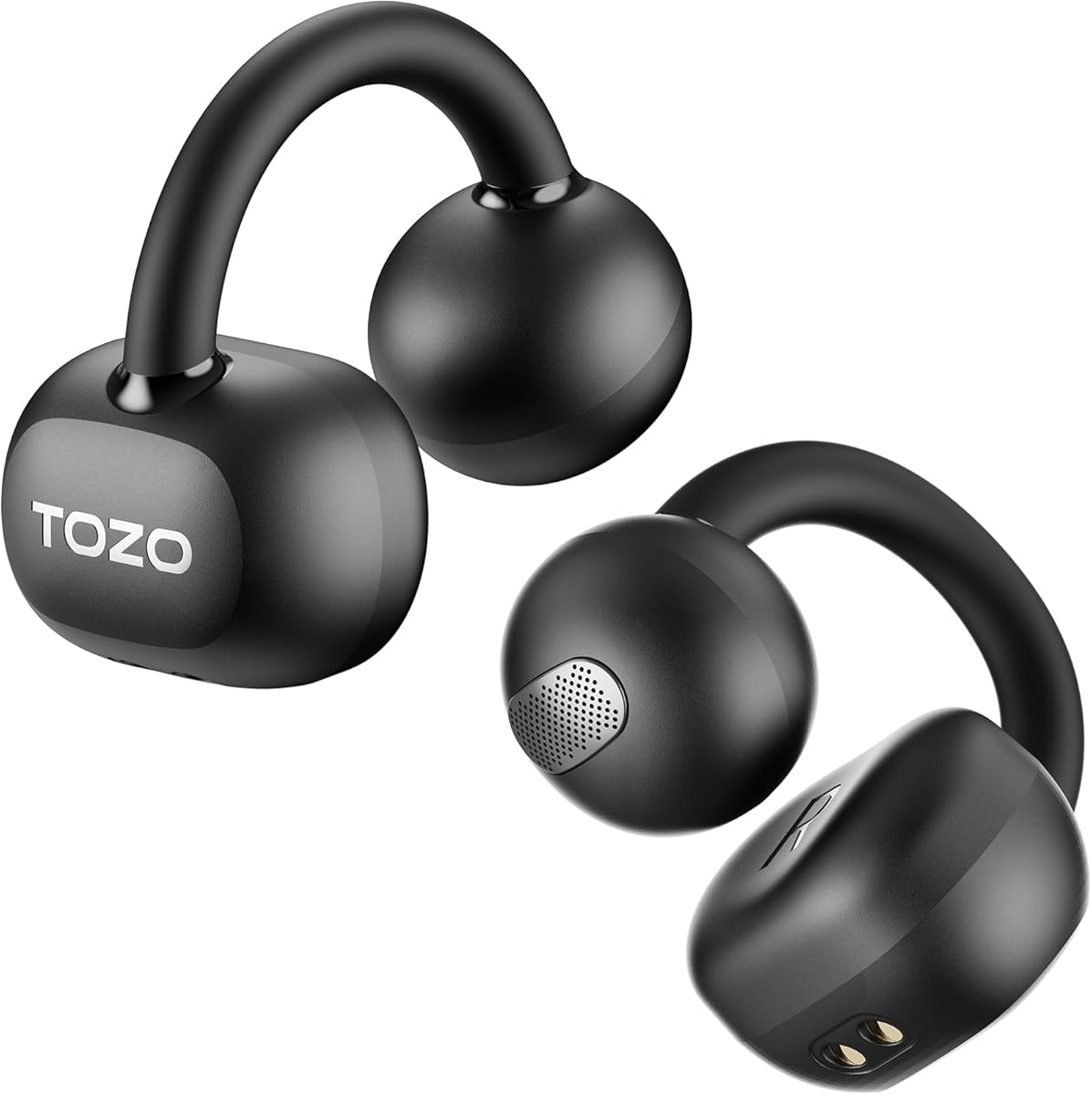
TOZO OpenEarRing combines a clip-on, open-ear format with wireless convenience and a generous battery system. It earns a 4.3 rating and distinguishes itself from ordinary in-ear single earbuds through its 5.1-gram earbud weight, skin-friendly silicone construction, and a design intended to work around glasses.
We may earn a commission when you buy through this link, at no additional cost to you.
The earbuds use Bluetooth 5.4, provide up to 10 hours of playback per charge, and add 30 hours through the case for a stated total of 40 hours. A digital case display and USB-C charging make the battery easier to monitor. TOZO app support provides 32 EQ modes, while the physical control handles calls and media.
Open-ear listening offers an important balance for one-ear users because the ear canal remains unobstructed. The listed 15-meter connection distance, IPX5 water resistance, and skin-friendly materials make it suitable for commuting and exercise. The trade-off is that open audio can leak more than a sealed in-ear design, and the app adds complexity for listeners who do not want to adjust equalization.
Overall, OpenEarRing is a strong all-around choice for listeners who want wireless freedom, extensive customization, and minimal pressure. It is particularly attractive to glasses wearers and people who dislike the insertion sensation of conventional earbuds. Those prioritizing absolute quiet or maximum bass isolation should look toward a sealed single-ear alternative.
The 5.1-gram clip-on form and contoured silicone grip reduce the need to insert a tip into the ear canal. Its stated glasses compatibility makes it especially relevant for users whose frames would otherwise interfere with an in-ear or hooked earpiece.
Bluetooth 5.4 supports a stable connection, while the companion app provides 32 EQ modes for changing the balance between genres. The one-step pairing process and straightforward button control reduce everyday setup friction.
We may earn a commission when you buy through this link, at no additional cost to you.
This compact Bluetooth earpiece is aimed at people who need one ear free while still receiving calls, navigation prompts, podcasts, or music. Its 4.0 rating reflects a straightforward product with useful call features, multipoint connectivity, and a discreet ergonomic shape.
We may earn a commission when you buy through this link, at no additional cost to you.
The supplied information lists a Bluetooth 5.4 chip, ENC processing, a built-in microphone, and up to 10 hours of music or talk time after a charge of less than two hours. Multipoint allows the earpiece to remain associated with two devices, such as a phone and laptop, while a multifunction button manages calls, playback, track changes, redial, and a voice assistant.
At 0.14 ounces, the earpiece is designed for long wear and can sit in either the left or right ear. Three eartip sizes should offer a more adaptable fit than the fixed-size product at the top of the list. The trade-off is that one-ear mono playback cannot reproduce the same spatial experience as stereo headphones, and the battery is shorter than that of several clip-on alternatives.
This model is best for commuters and office users who frequently move between a personal phone and a work computer. It is also suitable for drivers or exercisers who value situational awareness over full stereo imaging. Buyers who want richer sound, app controls, or a charging case should examine the TOZO and Soundcore options instead.
Multipoint connection is the defining convenience for office workers and mobile users. The earpiece can stay connected to two Bluetooth devices, reducing the need to repeatedly disconnect and re-pair when calls move between a phone and laptop.
The small ergonomic shape, three tip sizes, and lack of conspicuous blinking lights support low-profile use. ENC and the integrated microphone are particularly relevant for phone conversations, GPS prompts, and spoken directions.
We may earn a commission when you buy through this link, at no additional cost to you.
The Soundcore V20i is the most balanced overall recommendation in this guide, pairing an open-ear design with strong driver specifications, call-focused microphones, and extensive app features. Its 4.4 rating reflects a well-equipped option for listening, commuting, exercise, and work.
We may earn a commission when you buy through this link, at no additional cost to you.
The earbuds can rotate into four positions, giving users multiple ways to find a stable and comfortable fit. Their 16mm titanium-coated drivers use Soundcore's BassUp technology to add resonant bass, while four microphones and an AI enhancement algorithm support clearer calls. The app adds HearID, EQ modes, Spatial Audio, firmware updates, and other available features.
Its open-ear architecture maintains environmental awareness, which is valuable when crossing streets, working in an office, or sharing a space. Adjustable lights add a noticeable visual element, although some listeners may prefer a more understated product. As with other open designs, audio can leak, and the supplied information does not state a total battery figure, so prospective buyers should check current specifications for endurance.
The V20i is a compelling choice when sound quality, call clarity, fit adjustment, and software support all matter. It suits people who want a single open-ear earbud without relying on app-dependent features for basic operation. Those who prioritize the longest case-based battery or interchangeable left-right earpieces may prefer the dedicated options later in the list.
Four rotational positions allow the open-ear earpiece to settle differently around the outer ear. This makes the V20i adaptable to varying ear shapes and helps preserve stability during commuting, desk work, and everyday movement.
The 16mm titanium-coated drivers give the open design more conventional speaker scale than tiny earbud drivers. Four microphones with AI enhancement handle voice pickup, while the app provides several ways to refine the listening profile.
We may earn a commission when you buy through this link, at no additional cost to you.
This single-side wired earbud stands out for its removable hook, which allows the wearer to adapt the same product to different preferences. It has a 4.0 rating and targets listeners who want one ear open while keeping a more secure wired earpiece in the other.
We may earn a commission when you buy through this link, at no additional cost to you.
The hook can fit either the left or right ear, or it can be removed entirely to create a standard in-ear configuration. This makes the earbud suitable for people who have difficulty keeping an earphone secure, including some users with single-sided deafness. The 1.2-meter cord connects to devices with a 3.5mm headphone jack.
Unlike several premium options, it offers no wireless connection, microphone, remote, app, or charging case. It is also described as a listening-only product, so it will not serve as a standalone phone headset. The cord can interfere with rapid movement, and the choice between hooked and hook-free use depends on personal comfort.
Choose this model if you value adaptability and reliable wired operation rather than modern conveniences. It is especially useful for computer listening, portable media players, and users who need to alternate between a secured fit and a conventional in-ear fit. Callers should look toward a single-ear headset with an integrated microphone.
The removable ear hook creates a secure option for active use, while removing it produces a more familiar in-ear earbud. That flexibility is valuable when comfort, retention, or clothing compatibility changes throughout the day.
Keeping one ear open allows users to hear nearby conversations, household activity, or environmental cues. The design is listed as popular among people with single-sided deafness and those who struggle to retain ordinary earphones.
We may earn a commission when you buy through this link, at no additional cost to you.
This wired right-ear earbud is one of the most functionally complete options for users who want both stereo channels represented in a single earpiece. Its 4.0 rating accompanies a feature set that includes channel mixing, an inline microphone, remote controls, three tip sizes, and a wrap-around retention design.
We may earn a commission when you buy through this link, at no additional cost to you.
Rather than playing only the channel meant for one side, the earbud combines left and right stereo channels into mono. That gives music, podcasts, videos, games, and audiobooks a more complete mix through one ear. It is also suitable for people with single-sided hearing loss and for side sleepers who want only one earbud.
The inline remote can answer or end calls, control playback, skip tracks, adjust volume, and activate a voice assistant. The microphone is designed to reduce background and wind noise. The 52-inch cable is reinforced, and a clip and carrying case are included. The limitation is that the product is configured for the right ear only and uses a 3.5mm plug.
This is a compelling pick for desktop users, side sleepers, and listeners who want full stereo content through one ear without complicated software. It is less suitable for those who need a wireless connection, left-ear placement, or modern USB-C and Lightning device compatibility without an adapter.
Mixing the stereo channels prevents one side of a recording from disappearing. This gives single-ear listeners access to the complete mix while still leaving the opposite ear open.
The inline microphone and buttons make the wired design more versatile for phone calls and everyday control. A wind-noise-reducing microphone improves voice pickup during commuting, cycling, or driving.
We may earn a commission when you buy through this link, at no additional cost to you.
The Xmenha earpiece uses an earless open-ear design intended to keep the ear canal untouched while preserving environmental awareness. Its 3.8 rating places it among the more specialized choices, offering adjustable hooks, noise-reducing microphones, USB-C charging, and a stated 30 hours of listening or talking time.
We may earn a commission when you buy through this link, at no additional cost to you.
The skin-friendly ABS body and adjustable earhook are designed to reduce ear pain and improve security. Its earless air-conduction format sits outside the canal, making it relevant for runners, gym users, and people who dislike inserted earbuds. IPX5 protection is intended to handle sweat and rain during outdoor activity.
Dual directional microphones and an ENC algorithm support clearer conversations in noisy settings. The product works with Android, iOS, and Windows devices, and its voice prompts can be cycled through languages with a four-button press. The main drawback is its lower user rating, plus the general loss of isolation and potential sound leakage associated with open designs.
This model makes sense for active users who prioritize a long battery and an earhook that avoids ear-canal insertion. Office workers can also benefit from the microphone and awareness features. Buyers focused on audio refinement, richer customization, or a more established app ecosystem may prefer Soundcore or TOZO alternatives.
The open, out-of-ear structure reduces pressure inside the ear canal. An adjustable hook can be positioned for stability, which is valuable during running, workouts, and other movement-heavy activities.
The stated 30-hour operating duration is among the strongest in this group. USB-C quick charging takes about one hour, while IPX5 protection adds resistance to sweat and rain.
We may earn a commission when you buy through this link, at no additional cost to you.
SHOKZ OpenDots ONE is the premium selection in this guide, combining a compact clip-on format, interchangeable left-right earpieces, Dolby Audio, and advanced construction. Its 4.4 rating places it among the top-rated products in the comparison.
We may earn a commission when you buy through this link, at no additional cost to you.
Each earbud weighs 6.5 grams and uses a flexible nickel-titanium plate with a soft silicone grip to conform to the ear. Because the earpieces can switch sides, users can choose whichever side feels most comfortable. SHOKZ's open-ear approach keeps the ear canal open, while DirectPitch technology is intended to reduce sound leakage.
The charging system provides 10 hours per charge and up to 40 hours with the case. A 10-minute quick charge supplies two hours of listening. The app provides EQ modes, touch-control customization, multipoint pairing, a locate function, and battery tracking. IP54 water resistance adds everyday protection. Wireless charging is supported, but the quick-charge function is unavailable through it.
OpenDots ONE is ideal for users who want a refined open-ear experience, flexibility across ears, and premium audio features in a small format. It also works well for commuting and work where awareness matters. Those who value established app functions and interchangeable earpieces will find plenty to appreciate, although the product remains a more advanced purchase than simpler wired alternatives.
Interchangeable left-right earpieces make the product more adaptable than models fixed to one side. The flexible plate and silicone grip conform to the ear, supporting both comfort and secure placement.
Dolby Audio and Bassphere technology support the open-ear presentation, while DirectPitch aims to limit leakage. App-based EQ, touch controls, multipoint pairing, device location, and battery tracking add everyday convenience.
We may earn a commission when you buy through this link, at no additional cost to you.
Soundcore C50i is a well-rounded open-ear clip designed specifically for running, gym sessions, and daily listening without sealing the ear canal. It holds a 4.2 rating and combines a flexible clip, 12mm drivers, AI call processing, IP55 protection, and Bluetooth 6.0.
We may earn a commission when you buy through this link, at no additional cost to you.
The memory titanium FlexiClip is designed to adapt to different ear shapes and remain stable during intense movement. Its stated 12mm drivers produce up to 86dB and emphasize bass, offering a more conventional open-ear audio profile than bone-conduction products. AI filtering is included to reduce background noise during outdoor calls.
The earbuds provide eight hours of use per charge and up to 28 hours with the case. IP55 protection helps against sweat and rain, while the soundcore app offers HearID, EQ modes, Spatial Audio, firmware updates, and other features. Open-ear leakage remains a trade-off, and the stated total battery is shorter than the 40-hour maximum offered by some rivals.
Choose the C50i for active users who want a stable clip, stronger bass, and convenient app controls. It works well for commuting and conversations because the ear canal remains open. Listeners who place battery life and premium construction at the top of their priorities may prefer the SHOKZ OpenDots ONE instead.
The FlexiClip uses memory titanium to adapt to the shape of the ear and maintain a secure hold. Because it rests over the ear without entering the canal, it also offers an alternative for users sensitive to inserted earbuds.
Custom 12mm drivers and an 86dB maximum output give the C50i more low-end emphasis than many open designs. IP55 protection and AI call filtering make it particularly well suited to running, gym use, and outdoor commuting.
We may earn a commission when you buy through this link, at no additional cost to you.
The Single Ear Wireless Earbud is a practical, uncomplicated headset for office work, driving, commuting, and voice use. Its 3.8 rating reflects a product whose supplied information emphasizes straightforward comfort, secure wearing, and a 12-to-15-hour battery rather than premium sound or extensive customization.
We may earn a commission when you buy through this link, at no additional cost to you.
Its ergonomic in-ear design is intended to remain comfortable during extended sessions and stable during walking, talking, and routine movement. It is suitable for phone conversations, voice prompts, podcasts, and general audio, making it a natural fit for people who want a small wireless earpiece without two separate buds.
The stated 12-to-15 hours of playtime is useful for a full workday or a long drive. The trade-off is that the product information does not mention multipoint pairing, a charging case, water-resistance certification, EQ controls, or a companion app. Those searching for richer specifications or greater outdoor protection should favor one of the more fully specified wireless alternatives.
This earpiece is best for office staff, drivers, and commuters who prioritize a secure, lightweight one-ear headset and hands-free operation. It may also suit users who want a discreet alternative to an over-ear headset. Those seeking stronger music performance, environmental audio controls, or advanced call processing should compare it with the TOZO and Soundcore models first.
The ergonomic in-ear shape is designed for extended use without the bulk of a full headset. Its small format also allows users to keep one ear available for colleagues, dispatchers, passengers, or nearby activity.
A stated 12-to-15-hour operating duration supports daily work and commuting. Hands-free suitability makes the earpiece useful for calls, navigation prompts, podcasts, and routine instructions.
We may earn a commission when you buy through this link, at no additional cost to you.
The best one-ear earbud depends on how and where you listen. Compare wearing style, audio behavior, call requirements, battery life, compatibility, and comfort before choosing.
In-ear single earbuds seal at least part of the canal, which can improve perceived bass and reduce some outside noise. They are compact, familiar to many listeners, and often inexpensive, although they may become uncomfortable during long sessions. Open-ear clip-on models rest around the outer ear and generally create less canal pressure. This open approach supports environmental awareness and works particularly well with glasses, but sound may leak more noticeably into the surrounding area.
A true mono earbud may deliver the same balanced signal to the listener, while some wired products specifically combine the left and right stereo channels into one earpiece. The latter can make music, dialogue, and videos feel more complete through one ear. Open-ear stereo pairs can provide a wider sound field, but if you use only one earpiece, the audio experience differs from full stereo. Consider whether your priority is balanced content, natural channel separation, or awareness of nearby sound.
A one-ear product must remain stable without pressing painfully against the ear canal. Eartip sizes help with in-ear models, while adjustable hooks and rotating positions improve retention for open designs. Glasses users should favor a shape that rests outside the canal and avoids contact with frame arms. Side sleepers may prefer a low-profile earpiece or a wired option with a short route for the cable. If possible, compare dimensions and included accessories with your typical wearing habits.
Battery expectations vary greatly. A compact in-ear headset may provide around ten hours, while some open-ear products list 20 to 30 hours of direct use or as much as 28 to 40 hours when a charging case is included. For office work, frequent calls, and long listening sessions, a case can make recharging far less disruptive. Check both earbud runtime and total case runtime because the two figures describe different things. USB-C charging is convenient, while wireless charging adds another way to replenish a compatible case.
Call quality depends on more than having a microphone. ENC, AI-enhanced processing, and multiple directional microphones can reduce steady background noise, while wind-noise reduction helps during outdoor travel. Wired products may include an inline remote for answering calls, changing tracks, adjusting volume, or activating a voice assistant. Wireless headsets often provide equivalent functions through a multifunction button or touch controls. Office workers, drivers, and frequent callers should give call performance more weight than bass or decorative lighting.
Wired models require a compatible 3.5mm headphone output, and some phones or tablets no longer include one. Bluetooth products offer broader compatibility with phones, tablets, computers, and watches, but multipoint support is worth checking if you move between a personal device and a work laptop. Confirm the wireless range, supported Bluetooth version, and required app. Also consider whether the included audio channels behave as expected when only one side is worn.
Runners and gym users should look for a stated water-resistance rating, particularly if sweat or rain is likely. IPX5 is used by several products in this guide and indicates resistance to sweat and light rain exposure. Water resistance is not the same as full waterproofing, and charging ports should remain dry when possible. For everyday office and commuting use, resistance may matter less than comfort, call quality, and a stable connection.
App-based EQ, spatial audio, touch controls, lighting, locate functions, and charging cases can all improve convenience, but more features do not automatically create a better one-ear experience. A simple wired product may be ideal at a desk, while a wireless model with multipoint, a long battery, and water resistance is better for commuting. Make a priority list based on daily routines, then avoid paying attention to features you will rarely use.
Begin by choosing the most comfortable side and wearing position. For in-ear models, select the smallest tip that provides a secure seal without pressure; for open or hooked designs, adjust the clip or earhook until the earpiece feels stable. Wireless products should be fully charged, paired with the intended device, and checked for a comfortable control mapping before use.
For stereo-to-mono wired models, connect the 3.5mm plug directly to a compatible source or through the correct device adapter. Avoid pulling on the cable during removal, and use the supplied clip or case to prevent tangling. During calls, place the microphone on the side facing your mouth and speak at a natural volume rather than raising it unnecessarily.
Clean the eartip or silicone surface regularly with a dry or lightly damp soft cloth, and remove earbud surfaces from moisture before charging. Avoid immersing non-waterproof products, using harsh chemicals, or blocking charging contacts with dirt. Store wireless earbuds in their case, and replace a worn tip or damaged cable before it compromises fit or audio.
Many wireless earbud models allow a single bud to be used independently, but the manufacturer controls whether audio continues, calls work normally, and battery behavior changes when the other bud is removed. A product sold specifically as a single-ear headset may provide more predictable one-ear operation. Check the instructions and controls for your exact model before relying on it in calls.
Open-ear models do not seal the ear canal, so users can often hear more of their surroundings. That situational awareness can be useful while walking, cycling, or working, but it does not make any listening activity automatically safe. Users should still follow local traffic rules, remain attentive, and avoid using audio in situations where hearing the environment is essential.
A mono earbud presents a balanced single-channel signal without necessarily mixing two separate source channels. A stereo-to-mono product combines the left and right channels into one earpiece, allowing both sides of a recording to be heard. The latter can provide a more complete mix when you want to listen through only one ear.
Comfort depends on the design and sleeping position. A compact in-ear or low-profile open-ear model may avoid pressure against the pillow, while hooked designs can feel intrusive when lying on that side. A wired earbud also requires careful cable routing to prevent pulling or tangling. Test the fit briefly before sleeping and stop if it causes discomfort.
Wireless models with multipoint can maintain connections to two devices at the same time, allowing calls to move between a phone and computer more smoothly. Not every product supports this function, and some require the associated app. Wired 3.5mm models can also connect to computers and phones with a headphone jack, provided the correct adapter is available.
The strongest office-oriented options combine a secure fit, clear microphone, noise-reduction processing, and accessible call controls. The single-ear Bluetooth earpiece with multipoint is particularly practical for phone-and-laptop workflows, while the wired stereo-to-mono model provides a complete audio mix and inline remote. Your choice also depends on whether mobility or a permanent desk setup matters more.
No. A one-ear product can use an in-ear tip, an earhook, or an open clip. In-ear designs may provide stronger isolation and more conventional bass, while open designs reduce canal pressure and maintain awareness. If you wear glasses or dislike inserted earbuds, the open-ear products are worth considering despite their greater potential for sound leakage.
Remove visible dirt with a soft, dry or lightly damp cloth and gently clean the silicone or acoustic surfaces without pushing debris into the openings. Avoid soaking the earpiece unless it has an appropriate water-resistance rating, and keep moisture away from the charging contacts. Dry it fully before returning it to the charging case.
The Single Side Earphone is the straightforward budget option, the Soundcore V20i provides the most balanced overall mix of sound, fit, and app features, and the SHOKZ OpenDots ONE stands out as the premium option with interchangeable earbuds and Dolby Audio. Each serves a different need while keeping one ear available for awareness or conversation.
For active use, prioritize a stable hook or clip, water resistance, and a secure fit. For office work, look for clear microphone processing, call controls, and multipoint connectivity. For side sleepers and desktop listening, a wired mono model may be simpler, particularly when channel mixing and inline controls are important.
Before purchasing, verify the current specifications, device compatibility, included accessories, and availability. Product features and selling prices can change over time, so checking the latest listing ensures that the chosen earbud still matches your budget and listening habits.