
New Bone Conduction Open-Ear Headphones
4.8Editor score
Titanium frame weighing 29 grams
Up to 10-hour battery life
IP55 water resistance
Compare the best bone conduction headphones for running, swimming, calls, comfort, battery life, durability, and everyday open-ear listening.
Bone conduction headphones deliver sound through the cheekbones while leaving the ears open, making them especially useful for running, cycling, swimming, and everyday calls. A good model balances secure fit, audio clarity, environmental awareness, durability, battery life, and comfortable long-term wear rather than focusing on one feature alone.
This guide compares ten bone conduction headphones using the supplied product specifications, feature descriptions, ratings, and intended activities. It covers premium sport models, lightweight options for running and hiking, a swimming-focused headset, and general-purpose open-ear headphones, helping readers match features to their priorities.
Each review explains where a product stands out, where compromises may appear, and which listeners are most likely to benefit. Ratings and specifications reflect the provided product information, while availability and pricing can change, so readers should confirm current details and fit conditions before purchasing.
4.8Editor score

4.3Editor score

4.7Editor score
The comparison below highlights each model's strongest attributes, including frame weight, playback time, water resistance, and major functional features, so listeners can quickly narrow the field by activity and priorities.



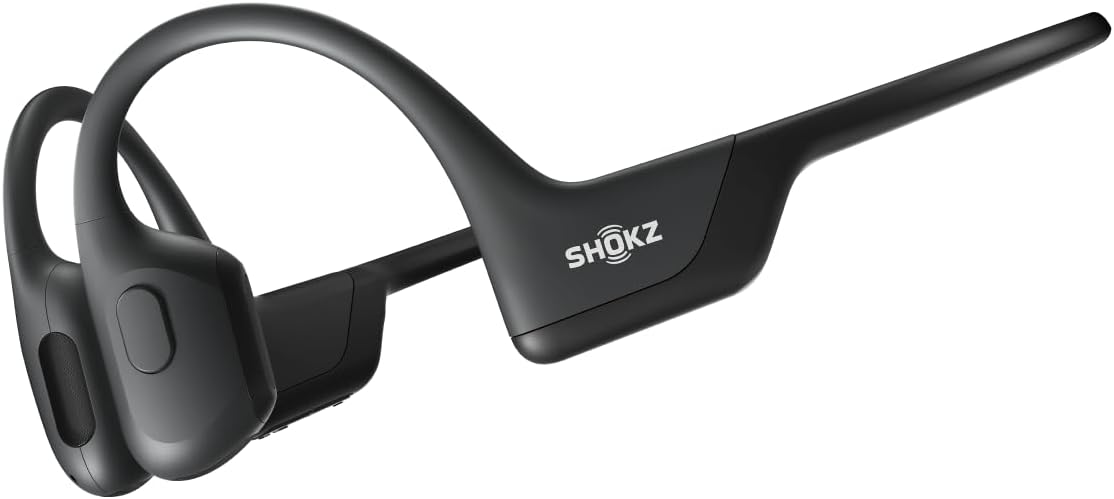
The SHOKZ OpenRun Pro 2 is a premium sport-focused headset with a 4.3 rating and an unusually ambitious audio design. It combines bone conduction for clear highs with air conduction for deeper bass, making it a strong option for runners and gym users who want more body than a typical minimal open-ear model. Its dual-driver approach is the most immediately distinctive feature in this roundup.
We may earn a commission when you buy through this link, at no additional cost to you.
The included EQ modes add practical control through the Shokz App. Classic Mode offers a purer bone-conduction presentation, while Volume Boost Mode is intended to make audio easier to hear in noisy environments. The weight-optimized unibody frame uses a Ni-Ti alloy memory wire and ergonomic ear hooks, giving the headset a stable profile during running, cycling, and gym sessions.
Call handling is another major strength. Two wind-resistant microphones and AI noise reduction reportedly filter 96.5% of background noise, including wind at speeds of up to 15 miles per hour. That makes the model more attractive for outdoor calls, although its open-ear design cannot completely isolate a speaker from nearby traffic, voices, or construction noise.
This is the strongest all-around recommendation for active users who value audio depth, app-based controls, and dependable outdoor communication. Buyers focused only on swimming should choose a dedicated waterproof model, while those who prioritize a lower weight or a more basic design may find other options in this list more suitable.
Unlike listeners that rely exclusively on bone conduction, this headset combines bone-conducted highs with air-conducted bass. The result is intended to provide a fuller 3D presentation while preserving the open-ear benefit.
The dual microphones, wind resistance, and AI noise reduction make the OpenRun Pro 2 especially relevant to runners and cyclists who take calls along busy routes.
We may earn a commission when you buy through this link, at no additional cost to you.
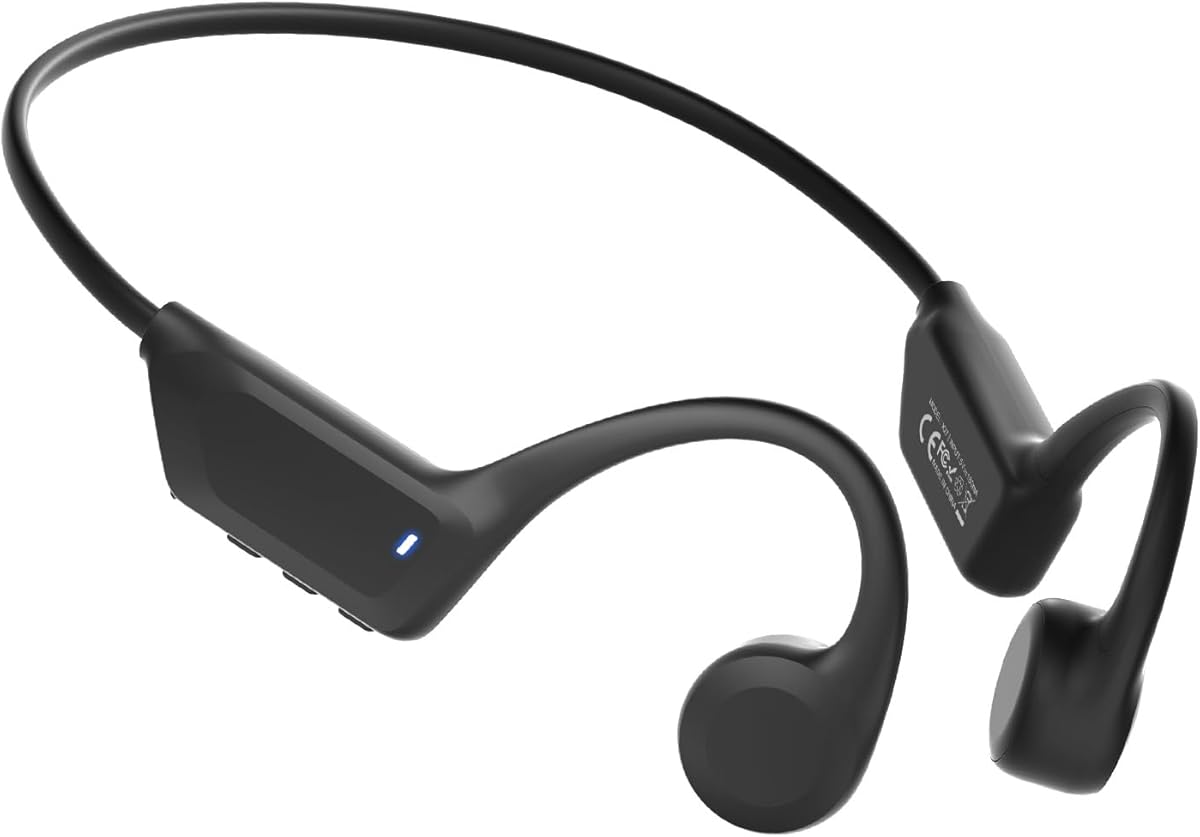
This generic-titled open-ear sports headset earns a 4.8 rating and presents a compelling balance of weight, durability, and battery performance. Its supplied description mentions Bluetooth 6.0 in the title but Bluetooth 5.4 in the feature list, so buyers should treat the exact wireless specification as something to verify on the final product page.
We may earn a commission when you buy through this link, at no additional cost to you.
At 29 grams, the headset uses a flexible titanium frame designed to resist deformation while remaining comfortable during running, hiking, cycling, and gym sessions. Its IP55 rating makes it suitable for sweat and ordinary weather exposure, while the open-ear construction keeps the ear canals unobstructed and allows listeners to remain aware of nearby activity.
The battery specification also deserves attention. The product title advertises eight hours of playtime, while the feature description states up to ten hours and mentions safe, stable Type-C fast charging. Regardless of the exact variation, the included charging method supports convenient use between workouts and commutes.
This is a persuasive budget recommendation for people who want a light, flexible, water-resistant headset without moving to the premium end of the category. It may be less compelling for buyers who depend on sophisticated companion apps, premium bass, or highly advanced microphone processing.
The titanium frame balances flexibility and durability at a claimed 29 grams. That makes the model a practical option for runners and cyclists who need stability without the bulk of traditional over-ear headphones.
An IP55 rating supports use during sweaty workouts and light outdoor exposure. It does not indicate the same level of submersion protection offered by dedicated swimming models.
We may earn a commission when you buy through this link, at no additional cost to you.
The PSIER Bone Conduction Headphones combine a 4.7 rating with a notably light 23-gram frame, making them one of the smallest options here. Their appeal extends beyond weight: the specifications highlight Bluetooth 6.0, 60 millisecond latency, a 33-foot range, 13 mm drivers, and a 90 dB sensitivity rating.
We may earn a commission when you buy through this link, at no additional cost to you.
An adjustable strap helps accommodate different head sizes, while the memory-titanium frame is designed to remain stable during running, cycling, and hiking. The open-ear format leaves the ears free, and the upgraded acoustic sealing is claimed to reduce sound leakage by as much as 50% without creating the sealed sensation of conventional earbuds.
The Boean App adds features not commonly seen in this category, including AI-generated songs, adjustable EQ profiles, and real-time translation across 91 languages. Battery life is advertised at up to 10 hours at 50% volume, with a full charge taking about two hours and standby time listed at 200 hours.
This model is ideal for tech-oriented runners who value low weight, modern connectivity, and app features. Its IPX5 rating supports sweat and rain resistance but explicitly excludes underwater use, and the smart features will matter less to buyers who prefer a simpler setup.
The 23-gram frame reduces bulk, while the stated 60 millisecond latency and stable Bluetooth 6.0 connection target responsive everyday use. These features are particularly appealing during active sessions.
The Boean App expands the headset's utility with AI song creation, sound profiles, and translation. Buyers who enjoy adjusting settings may find this functionality more valuable than a basic physical-control design.
We may earn a commission when you buy through this link, at no additional cost to you.
The X7 MAX is the only model in this roundup explicitly designed for swimming, with a 4.8 rating and IPX8 protection. Its supplied specifications allow full submersion in water up to five meters deep for as long as 2.5 hours, making it the clear choice for swimmers within this group.
We may earn a commission when you buy through this link, at no additional cost to you.
Unlike most open-ear headsets, it switches between Bluetooth 6.0 and an internal MP3 mode. The double-click control described in the product data makes the transition straightforward, while internal storage can hold up to 2,000 songs. Bluetooth cannot operate underwater, so MP3 mode is required for pool or open-water listening.
Soft silicone pads and an adjustable strap help keep the device secure and comfortable. Outside the water, upgraded 14.2 mm dynamic drivers provide the claimed rich bass and crisp highs, and an enhanced call system is included for communication.
Choose the X7 MAX when swimming is central to your use case. For ordinary runs and commutes, the trade-off is less useful because many competing models offer more advanced app features or a lighter everyday frame.
IPX8 protection and stated submersion limits distinguish this model from sweat-resistant sport headsets. The product is intended for swimming, diving, and water workouts rather than simple weather exposure.
Internal storage with MP3 mode allows phone-free playback. Music must first be transferred from a computer through the magnetic charging cable, which adds a small setup step but removes signal concerns underwater.
We may earn a commission when you buy through this link, at no additional cost to you.
The SHOKZ OpenRun Air 2 weighs 26.4 grams and is described as more than 9% smaller than the preceding generation. Its ergonomic ear hooks use memory alloy to remain secure through running, jumping, and turning, while the open-ear format preserves environmental awareness.
We may earn a commission when you buy through this link, at no additional cost to you.
PremiumPitch 3.0 provides the stated balanced sound, and the Shokz App adds four preset and two custom EQ profiles. Its 10-hour battery can be extended by two hours of calls, music, or podcast playback after a five-minute quick charge.
The IP67 rating means it can handle sweat, rain, and rinsing, but the product information explicitly excludes swimming and underwater activities. The dual noise-cancelling microphone layout and AI noise reduction support clearer calls, while physical buttons allow direct control of calls, volume, and tracks.
The OpenRun Air 2 is a good fit for runners who prioritize low weight, a secure fit, and tactile controls. Its supplied 4.1 rating is the lowest among the Shokz models here, so listeners who prioritize richer bass should consider the OpenRun Pro 2.
At 26.4 grams, the OpenRun Air 2 emphasizes low weight. Contoured memory-alloy hooks are designed to preserve that lightness while preventing the headset from shifting during active movement.
Six available EQ profiles offer more sound customization than a basic headset, while five minutes of charging can add two hours of use. Both features improve convenience for long training days.
We may earn a commission when you buy through this link, at no additional cost to you.
The orange SHOKZ OpenRun Pro 2 provides the same core feature set as the black version, including dual drivers, 12 hours of combined playback, app-based EQ, and advanced outdoor microphone processing. Its 4.3 rating aligns with the other OpenRun Pro 2 listing, and it appeals to buyers who prefer a brighter color option.
We may earn a commission when you buy through this link, at no additional cost to you.
Bone conduction supplies the clear high frequencies while air conduction contributes deeper bass, producing a fuller presentation than a purely bone-conducted design. The unibody frame, Ni-Ti alloy memory wire, and ergonomic hooks are designed for stability during gym sessions, running, and cycling.
Two wind-resistant microphones and AI noise reduction reportedly filter 96.5% of background noise, including wind at speeds up to 15 miles per hour. Classic Mode provides a purer bone-conduction sound, while Volume Boost Mode helps users hear audio more clearly in noisy settings.
Choose this version for the same performance and feature benefits as the black model if orange better matches your style. The main trade-off is that the colorful finish does not itself improve sound or comfort, so buyers should prioritize fit and specifications over appearance alone.
Dual bone- and air-conduction drivers support a fuller sound than a conventional single-path open-ear headset. The system is aimed at listeners who want stronger bass without inserting earbuds.
Wind-resistant microphones and AI background-noise reduction make this model useful for calls during outdoor movement. It cannot eliminate every environmental sound, but it targets common sources of interference.
We may earn a commission when you buy through this link, at no additional cost to you.
Raycon's open-ear model has a 3.9 rating and focuses on a lightweight, adjustable design for runs, walks, commutes, and gym sessions. Its most notable specification is an IP68 rating, offering strong protection against sweat, rain, and spills.
We may earn a commission when you buy through this link, at no additional cost to you.
The frame uses an ergonomic, wraparound approach intended to reduce ear fatigue and remain comfortable during extended wear. Users can slide the open-ear earpieces closer for stronger perceived volume or move them away to hear more of their surroundings, giving the fit a practical dual purpose.
Charging uses a specially designed magnetic cable that maintains a moisture-resistant seal. A built-in microphone supports calls, and the open-ear design leaves the listener connected to traffic and conversations around them.
The product information specifically notes that the headphones perform best in everyday active environments rather than high-noise settings. That honest limitation, combined with the lowest rating in the group, makes this more of a situational recommendation for listeners who prioritize weather resistance and adjustable awareness.
The IP68 specification is especially notable for a model intended for runs and commuting. Magnetic charging also helps preserve a reliable, moisture-resistant connection during repeated use.
Moving the earpieces closer increases perceived volume, while repositioning them farther away improves environmental awareness. This makes the fit adjustment useful beyond simple comfort.
We may earn a commission when you buy through this link, at no additional cost to you.
This open-ear headset carries a 4.8 rating and positions itself as a waterproof, ultra-light option for running, cycling, workouts, and hiking. Bluetooth 6.0, a stable connection, and long advertised battery life form the core of the product proposition.
We may earn a commission when you buy through this link, at no additional cost to you.
Its most obvious appeal is the combination of modern connectivity and an open-ear form factor. The design allows users to keep their ears unobstructed while receiving audio, making it suitable for routes where hearing traffic, other athletes, or companions matters.
The supplied product data is limited compared with the other listings, so the exact playback time, weight, ingress-protection rating, charging method, and microphone capabilities are not clearly detailed. Those details should be confirmed on the retail listing before purchase, particularly for anyone comparing it with precisely specified alternatives.
This is a worthwhile shortlist candidate because of its rating and modern feature positioning, but the limited information makes it harder to evaluate confidently than the more thoroughly documented models. Buyers should confirm fit, water-resistance certification, and actual endurance if those details drive their decision.
Bluetooth 6.0 is the headline connection feature. Its presence suggests a current wireless platform, although real-world range and stability should be confirmed from current product information and user feedback.
The listing does not provide specific battery hours, frame weight, or an exact IP rating. Those omissions make direct technical comparisons more difficult and warrant careful attention before checkout.
We may earn a commission when you buy through this link, at no additional cost to you.
The CXK headset offers a 4.4 rating and combines Bluetooth 6.0, a 28-gram titanium frame, and up to 10 hours of playback. It is designed for active users who want open-ear comfort with modern wireless functions and a microphone for calls.
We may earn a commission when you buy through this link, at no additional cost to you.
Its flexible wraparound frame is intended to remain stable during running, workouts, commuting, and everyday activities. The open structure reduces ear pressure, while IPX7 protection covers sweat and rain. Magnetic charging supplies a full recharge in about two hours, although the headset is not intended for swimming.
The included Boean App expands functionality with AI-generated songs, adjustable EQ, enhanced bass, balanced vocal profiles, and genre-specific settings. These options are particularly useful for listeners who want to personalize their soundtrack rather than rely entirely on fixed presets.
This is a balanced recommendation for daily workouts and commuting. It lacks the X7 MAX's underwater capability and the OpenRun Pro 2's hybrid driver design, but it compensates with lightweight construction, modern connectivity, and a generous set of app-based features.
Bluetooth 6.0 supports fast pairing and stable connectivity, while the Boean App adds sound personalization and creative tools. Together they make the headset feel more advanced than a basic sports model.
IPX7 protection is appropriate for sweat, rain, and active daily use. The product should not be taken into the water, so swimmers should select a model with explicit underwater protection.
We may earn a commission when you buy through this link, at no additional cost to you.
The original SHOKZ OpenRun Pro has a 4.5 rating and a well-established feature set centered on secure sport fit, open-ear comfort, and fuller bass. It includes a Shokz headband and uses a lightweight wraparound titanium frame designed to remain stable during intense training.
We may earn a commission when you buy through this link, at no additional cost to you.
Its ninth-generation bone-conduction technology and TurboPitch system are intended to produce clear sound, powerful volume, and rich bass without placing earbuds in the ear canal. The open-ear design also keeps users aware of their environment, supporting connection and situational awareness during workouts.
Battery life reaches 10 continuous hours for music, calls, and podcasts, and a five-minute quick charge supplies up to 1.5 hours of use. Magnetic induction charging and compatibility with Android, iOS, Windows, and other Bluetooth-enabled devices add everyday convenience.
This remains a solid all-purpose sport recommendation for runners and gym users who value the included headband and established Shokz design. Newer OpenRun Pro 2 models add a hybrid dual-driver system and more sophisticated noise processing, while this older generation sticks to a more traditional bone-conduction approach.
The wraparound titanium frame and included headband create a secure alternative to earbuds. This design is useful for listeners who dislike the insertion pressure of conventional canal headphones.
TurboPitch audio emphasizes rich bass, while the 10-hour rating and quick-charge function target long workout days. The design remains focused on sport use rather than aquatic activity.
We may earn a commission when you buy through this link, at no additional cost to you.
The right bone conduction headphones depend on where you will use them, how you communicate, and whether your priority is lightness, endurance, sound depth, app-based control, or underwater operation. These factors help narrow the category before you focus on individual models.
Water-resistance ratings are essential for runners, cyclists, swimmers, and anyone who sweats heavily or works near water. Models with IP55 or IPX7 protection are generally positioned for sweat, rain, and splashes, but they should not be assumed suitable for immersion. The X7 MAX stands apart with IPX8 protection and stated underwater use up to five meters for as long as 2.5 hours. Its MP3 mode is necessary underwater because Bluetooth does not function there. For dry exercise, commute, or everyday wear, a lower protection level may be sufficient.
Match the rating to the activity, not just the word waterproof. A product suitable for a sweaty run is not automatically suitable for a pool.
Bone conduction avoids the canal pressure associated with many earbuds, but a poorly positioned headset can still become uncomfortable. Frame weight matters over long sessions: options range from 23 grams for the PSIER model to 29 grams for the budget-focused generic headset. Flexible titanium frames and contoured ear hooks can improve stability, while an adjustable strap helps accommodate different head sizes. Buyers with glasses should also check whether the hooks and forehead band create pressure points.
Prioritize a secure, lightweight frame rather than choosing only by weight. Fit affects both comfort and bass consistency.
Playback duration determines how easily a headset fits into a training schedule. Stated runtimes range from eight hours for the X7 MAX and the headline of the budget model to 12 hours of combined playback for the OpenRun Pro 2. Some products also offer quick charging, including two added hours after five minutes on the SHOKZ OpenRun Air 2 and up to 1.5 hours on the original OpenRun Pro. Charging style matters too: magnetic cables are common, while the budget model uses Type-C and the X7 MAX uses magnetic charging.
Treat advertised battery figures as maximum or usage-dependent claims. Volume, features, and call use can affect real-world runtime.
Bone conduction generally provides clear mids and highs but can lack the deep low-end associated with conventional earbuds. The SHOKZ OpenRun Pro 2 addresses this by combining bone conduction with air conduction for stronger bass. The PSIER and X7 MAX models emphasize larger drivers, while several others promise balanced stereo sound. EQ support can refine the result: the OpenRun Pro 2 offers dedicated Classic and Volume Boost modes, the OpenRun Air 2 supports preset and custom profiles, and the PSIER and CXK models offer additional app-based settings.
Choose richer hybrid audio for music-focused workouts, but do not expect an open-ear design to isolate noise like a sealed headset.
Call performance depends on microphone placement, wind resistance, and noise-processing technology. The OpenRun Pro 2 uses two wind-resistant microphones and AI noise reduction claimed to filter 96.5% of background noise, including wind at speeds up to 15 miles per hour. The OpenRun Air 2 also combines a dual noise-cancelling microphone layout with AI processing. Other models include built-in microphones and noise-cancelling claims but provide fewer details. Open-ear listening remains exposed to nearby voices, traffic, and wind, so call quality should be evaluated in the environments where you actually take calls.
For frequent calls in noisy settings, prioritize documented microphone features over general audio claims.
Modern Bluetooth specifications can improve pairing speed, stability, and responsiveness. The PSIER and CXK models feature Bluetooth 6.0, while the PSIER lists 60 millisecond latency and a 33-foot range. The budget open-ear model mentions both Bluetooth 6.0 and Bluetooth 5.4, making its final specification worth confirming. App support can add meaningful value: the Shokz App supplies EQ modes, while Boean-compatible models add AI song creation, sound profiles, and translation across 91 languages.
Bluetooth generation and software features should complement your priorities rather than replace basic fit and water-resistance checks.
Physical buttons can be valuable when the phone is inaccessible during a run or swim. The SHOKZ OpenRun Air 2 provides buttons for calls, volume, and track changes, while the X7 MAX uses a double-click action to move between Bluetooth and MP3 modes. Touch controls may look cleaner but can create accidental inputs or be harder to operate with wet or gloved hands. Charging connectors should also be considered: magnetic attachments are convenient for repeated docking, while Type-C offers broader compatibility with existing cables.
Choose controls that remain easy to identify and use in your most common setting.
No single headset is optimized for every situation. Swimmers should begin with the X7 MAX because of its underwater protection and phone-free MP3 storage. Runners may prefer the PSIER for its 23-gram frame, the OpenRun Air 2 for lightweight physical controls, or the Raycon for adjustable awareness. Music-focused users may favor the OpenRun Pro 2's dual-driver system. Daily commuters can value the original OpenRun Pro's 10-hour runtime, included headband, and established open-ear design.
List your primary activity first, then rank comfort, sound, calls, and battery as secondary considerations.
Begin by fitting the frame before inserting any music. Place the transducers on the cheekbones just in front of the ears, allowing the ear hooks to sit behind the ears without excessive pressure. If a model includes an adjustable strap, use it to stabilize the headset during running or cycling. Adjust the position until the audio feels balanced and nearby voices remain easy to hear. For models with adjustable earpieces, moving them closer can increase perceived volume, while moving them away increases environmental awareness.
Pair the headphones using the manufacturer's instructions, then confirm the connection through the companion app when one is available. Apply EQ or listening modes before starting a workout, and learn the physical controls while you can still see the screen. The X7 MAX requires a double-click to switch between Bluetooth and MP3 mode, and MP3 mode must be selected before entering the water. The original OpenRun Pro supports a five-minute quick-charge routine, while the OpenRun Air 2 offers a similar rapid top-up for active use.
Care for the headset according to its exact water-resistance rating. For models that tolerate sweat and rain, wipe the transducers and charging contacts dry after exercise and avoid charging while moisture remains. The X7 MAX can be submerged according to its stated IPX8 limits, but MP3 mode is required underwater. Do not swim with models that only specify IP55, IP67, or IPX7. Keep the charging port clean, store the frame away from extreme heat, and inspect the ear hooks and band for damage after frequent outdoor use.
Bone conduction headphones are often better for running, cycling, and situations where environmental awareness matters. They leave the ears open and avoid the deep insertion pressure associated with many earbuds. Regular earbuds may still provide stronger bass and better passive noise isolation, so the better choice depends on whether openness or isolation is your priority.
They can work with glasses, but the fit depends on the frame design. Ear hooks and forehead bands may press against spectacle arms or shift when you move. Models with a flexible frame and adjustable strap are more adaptable, so buyers who wear glasses should test the headset and carefully reposition the transducers during fitting.
Only select a model explicitly rated for underwater use. The X7 MAX in this guide has IPX8 protection and stated submersion capability up to five meters for 2.5 hours. It must use MP3 mode underwater because Bluetooth does not function in water. Models rated IP55, IP67, or IPX7 should be treated as sweat- and rain-resistant rather than swim-ready.
Open-ear headphones rely partly on environmental sound reaching the ear, so traffic, wind, construction, and conversations can mask the music. Some models offer a Volume Boost mode or app EQ to improve perceived loudness. Increasing playback volume can help, but listeners should remain alert around traffic and other hazards.
They often reduce the pressure associated with sealed earbuds and can be comfortable for long sessions because the ear canals remain open. The overall weight, hook pressure, fit, and volume still matter. Choosing a lightweight model, positioning the transducers correctly, and taking breaks can help prevent discomfort around the ears or jaw.
Traditional bone conduction models can sound bass-light compared with in-ear or over-ear headphones. The SHOKZ OpenRun Pro 2 uses bone conduction for clear highs and air conduction for deeper bass, making it a notable choice for fuller sound. EQ controls can also improve perceived bass, although no open-ear model perfectly reproduces the sealed bass response of conventional headphones.
Open-ear designs generally leak some sound because the transducers still vibrate against the frame and the drivers are not sealed in the ear canal. Models with enclosed acoustic cavities claim reduced leakage, while the PSIER model states a reduction of up to 50%. Lowering the volume remains the most reliable way to limit what others hear.
Start with your primary activity, then check water resistance, frame weight, fit, battery life, call features, and sound preferences. Swimmers need explicit underwater protection, while runners should prioritize a secure hook or strap and sweat resistance. Buyers who spend time on calls should examine microphone and wind-noise features rather than relying only on general audio claims.
The SHOKZ OpenRun Pro 2 is the most compelling all-around choice for active listeners because its dual-driver system, dedicated EQ modes, 12-hour combined playback, and advanced microphone processing cover a broad range of needs. The generic-titled open-ear sports headset stands out as the budget selection, while the PSIER model offers a premium combination of a 23-gram frame, low-latency Bluetooth, and extensive app features.
Prioritize the requirement that cannot be compromised. Swimmers should focus on explicit underwater protection and MP3 storage, runners and cyclists need a stable lightweight fit, and frequent phone users should seek documented wind and noise reduction. Battery life, EQ, charging method, and smart features should then be ranked according to how often they will matter in daily use.
Ratings, specifications, availability, and pricing can change over time, so readers should check the current product listing before ordering. Confirm the exact Bluetooth version, water-resistance level, fit, and included accessories, and compare the final purchase with the intended activity rather than selecting solely by a model name or rating.