
2 Pack 2.5mm to RCA Adapter Cable
4.2Editor score
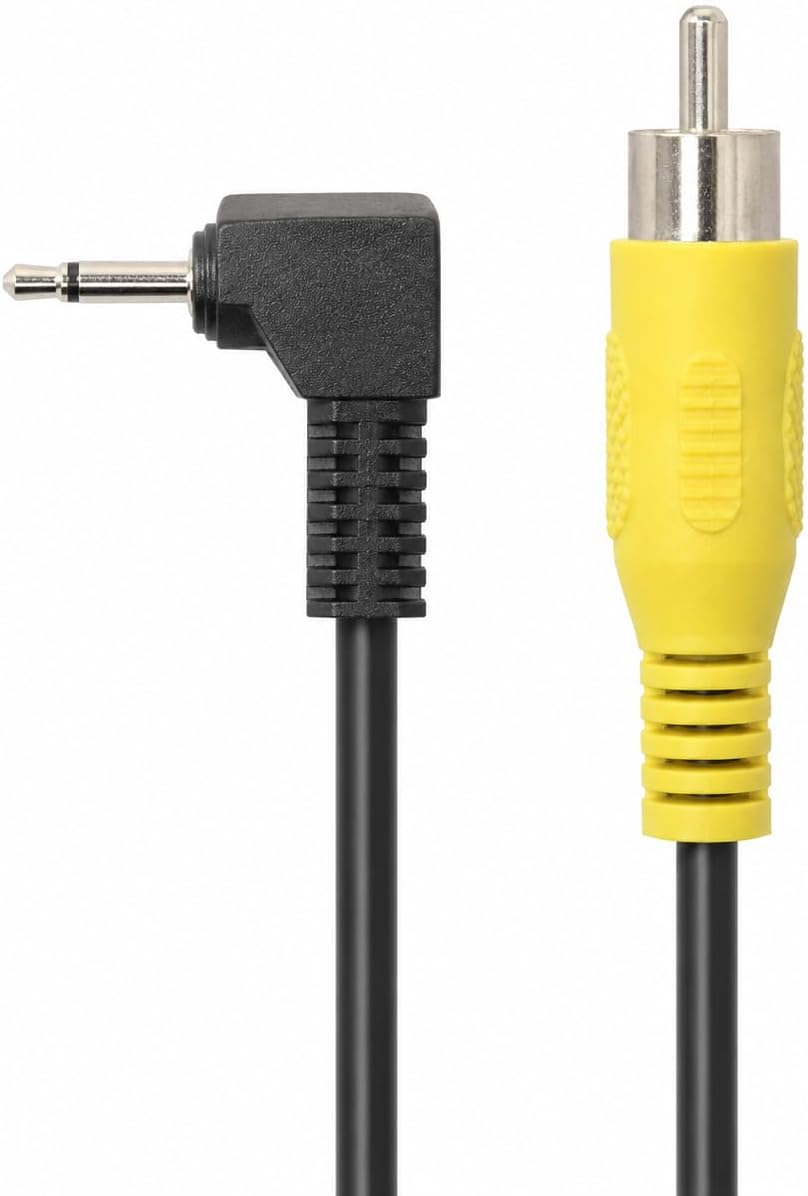
Right-angle 2.5mm TRRS plug
RCA female video connector
20cm two-pack configuration
Our 2.5mm to RCA Adapter guide compares 10 options by connector type, pin layout, signal support, cable, and compatibility for car cameras, GPS, and AV systems.
A 2.5mm to RCA adapter connects small-form-factor audio or video equipment to a more familiar RCA input. The right choice depends on connector gender, pin configuration, signal type, cable length, and whether the device needs a video-only connection, stereo audio, or a reverse-camera trigger.
The products in this guide were compared by examining their stated connectors, supported devices, cable designs, pin arrangements, shielding, and installation details. The list covers short right-angle adapters for dashboard cameras, longer audio cords, backup-camera cables, and multi-RCA conversion cables for several AV devices.
Each review explains the most useful application, technical strengths, and practical limitations. The leading selections include a flexible video cable, a feature-rich three-RCA cable, and a compact right-angle option, while every entry highlights compatibility details that should be checked before installation.
4.2Editor score

4.0Editor score

4.5Editor score
The table below compares all ten adapters by connector arrangement, signal purpose, length, and principal use case, making it easier to distinguish video-only camera cables from stereo-audio and full audio-video conversion options.



The MEIRIYFA 2.5mm to RCA Video Cable is a compact, four-pole 2.5mm TRRS male-to-RCA female cable designed for video interface conversion. It holds a 4.0 rating and includes two cables, making it particularly useful for vehicles with more than one dashboard camera, navigation screen, or backup camera. Its 90-degree plug is designed around the limited clearance commonly found around a vehicle display.
We may earn a commission when you buy through this link, at no additional cost to you.
Shielding is one of its main selling points because it is intended to reduce radio-frequency interference, electromagnetic interference, and excess noise. The cable also uses an oxygen-free copper core to support conductivity and signal clarity. Its four-pole 2.5mm plug follows the stated arrangement in which pin 3 carries video plus, pin 4 is ground or video minus, and pin 2 is the reverse trigger connection.
The trade-off is that the short 7.7-inch length and RCA female end are intended for nearby equipment rather than long-distance installation. The listing also describes the trigger as connecting to a reverse-light or turn-signal positive supply, which means proper routing and electrical understanding matter. The included two-pack is useful, although it does not make the cable suitable for every audio task.
This is a sensible choice for a compact backup-camera or dash-cam installation where a right-angle connector, video signal, and reverse-trigger connection are all needed. Verify the four-pole arrangement and the availability of the appropriate trigger connection before buying.
The 90-degree plug helps the RCA connection sit closer to a vehicle display, reducing strain where space behind the screen is limited. That makes the short cable easier to route around a mounting bracket.
Receiving two cables allows separate connections for devices such as a GPS unit, dashboard recorder, or backup camera. It also provides a spare for later installation changes.
We may earn a commission when you buy through this link, at no additional cost to you.
The 2.5mm Male Mono to 1 RCA Male Audio Adapter Cable Cord is the simplest audio-focused option in this guide. It has a 5.0 rating, uses a 2.5mm male plug on one end and an RCA male plug on the other, and measures five feet. Those characteristics make it a straightforward choice for linking a compatible 2.5mm mono audio source to an RCA-equipped sound system.
We may earn a commission when you buy through this link, at no additional cost to you.
The five-foot run is considerably longer than the short camera cables elsewhere in the list. That extra reach can help when the source and receiver are not directly beside one another, such as when connecting a portable audio device to a home theater system, preamplifier, or other RCA input. Its simple male-to-male arrangement also makes the connection direction easy to understand.
This product is explicitly mono and provides only one RCA connection, so it is not the appropriate choice for conventional left-and-right stereo audio or composite video. Compatibility also depends on whether the source uses a two-pole 2.5mm configuration. Users should not infer that the four-pole TRRS and OMTP arrangements used by several other products apply here.
Choose this cable for a known mono-audio installation where a longer cable is useful. It is particularly attractive for uncomplicated hookups that do not need video, stereo channel separation, a reverse trigger, or a right-angle plug.
The five-foot length provides more placement flexibility than the compact 7.7-inch and 8-inch alternatives. It can reduce the need for extension leads when connecting separated audio components.
A single RCA connection keeps the setup simple for compatible mono sources. It should not be selected when the equipment requires separate left and right audio channels.
We may earn a commission when you buy through this link, at no additional cost to you.
The 2.5mm 4-Pole to 3 RCA AUX AV Cable is the most functionally complete adapter in the guide. Its 4.5 rating reflects a versatile package that provides red and white RCA connections for left and right audio, a yellow RCA connection for video, and a five-foot PVC cable. A 3.5mm male-to-2.5mm female adapter is also included for compatible early-generation headphones and stereo sources.
We may earn a commission when you buy through this link, at no additional cost to you.
Unlike the video-only camera cables, this product is designed to connect a broader range of portable devices with home entertainment equipment. Its stated applications include smartphones, MP3 players, and tablets connecting to televisions, AV receivers, amplifiers, and projectors. The included converter expands the range of 2.5mm sources that can be accommodated.
Compatibility is the critical limitation. The supplied information says the 3.5mm-to-2.5mm adapter is only suitable for OMTP-standard earphones and is not compatible with CTIA-standard earphones. The 2.5mm four-pole plug is also identified as OMTP, with the stated order of left channel, right channel, video, and ground. Users should confirm this arrangement before purchasing.
This is the best choice for a full audio-video connection rather than a single video signal. It offers the broadest stated device support in the guide, but the strict OMTP requirement makes careful connector verification essential.
The three-RCA arrangement separates left audio, right audio, and video. This allows a compatible 2.5mm source to connect to conventional AV inputs without relying on separate adapters for each signal.
The bundled 3.5mm male-to-2.5mm female cable makes the package more versatile for eligible OMTP earphones and stereo speaker plugs. It does not make CTIA-equipped earphones compatible.
We may earn a commission when you buy through this link, at no additional cost to you.
This backup camera video cable uses a 2.5mm female connector on one side and a 3.5mm male plug on the other, with a stated length of 10.23 inches. It has a 4.1 rating and is designed around a rear-view camera connection, especially a CVBS/NTSC camera used with a compatible portable CarPlay or vehicle display.
We may earn a commission when you buy through this link, at no additional cost to you.
The red lead is identified as the reversing trigger line, allowing the display to switch to the camera image when reverse is selected when the wiring is connected correctly. The adapter therefore handles both the video connection and the trigger function in one relatively short assembly. Its stated vehicle focus makes it distinct from the home-theater-oriented three-RCA cable.
Format compatibility is restrictive. The information specifically says it is only compatible with CVBS/NTSC cameras and directs AHD users toward a different four-pin backup-camera option. Connecting it to an AHD camera or a display expecting another signal format may produce no picture, an unstable image, or a warning on the receiving device.
Buy this adapter when both the camera and receiving screen are known to support CVBS/NTSC and a 2.5mm female vehicle input. It is a focused camera-install solution rather than a general-purpose stereo-audio cable.
The red reversing trigger line is intended to connect with reverse-light or turn-signal power so the display can show the camera image automatically. Correct trigger routing is as important as the video connection.
The adapter is limited to CVBS/NTSC equipment. An AHD camera requires a matching four-pin cable rather than this 2.5mm-to-3.5mm arrangement.
We may earn a commission when you buy through this link, at no additional cost to you.
The Seadream 2.5mm to RCA Cable is a two-pack of 8-inch, 90-degree adapters for connecting a GPS tablet with a 2.5mm AV input to an RCA backup camera. Its 3.7 rating is the lowest among the rated products, but the design directly addresses a clear need: compact routing around a vehicle display with limited space behind the mounting hardware.
We may earn a commission when you buy through this link, at no additional cost to you.
The cable uses a four-pole 2.5mm TRRS male plug and an RCA female plug. Shielding is included to reduce radio-frequency and electromagnetic interference as well as excess noise. The stated construction also includes a copper core for conductivity, while the plug housing is described as resistant to corrosion, oxidation, cracking, and high temperatures.
Compared with the MEIRIYFA and other two-pack right-angle options, this listing offers less detail about the exact reverse-trigger wiring. It identifies the product as suitable for GPS tablets, DVRs, and backup cameras, but users who depend on automatic reverse switching should confirm that their equipment and wiring method are compatible before installation.
This product is best for users who prioritize a short right-angle cable, a two-pack, and basic shielded video routing. The lower listed rating warrants checking recent customer feedback, while the compact construction makes it appealing for space-constrained dashboard installations.
The right-angle 2.5mm plug is intended to sit neatly against a GPS tablet or display. That geometry can reduce cable bending and makes a short connection easier to route in a confined mounting area.
Shielding helps minimize interference in a vehicle environment, while two cables allow simultaneous use with separate displays or provide a spare. The copper core is also intended to support stable conductivity.
We may earn a commission when you buy through this link, at no additional cost to you.
The Gold-Plated AV-In Cable is a well-rounded video adapter for GPS tablets, dash cams, DVRs, RV tablets, and backup cameras. It has a 4.0 rating and combines a 2.5mm TRRS male plug with an RCA female plug. Its 12-inch length offers a little more routing freedom than the shortest dashboard-camera options.
We may earn a commission when you buy through this link, at no additional cost to you.
Gold-plated connectors are specified for signal clarity, and the cable includes shielding intended to reduce radio-frequency interference, electromagnetic interference, and excess noise. Molded strain-relief connectors add grip and durability, while treaded surfaces are intended to make repeated plugging and unplugging easier.
The important limitation is that it is a video-only connection. It does not provide power to a camera, so a separate power arrangement remains necessary. Buyers should also avoid treating the RCA female end as a general-purpose stereo-audio solution unless the device documentation confirms the required pin assignment.
This cable is a strong general recommendation for a standard 2.5mm AV-in installation. It balances corrosion-resistant connector treatment, shielding, strain relief, and moderate length without adding a reverse trigger or multi-channel output.
Gold plating is combined with molded strain relief to support dependable contact and easier handling. These details are especially useful for a cable that may be unplugged during device changes or maintenance.
The cable transfers video from a compatible RCA-equipped device to a 2.5mm AV input. It does not carry camera power, so installation planning must include an appropriate separate supply.
We may earn a commission when you buy through this link, at no additional cost to you.
This 2.5mm male-to-3.5mm female adapter is designed for backup cameras connected to portable CarPlay screens, portable car stereos, and other equipment with AUX or AV-in ports. It has a 4.3 rating, the second-highest rating in the guide, and includes a red reverse-trigger cable for automatic image switching.
We may earn a commission when you buy through this link, at no additional cost to you.
The red trigger lead is intended to connect to reverse-light power or turn-signal power. When correctly connected, the vehicle display can change to the camera image when reverse is engaged. The cable also uses a copper core for conductivity and an interface described as resistant to corrosion, oxidation, and high temperatures.
The main limitation is again camera format. The stated information says it is compatible only with CVBS cameras, so buyers should verify the camera system before installing it. Its 2.5mm male and 3.5mm female arrangement also makes it a different path from the more common 2.5mm male-to-RCA female cable.
This is a good choice for a CVBS camera installation that requires both a camera signal and an automatic reverse trigger. It is less suitable for general AV conversion, stereo audio, or AHD systems.
The integrated red lead combines the trigger function with the camera cable, reducing the number of separate connections. Proper connection to reverse-light or turn-signal power enables automatic display switching.
The 3.5mm female end is designed for compatible portable CarPlay screens, stereos, and AV-in equipment. Users should confirm the port and camera format before installation.
We may earn a commission when you buy through this link, at no additional cost to you.
The Right-Angle AV-In Cable is a two-pack of 0.2-meter, 90-degree 2.5mm TRRS male-to-RCA female cables for GPS tablets, dash cams, DVRs, and reversing cameras. It has a 4.0 rating and gives particularly detailed information about the four-pin layout, including the stated roles of pins 3 and 4.
We may earn a commission when you buy through this link, at no additional cost to you.
Pin 3 is described as carrying the positive video signal, while pin 4 serves as ground or the negative video connection. The listing says the four-pin design can work with both three-pin and two-pin connectors, which may broaden device compatibility, but users should still compare the pin assignment with the documentation for both ends.
Construction features include gold-plated connectors, high-purity copper conductors, an insulated PVC outer sheath, and shielding intended to minimize radio-frequency and electromagnetic interference. The right-angle geometry is also presented as reducing repeated bending and cable damage in tight vehicle spaces.
This product is a strong option when pin documentation matters, the installation is tight, and two cables are useful. It should be selected primarily for compatible video equipment rather than assumed to handle conventional stereo audio or camera power.
The documented four-pin arrangement helps installers understand the video-positive and ground positions. Confirming both source and display pinouts is still essential before connecting the cable.
The 90-degree plug changes the direction of the cable close to the equipment port. In a confined dashboard space, this can reduce sharp bends and improve routing around a mount.
We may earn a commission when you buy through this link, at no additional cost to you.
The 2 Pack 2.5mm to RCA Adapter Cable offers a practical combination of compact size, right-angle connectors, and two included cables. It has a 4.2 rating and is intended to connect a GPS tablet with a 2.5mm AUX AV-in port to an RCA backup camera, with further stated use for navigation units, DVRs, and dashboard cameras.
We may earn a commission when you buy through this link, at no additional cost to you.
Each cable measures 7.9 inches, or 20 centimeters, and uses a 90-degree 2.5mm TRRS male plug with an RCA female plug. Gold-plated connectors are specified for signal clarity, while shielding is designed to reduce radio-frequency interference, electromagnetic interference, and excess noise in a vehicle environment.
The main limitation is reach. A 7.9-inch cable works well when the display and source are close, but it cannot span a larger dashboard or equipment gap. The product is also centered on AV-input conversion, so buyers should not assume it provides stereo separation or any necessary camera power.
This is an appealing practical choice for one or two nearby devices because the two-pack provides a spare or allows a second installation. It combines the most common right-angle configuration with shielding and plated contacts.
Two cables make it easier to connect separate devices or retain a spare for troubleshooting. This is useful when a vehicle has both a navigation screen and a camera-related display.
Shielding and gold-plated contacts support the product's core purpose as a short video-input cable. They do not expand its range or provide power beyond what the connected devices require.
We may earn a commission when you buy through this link, at no additional cost to you.
The Gold-Plated AV-In Cord is a 0.3-meter cable with a 2.5mm TRRS male plug and an RCA female connector. It is presented as a converter for AV-in equipment, with gold-plated contacts as its most prominent stated construction feature. The product data does not provide a numerical rating for this listing.
We may earn a commission when you buy through this link, at no additional cost to you.
The connector arrangement matches the common pattern used by several short camera and navigation cables in this guide. Its 0.3-meter length offers slightly more routing room than the 20-centimeter alternatives while remaining compact enough for installation behind or beside a vehicle display.
The limited supplied description is the biggest practical drawback. It does not state a specific device list, detailed pin mapping, trigger arrangement, shielding specification, or whether the cable is sold as a single unit. As a result, its suitability for a particular navigation or camera system cannot be confirmed from the available information alone.
This cord is best considered a general compact option for a device with a matching 2.5mm AV-in arrangement and RCA-equipped source. Buyers who need a known reverse trigger, a defined pin map, or a specific vehicle compatibility should choose one of the more thoroughly documented products instead.
Gold-plated contacts are the main stated feature and are intended to support dependable signal transfer. As with any short adapter, connector fit and correct pin compatibility remain the decisive installation concerns.
The 0.3-meter cable is sized for nearby equipment and provides a little more length than the shortest dashboard options. It remains a compact solution rather than a long extension cable.
We may earn a commission when you buy through this link, at no additional cost to you.
The correct adapter depends primarily on the devices being connected, the signal each port expects, and the physical space where the cable must fit. Review connector gender, pin layout, signal type, camera format, trigger requirements, and cable length before making a selection.
A 2.5mm to RCA cable can terminate in a male or female connector on either side, and that detail determines how it fits the equipment. A 2.5mm male plug normally enters a female device port, while an RCA female jack accepts a male connector from a camera or source. Other products reverse those genders, such as the backup-camera cable with a 2.5mm female end and a 3.5mm male plug. Confirm the shape of both ports instead of relying only on the cable's abbreviated title.
Four-pole 2.5mm TRRS cables are not automatically interchangeable. In the four-pole arrangements described in this guide, pins may carry video, ground, audio channels, or a reverse trigger, and the order can vary. The MEIRIYFA and Right-Angle AV-In Cable descriptions identify video-positive and ground functions, while the three-RCA cable follows an OMTP sequence of left, right, video, and ground. Compare the manufacturer documentation for both source and display rather than inferring the layout from the physical size.
Video-only, mono audio, stereo audio, and combined audio-video are different jobs. Most short right-angle products are intended to carry video into an RCA female connection, while the five-foot mono cable sends one channel to one RCA plug. The three-RCA option separates red and white audio from yellow video and also includes a 3.5mm source adapter. Selecting by signal type prevents a physically fitting cable from becoming an unusable connection.
OMTP and CTIA describe different 3.5mm headset pin arrangements, and an adapter that fits physically may still produce incorrect channel routing. The three-RCA cable is explicitly limited to OMTP earphones and states that CTIA earphones are not compatible. For equipment that depends on microphone and headphone detection, check the device standard and the adapter's documentation before purchasing.
Backup-camera compatibility is not determined by connector size alone. Two products in this guide are limited to CVBS cameras, and the Backup Camera RCA Adapter additionally specifies NTSC and notes that AHD cameras need a different four-pin solution. Check the camera output format, the display input format, and any adapter or conversion requirements described by both manufacturers. An electrically compatible plug can still fail when the signal standards differ.
A trigger connection tells a compatible display when to show the rear camera image. Several camera cables include a red lead for connection to reverse-light or turn-signal power, but the exact wiring method varies by installation. It is important to distinguish a trigger lead from a video conductor or power supply. Follow the instructions for the display and vehicle wiring, and avoid assuming that every RCA adapter includes automatic switching.
Length should follow the physical distance between the devices, but shorter is not always better. Seven- to eight-inch cables work well behind a dashboard display, while a five-foot cable is more useful for separated home-audio equipment. A right-angle plug can also reduce stress by changing cable direction immediately at the port. Choose a length that reaches without leaving a large loop trapped in a hinge, mount, or trim panel.
Shielding helps reduce radio-frequency and electromagnetic interference, which is valuable around vehicle electronics and longer AV runs. Several products also specify copper conductors, gold-plated contacts, molded strain relief, or corrosion-resistant housings. These details can improve durability and signal consistency, but they cannot correct an incompatible pin map or mismatched camera format. Treat them as construction advantages after the electrical and physical requirements are satisfied.
Begin by identifying the source and receiving ports. Match the connector gender, confirm the 2.5mm pin arrangement, and make sure both devices support the same signal type. For a camera, verify that the camera and display use a compatible format such as CVBS/NTSC and determine whether a reverse trigger is required.
With power disconnected, connect the 2.5mm plug to the appropriate AV-in or auxiliary port and attach the RCA end to the source. Route the cable without sharp folds, especially around a screen mount or vehicle hinge. If automatic reverse switching is required, connect the trigger lead to the reverse-light or turn-signal power arrangement specified for the display, taking care to follow the wiring instructions exactly.
Power the devices and test the image or audio. If there is no signal, check the connector seating, pin compatibility, camera format, and trigger arrangement before changing cables. During use, keep connectors dry, avoid hanging weight from the 2.5mm plug, and disconnect it by gripping the connector rather than pulling the cable.
No. The connector must match, and the camera and display must also support compatible signal formats. Several options in this guide are limited to CVBS cameras, and one specifies NTSC compatibility while directing AHD users toward a different four-pin solution. Check the camera output, display input, and pin layout before installation.
A four-pole TRRS plug can carry multiple functions, such as video, ground, trigger, or separate audio channels, depending on the device. A mono audio cable generally uses fewer conductors and is intended only for one audio signal. Because a TRRS plug can physically fit some connections, the internal pin map must be checked before use.
The 2.5mm 4-Pole to 3 RCA cable is the option specifically designed for combined audio and video. It provides separate red and white RCA connections for left and right channels, a yellow connection for video, and an included 3.5mm adapter. Its OMTP limitation means it is not suitable for CTIA-standard earphones.
A right-angle plug changes the direction of the cable directly at the port, making it easier to fit behind a tightly mounted GPS tablet, dash camera, or display. It can also reduce repeated bending where clearance is limited. The connector still needs to support the correct pin arrangement and signal.
A trigger wire is needed when the display should switch to the camera automatically when reverse is selected. It generally connects to the vehicle's reverse-light or turn-signal power arrangement according to the display instructions. If the display has a manual camera input, the trigger may not be necessary, but the vehicle and screen wiring should still be checked.
The Gold-Plated AV-In Cable is explicitly described as a video-only connection that does not provide camera power. A separate, appropriate power supply is required for a camera that is not already powered elsewhere. Video adapters should not be treated as general-purpose power cables.
The supplied product information specifically says the included 3.5mm-to-2.5mm adapter in the three-RCA package is not compatible with CTIA-standard earphones. The connectors may fit physically, but the channel and microphone assignments can differ, so the standard must match.
A short 7.7-inch to 12-inch cable is usually sufficient when the RCA source and 2.5mm display are close together, especially behind a dashboard mount. A longer cable is more appropriate for separated home-audio equipment.
The correct choice is the shortest length that reaches without a sharp bend or strained connector. Right-angle plugs can make a short cable easier to route in tight spaces.
The Gold-Plated AV-In Cable is the strongest general pick for a compact vehicle video connection because it combines a documented connector arrangement, shielding, strain relief, and a moderate 12-inch length. The two-pack right-angle option is a practical alternative for nearby devices, while the three-RCA cable leads the group for users who need stereo audio and video from one compatible source.
Compatibility should always come before construction features. Confirm connector gender, the 2.5mm pin map, signal type, camera format, and reverse-trigger requirements before selecting a model. A well-made cable cannot compensate for a mismatched OMTP and CTIA arrangement or for connecting an AHD camera to a CVBS-only input.
Product listings and availability can change, so check the current product page, current specifications, and recent customer feedback before purchasing. Also verify the dimensions, included accessories, and compatibility statements again, particularly when a product description contains limited technical information.