
Bambu Lab A1
4.7Editor score
Beginner-friendly automatic setup
10,000 mm/s² acceleration
AMS lite multi-color compatibility
Quiet operation and flow compensation
Our expert guide compares the best 3D printer for cosplay props, covering build volume, speed, materials, multi-color features, automation, and workflow.
A 3D printer for cosplay props must balance large printable volumes, surface quality, material flexibility, and dependable automation. Props can range from lightweight wrist armor and decorative trim to full-size helmets, weapons, backpacks, and wearable structures, so printer capability matters as much as the model itself.
The ten printers in this guide were compared using their published specifications, including build volume, maximum speed, supported materials, tool changing, color capability, calibration, filtration, and monitoring features. The list covers accessible FDM machines as well as enclosed, multi-material systems aimed at ambitious cosplay builds.
Each review explains how a printer can support a specific prop workflow while identifying practical limitations and included-accessory requirements. Ratings and product details reflect the supplied information, while prices and promotional terms can change, so confirm current listings before purchasing.
4.7Editor score
4.7Editor score

4.0Editor score
This side-by-side comparison highlights the major capabilities that distinguish each FDM printer, from accessible single-color machines to enclosed systems with multi-material tool changers and expanded build volumes.



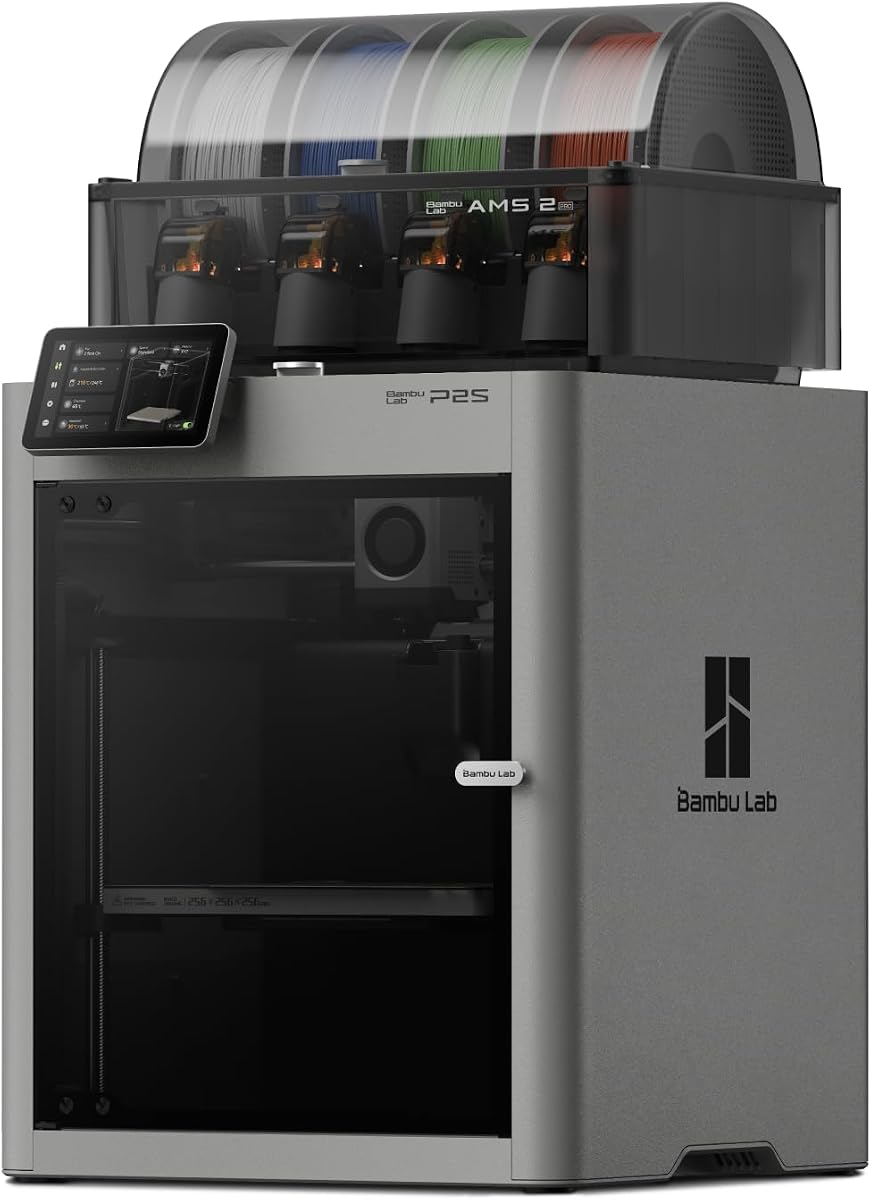
The Bambu Lab P2S Combo earns a 4.7 rating and stands out as a versatile all-rounder for cosplay fabrication. It combines 600 mm/s printing with a bundled AMS 2 Pro, allowing makers to produce colorful armor trim, emblems, segmented accessories, and decorative details without manually changing filament.
We may earn a commission when you buy through this link, at no additional cost to you.
Its standout capabilities extend beyond speed. The PMSM servo extruder and active flow-rate compensation support consistent layers, while AI failure detection, automatic calibration, quick-swap nozzles, and a reported 15-minute setup reduce the barrier for newer users. Adaptive airflow balances cool air for overhangs with a heated chamber reaching 50°C for demanding materials.
The enclosed structure is also useful when the workshop contains cosplay competition materials, paints, adhesives, and other items that should not settle on a print. The carbon filter contributes to a cleaner airflow environment, and access to MakerWorld, Bambu Studio, and Bambu Handy supports a broad design-to-print workflow.
This is the strongest general recommendation for makers who want one printer to cover accessories, wearable components, scenery, and multi-color objects. It may not offer the SV08 MAX's cubic build volume or the Creator 5 Pro's four independent toolheads, but its combination of speed, automation, color capability, and approachable workflow is exceptionally well rounded.
The AMS 2 Pro is the key differentiator for cosplay makers who want skin-tone accents, team colors, metallic-looking sections, or contrasting armor details. Its integrated filament drying helps keep materials ready for consistent extrusion, while seamless automated changes reduce interruptions during long accessory prints.
A high print speed is especially valuable when producing batches of clips, bracers, buckles, trims, or repeated costume components. Automatic bed leveling, failure detection, and active flow compensation help reduce operator intervention, allowing a workshop to produce parts more consistently.
We may earn a commission when you buy through this link, at no additional cost to you.
The Bambu Lab A1 carries a 4.7 rating and serves as an approachable entry point for cosplay makers who are comfortable with PLA and PETG. It is particularly suitable for smaller props, costume accessories, display pieces, masks, and iterative designs that need frequent adjustment.
We may earn a commission when you buy through this link, at no additional cost to you.
Its 10,000 mm/s² acceleration helps shorten print times, while automatic calibration handles Z-offset, bed leveling, and other core setup routines. Active flow-rate compensation works from sensor readings to maintain extrusion accuracy, a useful feature when moving between differently sized models or changing between common filaments.
The A1 also prioritizes convenience with a user-friendly interface, simplified touchscreen, one-clip quick-swap nozzle, and active motor noise canceling. Multi-color printing is available through AMS lite, although that accessory is not included with the standard configuration. An open design means it is not the strongest choice for engineering polymers that benefit from chamber control.
For a first serious cosplay printer, the A1 is persuasive because it removes many recurring setup obstacles while preserving useful speed and optional color. Makers should select the AMS lite if layered color is central to the project and choose the Combo version when that capability is required from the outset.
Automatic calibration and straightforward controls make the A1 approachable for someone building a first armor piece or costume accessory. Its active motor noise canceling also supports use in a shared room, where a loud printer could interfere with work or conversation.
AMS lite compatibility gives beginners a path toward multicolor trim without committing to a full-size enclosed multi-tool system. It is a practical middle ground for makers who want limited color changes in helmets, emblems, shoes, or gauntlets.
We may earn a commission when you buy through this link, at no additional cost to you.
The Sovol SV08 MAX has a 4.0 rating and is built for makers who want to print cosplay props at genuinely large scale. Its 500×500×500 mm build space can accommodate oversized collectibles, full-size prototypes, scenery sections, or multiple substantial parts in a single build.
We may earn a commission when you buy through this link, at no additional cost to you.
CoreXY kinematics minimize moving mass and optimize motion paths, supporting up to 700 mm/s and 40,000 mm/s² acceleration. That performance can be valuable for long, complex shells such as large helmet visors, backpacks, chest armor, or theatrical weapons. A 50 mm³/s high-flow nozzle supports demanding extrusion, while additional 0.6 and 0.8 mm nozzles are available separately.
Automatic features reduce setup friction. The eddy current scanning system performs contactless bed leveling, and pressure-sensing touch points assist with calibration. A built-in 1280×720 HD camera supports remote monitoring, time-lapse recording, and integration with Obico for cloud control and failure detection.
The principal caveat is that a heated chamber is not included. The printer supports a reserved interface for that upgrade, which may matter for ABS, ASA, PA, PC, or carbon-filled materials requiring greater environmental control. Even so, its exceptional volume and speed make it a compelling premium choice for large or batched cosplay fabrication.
The 500 mm cubed workspace reduces the need to divide a helmet, scenery element, or oversized weapon into many printed sections. That can save assembly time and reduce visible seams when the design is divided carefully and the resulting parts fit together cleanly.
CoreXY motion and high acceleration are valuable for large shells with many short segments. Faster travel and printing can improve workshop throughput when the material profile, cooling, and model geometry are properly tuned.
We may earn a commission when you buy through this link, at no additional cost to you.
The FLASHFORGE Creator 5 Pro earns a 4.3 rating and is aimed at cosplay builders who need different colors or materials within one object. Four preloaded, preheated toolheads can switch between filaments without the repeated loading, unloading, and purging associated with simpler color-changing systems.
We may earn a commission when you buy through this link, at no additional cost to you.
Its seven-second FlashSwap mechanism preserves material readiness across the tool set. The printer supports PLA, PETG, TPU, ABS, PVA, ASA, PA-CF, PET-CF, PAHT-CF, PPA-CF, PPS-CF, HIPS, and other materials, giving makers the freedom to combine rigid shells, flexible trim, dissolvable supports, and reinforced components.
A 320°C hardened nozzle and actively heated chamber rated to 65°C support layer bonding and warping control. The adaptive airflow system introduces cool air where needed for overhangs and bridges, while Flow Dynamics Calibration detects and compensates for changes caused by nozzle wear, residue, or filament moisture.
This is a strong choice for experienced makers producing integrated props that benefit from multiple colors or mechanical properties. The complexity and hardware investment exceed what a casual hobbyist needs, but for a dedicated cosplay workshop it can eliminate repeated manual intervention and improve material flexibility.
Preloaded toolheads are especially useful for props combining a rigid body, flexible edge, contrasting detail, and dissolvable support. The design avoids repeatedly cycling one nozzle through multiple materials, which can reduce waste and shorten color transitions.
The 65°C chamber and hardened nozzle create a more stable environment for materials that benefit from heat. This is relevant for ABS, ASA, and reinforced filament used in large wearable structures that must remain dimensionally consistent.
We may earn a commission when you buy through this link, at no additional cost to you.
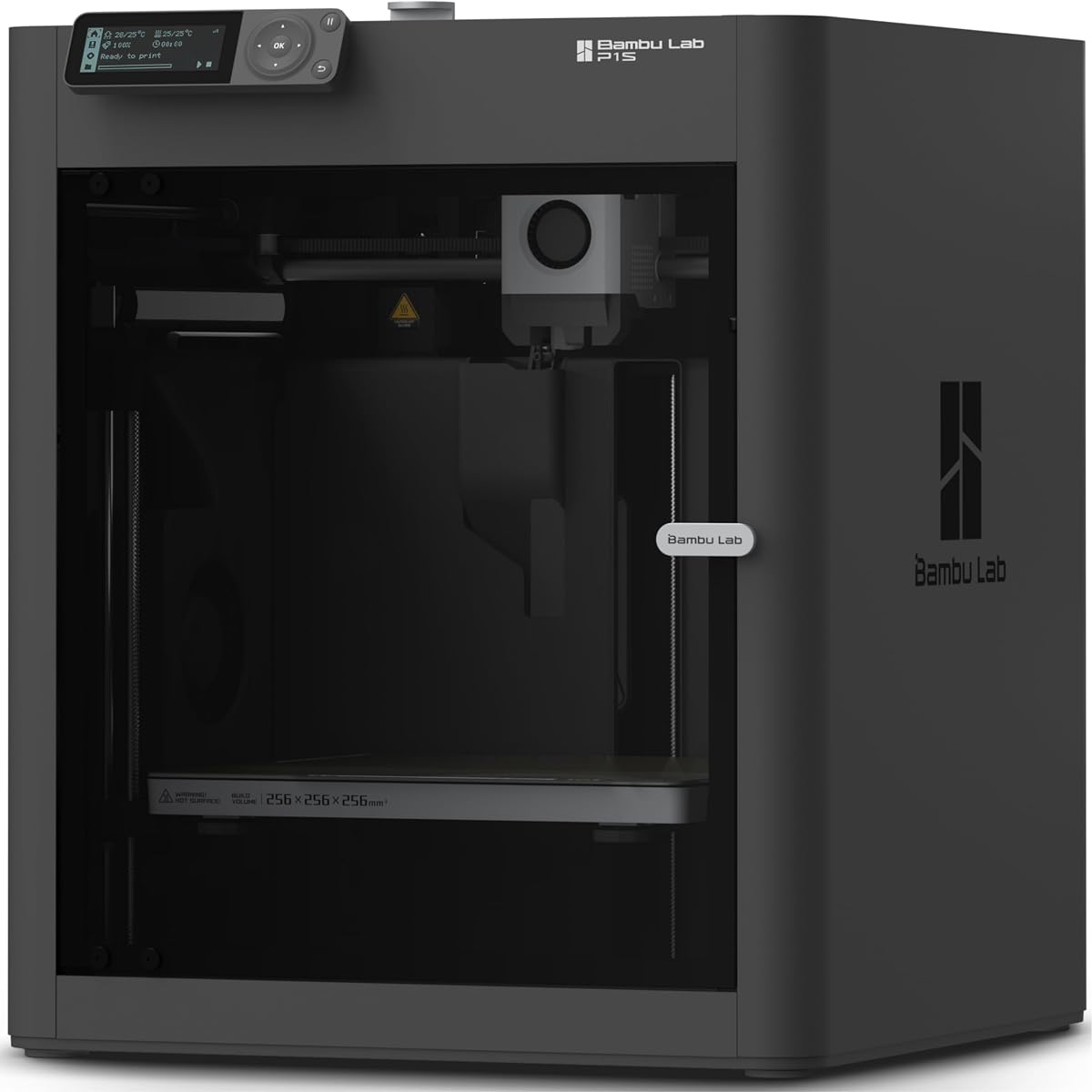
The Bambu Lab P1S holds a 4.5 rating and delivers a strong combination of speed, enclosure design, and established multi-color compatibility. It is a practical option for cosplay makers producing enclosed armor, helmet components, props, and accessories in a range of common materials.
We may earn a commission when you buy through this link, at no additional cost to you.
The machine supports speeds of up to 500 mm/s and acceleration of 20,000 mm/s², making it efficient for batches of costume pieces. Automatic bed leveling lowers setup demands, and the reported 15-minute setup helps new owners move quickly from unboxing to a print.
Its enclosure improves performance with advanced filaments by limiting airflow and helping maintain a more consistent thermal environment. PLA, PETG, TPU, PVA, PET ABS, and ASA are listed as ideal or supported, while PA and PC are described as capable. Carbon- or glass-fiber-reinforced polymers are not recommended.
The P1S is a well-rounded choice for someone who wants more consistency than an open-frame printer but does not need four toolheads. Multi-color printing requires a Bambu Lab AMS, so consider the total package and desired number of colors before deciding.
The fully enclosed body helps limit sudden temperature changes that can affect ABS, ASA, and other advanced materials. It also creates a more controlled workspace for repeated production of wearable shells and dimensional costume pieces.
High acceleration and speed are useful when producing repeated clips, bracers, armor edging, or costume hardware. Proper filament settings and adequate cooling remain important because speed alone does not guarantee clean results on every geometry.
We may earn a commission when you buy through this link, at no additional cost to you.
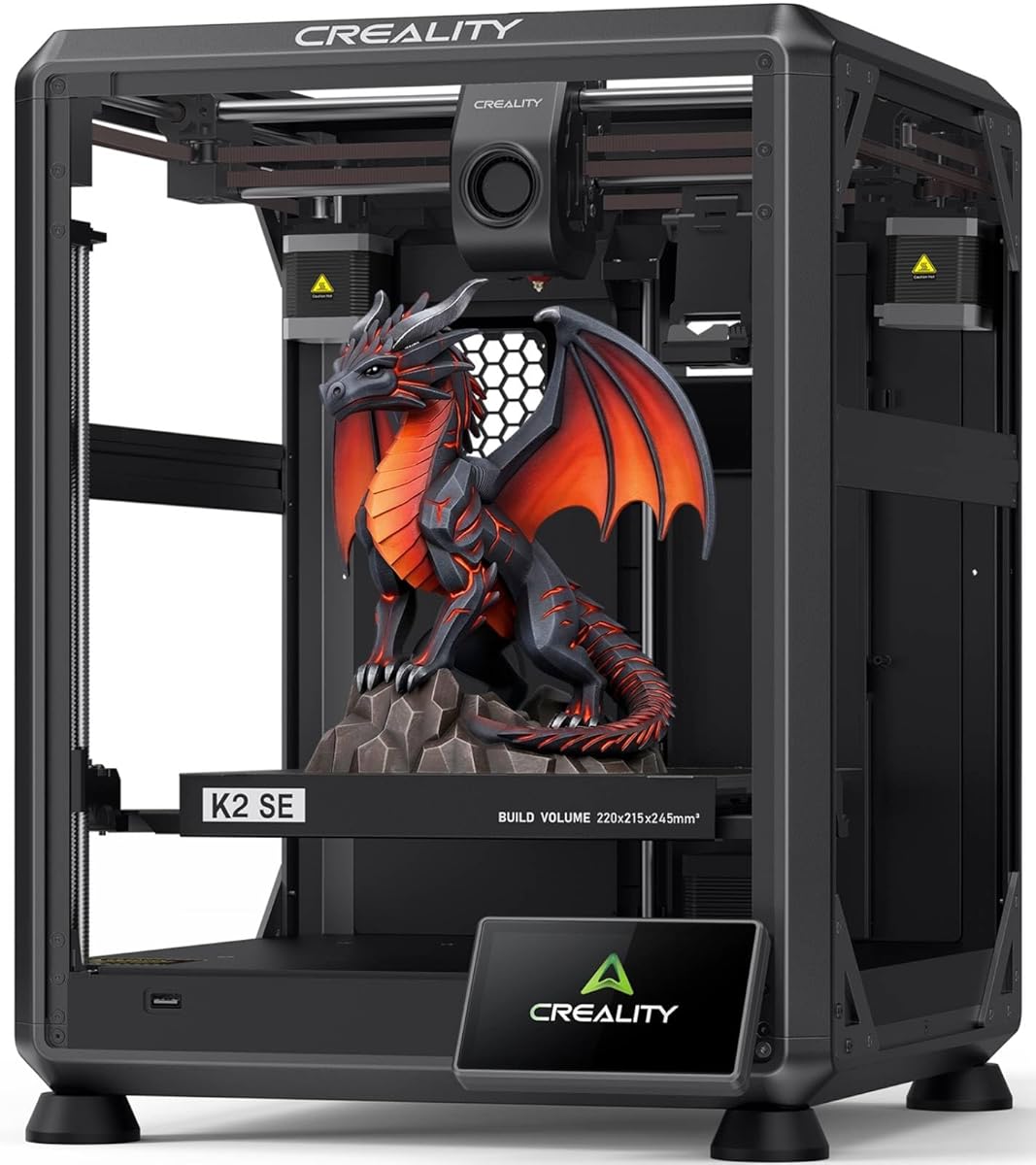
The Creality K2 SE has a 3.8 rating and combines a rigid metal frame, fast motion, direct-drive extrusion, and affordable entry into the Creality ecosystem. Its 220×215×245 mm build volume suits many wearable components, compact helmets, props, and multi-part batches.
We may earn a commission when you buy through this link, at no additional cost to you.
A lightweight CoreXY system supports speeds up to 500 mm/s and acceleration of 20,000 mm/s². Vibration sensing and input shaping reduce ringing, while the die-cast aluminum alloy frame, corner gussets, and dual-side crossbeams limit flex during rapid movement.
The direct-drive system includes hardened steel dual-drive gears, filament run-out detection, and a quick-swap nozzle. Automatic bed leveling, fan calibration, and first-time tuning are guided through the touchscreen, while Creality Print supplies more than 40 filament presets and multi-color slicing when paired with a CFS.
For makers building smaller props or accessories, this is a versatile platform with room to grow. Its main limitations are the separately sold CFS and a smaller build volume than several premium competitors. Even without the CFS, it remains useful for detailed single-color costume pieces and functional prototypes.
Frame rigidity helps maintain dimensional accuracy when the toolhead moves rapidly around detailed geometry. This is useful for buckles, clips, small armor plates, and other costume pieces where visible deformation or inconsistent holes could complicate assembly.
CFS compatibility gives the K2 SE a path toward automatic filament identification, relay switching, and multi-color workflows. Makers can begin with one color and expand later if their designs increasingly depend on contrasting sections.
We may earn a commission when you buy through this link, at no additional cost to you.
The FLASHFORGE Adventurer 5M Pro carries a 4.0 rating and is a well-rounded enclosed FDM printer for detailed cosplay parts. Its all-metal CoreXY frame supports 600 mm/s speeds and 20,000 mm/s² acceleration, while integrated vibration compensation helps maintain smooth surfaces.
We may earn a commission when you buy through this link, at no additional cost to you.
The tool-free quick-release nozzle changes in about three seconds and accepts 0.25, 0.4, 0.6, and 0.8 mm sizes. One-click full auto-leveling and a 280°C nozzle broaden practical material options. The 110°C heated bed supports ABS, ASA, PETG-CF, PLA, and PETG applications.
For shared workspaces, the enclosed chamber and operation below 50 dB are useful features. A dual filtration system helps manage fumes and particles, while the built-in camera provides remote monitoring, time-lapse creation, status alerts, filament detection, and power-loss recovery through Flash Studio.
This printer is a good fit for makers who want fast, quiet production of wearable accessories and detailed decorative components. It does not provide the four-toolhead workflow or actively heated chamber of the Creator 5 Pro, so it is better suited to single-material projects or simpler color changes.
The quiet enclosure makes long print sessions easier to manage around conversations, editing work, or convention preparation. Low-noise motion control is especially helpful when the printer must operate in an occupied room rather than a dedicated workshop.
The tool-free nozzle mechanism allows makers to switch between fine detail and faster production layers without complex disassembly. Multiple supported nozzle sizes make the machine adaptable to jewelry-scale trim, costume accessories, and thicker structural sections.
We may earn a commission when you buy through this link, at no additional cost to you.
The FLASHFORGE Creator 5 Pro 4-Toolhead has a 4.0 rating and targets makers who want multi-color output without the repeated purging associated with conventional material-changing systems. Its four independent toolheads swap nozzles in seven seconds, allowing separate colors or materials to remain loaded and ready.
We may earn a commission when you buy through this link, at no additional cost to you.
A fully enclosed CoreXY frame supports up to 600 mm/s, while the 65°C active chamber helps prevent warping in ABS, PC, and PA. The rigid integrated architecture combines linear rails and high-torque belts to reduce vibration and maintain accuracy during rapid movement.
Filtration is another important feature for an indoor cosplay workshop. Dual HEPA13 and activated carbon filtration work with continuous airflow to capture particles and fumes. Automated toolhead offset calibration, vibration compensation, dynamic flow calibration, an HD chamber camera, and Flash Studio remote controls support monitoring and process control.
This system is well suited to elaborate props containing several colors, rigid and flexible sections, or multiple material types. Its complexity and size may not suit a small workspace, but the near-zero waste tool-switching approach can be highly efficient for a dedicated maker who frequently prints integrated costumes and accessories.
Independent toolheads allow a prop to combine up to several distinct colors or materials in one print. This is valuable for emblems, layered armor, patterned accessories, and objects that would otherwise require extensive manual recoloring after printing.
The heated chamber, rigid motion system, and dynamic calibration features support repeatable production. These characteristics are useful when printing multiple costume parts that need to share dimensions, fit together, and maintain a consistent finish.
We may earn a commission when you buy through this link, at no additional cost to you.
The FLASHFORGE Creator 5 Pro Industrial has a 4.4 rating and presents a capable production platform for makers who need multiple materials, stable heat, and fast motion. Its 256 mm³ build volume provides room for substantial costume pieces while remaining more compact than the very largest large-format systems.
We may earn a commission when you buy through this link, at no additional cost to you.
Four independent extruders switch colors by swapping nozzles without forcing material through a shared nozzle. That separation supports clean color boundaries and prevents the cross-contamination associated with systems that retract and reload one extruder. The 65°C chamber supports ABS, ASA, PC, and Nylon, helping control warping and improve interlayer adhesion.
At 600 mm/s and 30,000 mm/s² acceleration, the printer is designed for throughput. Its all-metal CoreXY architecture, automatic platform leveling, toolhead offset calibration, and flexible PEI magnetic build plate support repeatable work and part removal.
A sensor suite monitors filament run-out and tangles, while a four-inch full-color touchscreen provides straightforward control. Tool-less nozzle changes reportedly take under 30 seconds. This model is best for experienced builders producing elaborate, multi-material props rather than those seeking the simplest first printer.
Four independent extruders allow rigid and flexible materials, or several colors, to coexist within one model. That makes the system useful for padded costume sections, reinforced armor, colored emblems, and props requiring material properties that differ by location.
Maintaining the chamber at up to 65°C is particularly useful for large ABS, ASA, PC, and Nylon parts. Stable heat can reduce corner lift and improve consistency across substantial wearable structures and repeated production runs.
We may earn a commission when you buy through this link, at no additional cost to you.
The Creality K2 Pro Combo has a 3.9 rating and arrives as a complete multi-color package with the CFS Smart Filament System. It supports up to 16 colors and multi-material output, making it attractive for layered costume pieces, decorative panels, and props requiring clean color separation.
We may earn a commission when you buy through this link, at no additional cost to you.
The 300×300×300 mm build volume is generous for cosplay work and allows several small components to be batched together. Speeds of up to 600 mm/s and 20,000 mm/s² acceleration are supported by FOC step-servo motors and linear rails, helping reduce the time spent on accessories and repeated parts.
Active chamber heating reaches 60°C to reduce corner warping with materials such as ASA and PPA. The supplied hardened steel nozzle supports abrasive composites including PPA-CF and PET-CF. Two cameras add useful monitoring: a chamber camera handles failure detection, build-plate checks, and time-lapse filming, while a nozzle camera performs real-time flow tuning and blockage detection.
The package includes the printer, CFS, a 500 g Hyper RFID filament spool, and a hardened steel nozzle. It is a broad, ready-to-build solution, but its advanced features create a steeper learning curve. Makers should assess chamber footprint and whether their designs genuinely require up to 16 colors.
The included CFS removes the need to add a separate multi-color system later. Up to 16 colors are useful for costumes with contrasting panels, logos, patterned armor, or intentionally mismatched themed details.
The chamber and nozzle cameras add visibility and automated checks during extended jobs. Flow-rate optimization, pressure-advance tuning, waste-chute blockage detection, and build-plate monitoring can help identify problems without requiring constant physical supervision.
We may earn a commission when you buy through this link, at no additional cost to you.
The right printer depends on the scale, geometry, material, and finish of the props you plan to make. Build volume, motion stability, heat control, color switching, and ease of use should be matched to the most demanding part of your costume rather than to a single headline specification.
Begin with the largest single object you expect to print, including room needed for supports, brim, or raft. A compact printer may handle gloves, buckles, bracers, and ornamentation beautifully, but a full helmet shell, large backpack, broad shoulder armor, or oversized weapon can require a 300 mm cubed or 500 mm cubed workspace.
Choose a volume that fits the intended prop with practical clearance. Building oversized sections separately can save money, but it introduces seams and assembly work, so scale should be considered alongside the design's shape and structural needs.
Cosplay props often appear at close range, so layer consistency, ringing, and visible surface texture matter. CoreXY designs, input shaping, vibration compensation, rigid frames, and stable linear motion can help produce cleaner vertical walls and fine details during fast movement.
Prioritize repeatable first layers and smooth outer surfaces. A high maximum speed is useful, but the machine should also provide effective compensation and enough control to keep the actual print speed appropriate for the geometry and material.
PLA is useful for lightweight display pieces and quick prototypes, while PETG, ABS, ASA, TPU, PA, and PC can provide greater toughness, heat resistance, or flexibility. An enclosed chamber helps stabilize some engineering polymers, and an actively heated chamber improves control with demanding materials.
Match the nozzle and chamber temperature to the filament. Reinforced composites also require a hardened nozzle, effective filtration, and careful drying. Never assume that listed compatibility means every branded filament will behave identically.
A basic multi-color system uses one nozzle and retracts, purges, and reloads filament between colors. It can work well for limited changes, while several independent toolheads preserve multiple colors or materials without repeated purging. Independent systems usually offer faster transitions and less cross-contamination.
Decide whether color is essential or merely decorative. If a costume has only one or two simple transitions, a CFS or AMS-style system may be sufficient. Complex patterns, flexible inserts, and rigid-and-soft assemblies benefit more from multiple independent toolheads.
Automatic bed leveling, flow calibration, first-layer checks, and failure detection reduce setup demands and failed prints. These features are especially helpful for new makers, students, or workshops producing many separate costume components where repeatability matters.
Look for a workflow that matches your experience. A guided setup is valuable if you are learning FDM printing, while advanced tuning options may be more useful for an experienced maker who wants to optimize profiles, cooling, retraction, and motion settings.
Enclosed printers can contain fumes and particles, but enclosure alone is not a complete ventilation solution. HEPA13 and activated carbon filtration can help manage particulates and odors, while a separate exhaust or ventilated work area remains sensible for frequent high-temperature or engineering-material printing.
Consider the printer's noise level if it shares a room with people. Quiet motion control and a sealed chamber can improve comfort, while filament drying and enclosed storage help reduce moisture-related print defects.
A built-in camera and remote interface let makers monitor long prints without interrupting them. AI cameras can add plate checks, nozzle inspection, flow tuning, and failure detection, while notifications help identify issues such as run-out or tangles.
Power-loss recovery is another useful feature for lengthy helmet or armor prints. Confirm that remote access is compatible with the software and network setup you intend to use, especially if the printer will run unattended in a workshop.
Begin by selecting or scaling a model to the printer's build volume, then inspect it for unsupported ledges, trapped powder, intersecting shells, and areas that may require supports. Choose a filament appropriate to the prop's function and appearance, level the build plate, confirm the nozzle temperature and material settings, and run a small calibration test before committing to a long print.
For a wearable prop, print thin test sections when wall thickness, flexibility, or fit is important. Allow large components to cool before removal, and clean the build plate without leaving oils or residue that could interfere with adhesion. Support removal is easier when the model is oriented to keep support interfaces accessible rather than hiding them behind finished surfaces.
After printing, remove the prop gently, remove supports incrementally, and sand or fill areas that will be painted. Clean the nozzle, wipe debris from the motion system, and inspect the build surface. Store filament dry and clean, clean the nozzle and heat break as instructed, and run maintenance checks regularly so calibration and material flow remain consistent.
The Sovol SV08 MAX stands out for large props because its 500×500×500 mm build volume can accommodate oversized shells and several substantial components at once. The Creality K2 Pro Combo and FLASHFORGE Creator 5 Pro Industrial are also strong options for large pieces, with enclosed chambers, heated environments, and higher material capability. The best choice still depends on whether scale, finish, or multi-material performance matters most.
It is not necessary for every costume. Single-color PLA or PETG props can look excellent after painting, and painting often produces finer gradients or special effects than a multi-color printer. Multi-color capability becomes valuable when the design requires contrasting layers, logos, skin tones, patterned details, or multiple rigid and flexible materials.
The Bambu Lab A1 is particularly approachable because it offers automatic bed leveling, flow compensation, a simplified touchscreen, and a quick-swap nozzle. The Bambu Lab P1S and Creality K2 SE are also accessible choices with automatic setup and more enclosure-oriented capability. A first-time maker should prioritize clear calibration and model preparation over the highest advertised speed.
PLA is lightweight, easy to print, and suitable for display props or parts that will be painted carefully. PETG is tougher and more heat resistant, making it a practical option for wearable accessories. ABS and ASA offer useful heat and strength characteristics but benefit from an enclosed or heated chamber and require more careful ventilation and tuning.
Sectioning can make oversized props practical by reducing the required build volume and improving printer access. It can also create stronger joints if the pieces are designed to overlap and are joined correctly. The tradeoff is additional assembly time and visible seams, so a printable one-piece design should be used when its geometry and build height remain practical.
An enclosure is optional for PLA and many PETG projects, but it becomes more valuable for ABS, ASA, PA, PC, and reinforced materials. It can reduce temperature fluctuations and help preserve dimensional consistency. Active chamber heating, filtration, and ventilation become increasingly important as material temperature and print duration rise.
A smaller nozzle can reproduce fine ornamentation, lettering, chainmail textures, and narrow details, while a larger nozzle can produce thick armor sections more quickly. Several printers support interchangeable sizes such as 0.25, 0.4, 0.6, or 0.8 mm. Choose the finest practical nozzle that can still extrude the required material reliably.
Remove supports carefully while the part is still manageable, then fill seams and minor layer imperfections with an appropriate filler. Light sanding, primer, and paint create a smoother surface, while clear coats can protect the finish. For wearable pieces, test the complete print for weight, rigidity, edge pressure, and ventilation before final assembly.
The Bambu Lab P2S Combo is the strongest overall choice because it combines fast printing, automatic operation, and bundled multi-color capability. The Bambu Lab A1 provides a more accessible route into cosplay fabrication, while the Sovol SV08 MAX is the standout option for exceptionally large props and batched oversized parts.
Prioritize the requirement that appears most often across your project list. Choose a large build volume for full-size shells, active heat and filtration for engineering polymers, independent toolheads for complex multi-material designs, and simple automatic setup for learning or small accessory batches. Print small test sections before committing to a final helmet, armor piece, or wearable structure.
Product ratings, bundle contents, accessories, and prices can change over time, so check the current listing before ordering. Confirm build dimensions, included multi-color equipment, filament support, and the availability of any separately sold chamber, nozzle, or filament system.
