
Sonic Bomb Dual Extra Loud Alarm Clock
4.5Editor score
113dB adjustable alarm
Separate powerful bed shaker
Three vibration modes
Discover the best alarms for deep sleepers, comparing loud sounds, bed shakers, wrist vibration, backup power, displays, and key features.
Alarms for deep sleepers must deliver a wake signal that remains noticeable even when conventional phone alarms are ignored. The most effective options combine high-volume audio, physical vibration, flashing lights, or wearable alerts, with features such as backup power, adjustable intensity, dual schedules, and rechargeable batteries adding practical reliability.
We compared ten alarm designs according to the strength and variety of their wake signals, display visibility, power options, scheduling controls, ease of setup, and suitability for shared bedrooms. The list covers traditional bedside clocks, cordless vibrating models, wireless bed-shaker systems, and silent wrist bands for people who do not want to disturb anyone nearby.
Each pick reveals what kind of sleeper and routine it suits best, from simple analog bells to feature-rich digital devices. Product availability, promotions, and configurations can change, so readers should confirm the current listing and included accessories before ordering.
4.5Editor score

4.4Editor score

4.4Editor score
The comparison below highlights each alarm's wake mechanism, sound level, vibration support, power design, and scheduling flexibility, making it easier to identify the right option for a bedroom, dorm, shift-worker, or shared sleeping space.




The ANJANK Extra Loud Alarm Clock with Wireless Bed Shaker holds a 4.4 rating and stands out as one of the most adaptable choices for people who routinely sleep through ordinary alerts. It combines a front-facing speaker, a separate wireless bed shaker, an adjustable night light, and two independently programmable alarms in one bedside system.
We may earn a commission when you buy through this link, at no additional cost to you.
Its maximum stated output of 112dB provides substantial sound force, while eight gradual sounds allow users to select something less abrasive for weekend schedules. The wireless shaker reaches up to 32.8 feet and offers three intensity levels, making it practical for placing beneath a mattress, on a pillow, or on a nearby chair when the same vibration can be felt from multiple positions.
The color system is unusually thorough for this category. Users can choose among nine colors, including a rainbow flow, adjust brightness from complete darkness to full brightness, and use the display as a softer wake-up cue before the alarm reaches maximum intensity. A Type-C charging output also adds a practical bedside function, although the main clock itself must remain plugged in because it has no battery backup.
This is a strong recommendation for couples, light sleepers who do not want a room-wide alarm, heavy sleepers, and users who want several escalation choices. Those needing backup operation during outages should look elsewhere; for everyone else, the combination of loud audio, wireless vibration, lighting, and dual scheduling makes this the most complete all-around system in the list.
The rechargeable 1500mAh shaker separates the physical wake signal from the bedside clock, reducing restrictions around placement. Magnetic or Type-C charging and three intensity levels make it easier to tune the signal to the mattress and the sleeper.
The adjustable RGB display and nine-color night light create a gentler pre-alarm option than sound alone. Complete darkness, six brightness levels, and a 0–100% dimmer give light-sensitive users meaningful control.
We may earn a commission when you buy through this link, at no additional cost to you.
The Sonic Bomb Dual Extra Loud Alarm Clock with Bed Shaker has a 4.5 rating and brings a straightforward, durable approach to waking heavy sleepers. Its stated 113dB alarm, adjustable volume, red flashing lights, and powerful external shaker create multiple ways to get attention without depending on a phone.
We may earn a commission when you buy through this link, at no additional cost to you.
The bed shaker is the defining feature. It can operate in vibration-only, buzz-only, or combined vibration-and-buzz mode, allowing users to select the type of physical signal that penetrates their bedding. The alarm duration can be adjusted from one to 59 minutes, while snooze intervals range from one to 30 minutes, offering unusually precise control over the wake-up sequence.
Its comparatively traditional design is a benefit for users who do not need a color display or smartphone-style controls. At the same time, this simplicity means fewer modern conveniences than the ANJANK, Acedeck, or Netzu models. The wired relationship between clock and shaker also needs more deliberate placement planning than a wireless system.
The Sonic Bomb is best suited to heavy sleepers, teens leaving for college, and households seeking a dedicated alarm that can produce substantial sound and mattress vibration. Its established positioning and broad mode selection make it a persuasive premium choice for anyone who wants reliable physical stimulation rather than a quiet wearable.
A one-minute minimum and 59-minute maximum let users create either a brief nudge or a persistent wake-up. Adjustable snooze timing prevents the rigid cycle common in simpler alarm clocks.
Sound, flashing red lights, and a separate bed shaker do not require interaction with an app. That makes this clock useful for users who prefer physical controls and uncomplicated bedside operation.
We may earn a commission when you buy through this link, at no additional cost to you.
The Acedeck Super Loud Alarm Clock carries a 4.5 rating and is built around a simple proposition: extremely loud sound, easy scheduling, and protection against short power interruptions. Its maximum stated output of 115dB is the highest figure listed among these ten products.
We may earn a commission when you buy through this link, at no additional cost to you.
Six alarm sounds provide some variety, while dual alarm settings support different weekdays, weekends, or household schedules. A built-in snooze function adds another layer of flexibility. The 4.2-inch LED display is large enough to read from a typical bedside position and has adjustable brightness for users sensitive to light during the night.
AAA backup batteries retain settings and allow alarms to operate during outages. They are strictly for memory backup and outage operation, not a general charging system. This limitation does not affect normal use while connected to external power, but it is worth understanding before installation.
Acedeck is a strong fit for students, shift workers, and heavy sleepers who respond best to audio and do not need physical vibration. It combines the loudest stated output in this roundup with useful backup functionality. Buyers who sleep beside a partner may want a vibrating wearable or a model with independently controlled bed shaker instead.
A 115dB maximum and six sounds create several ways to cut through deep sleep. Users can begin with a more familiar tone and adjust the sound selection for different days or household members.
The clock can switch to AAA batteries during an outage while preserving the programmed schedule. The backup is intended for alarms and memory only, so users should still keep external power connected as the primary source.
We may earn a commission when you buy through this link, at no additional cost to you.
The Alarm Clock with Bed Shaker, Vibrating Alarm Clock for Heavy Sleepers earns a 4.2 rating by offering a broad set of wake-up and scheduling controls. It supports sound-only, shaker-only, and combined operation, allowing the user to decide how much of the room should participate in the alarm.
We may earn a commission when you buy through this link, at no additional cost to you.
Two independent alarms can cover separate routines, and the snooze control can extend the alarm for as long as two hours. A separate alarm-pause function silences alerts for 24 hours without deleting the saved schedule, which is useful for temporary schedule changes. The seven-inch LED display is unusually large and offers eight brightness levels.
Power management is sensible for this category. The clock uses AC power for full functionality, while two AAA batteries preserve time and settings during an outage. The display turns off during backup operation to conserve power, although the alarm still activates. A USB charging port provides another convenient bedside function.
This model is best for adults and college students who want a wired shaker without giving up display customization and flexible snoozing. It may not satisfy someone expecting an overwhelmingly loud siren, and the many buttons can take some practice. Even so, it offers one of the most complete feature sets at a comparatively accessible level.
Sound-only mode supports conventional rooms, shaker-only mode offers a personal wake cue, and combined mode delivers both. This flexibility is valuable for shared spaces.
The large seven-inch screen and eight brightness levels make the time easier to read from bed. Users can soften the display at night without losing quick access to the clock.
We may earn a commission when you buy through this link, at no additional cost to you.
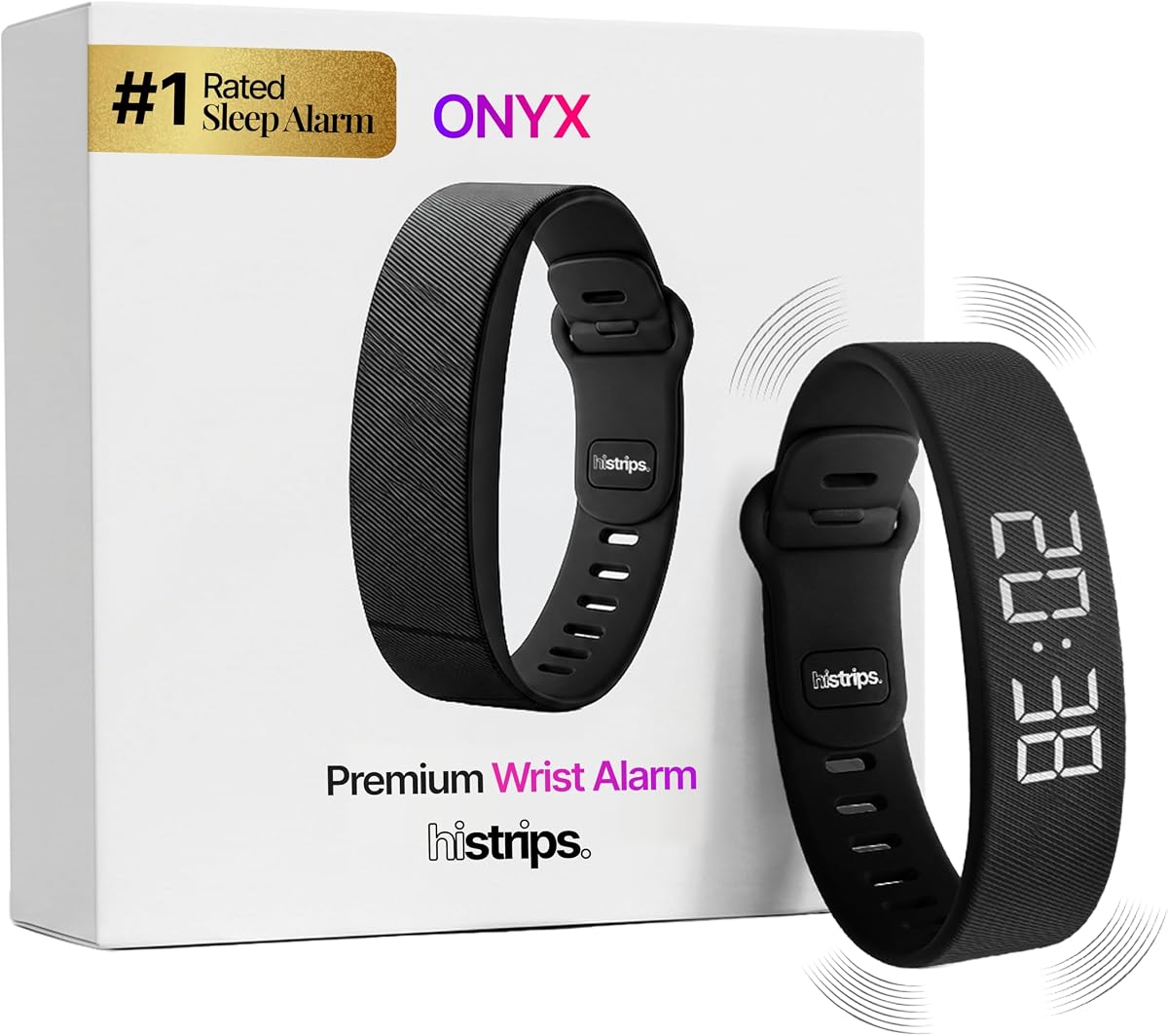
The Onyx Vibration Alarm has a 2.4 rating, the lowest in this comparison, but it offers a distinct solution for sleepers who cannot tolerate or want to avoid audible alarms. Its food-grade silicone wristband uses vibration as the only wake signal, with two intensity levels that escalate during the alarm.
We may earn a commission when you buy through this link, at no additional cost to you.
Three alarm settings provide scheduling flexibility, while the adjustable lightweight band is designed to remain in direct contact with the skin. The product information describes a silent 0dB design, making it particularly relevant to couples, roommates, dorm residents, and parents who share a room with someone on a different schedule.
Fast charging is said to support up to 14 days of use on a single charge, which would make the wearable appealing for travel and infrequent charging. The trade-off is that vibration effectiveness varies considerably between people. A wrist device may be less noticeable than a bed shaker for someone who turns heavily during sleep or removes accessories unconsciously.
Onyx is best for a light-to-medium sleeper who wants a private, silent cue, or for someone who already knows that wearable vibration reliably wakes them. Its low rating and limited two-level adjustment make it a less universal recommendation than the top bedside models. It should be considered a focused tool rather than a guaranteed solution for every heavy sleeper.
Because the alert is felt only by the wearer, Onyx can preserve a partner's sleep. It is especially useful where audible alarms would be unwelcome or where several people follow different schedules.
The soft, adjustable band is intended to remain secure without being intrusive. Finding a comfortable position that maintains skin contact is important because a loose or awkwardly positioned device may feel less noticeable.
We may earn a commission when you buy through this link, at no additional cost to you.
The Vibrating Alarm Clock Watch for Heavy Sleepers has a 3.6 rating and centers on a completely non-audible wake signal. It is designed for people who sleep through conventional sounds, share a room, or simply prefer not to begin the day by waking everyone nearby.
We may earn a commission when you buy through this link, at no additional cost to you.
Multiple customizable vibration alarms support a structured routine, while the wristband format keeps the alert private and close to the body. Its IP68 water resistance adds useful durability for exposure to sweat, rain, and daily spills, qualities that matter for a wearable expected to remain on the wrist overnight.
The main limitation is that the supplied information does not describe adjustable vibration intensity, a specific charge duration, or detailed controls for setting alarms. Those omissions make it harder to compare with the Onyx, which clearly lists two levels and up to three alarms. The moderate rating also suggests that the experience may vary considerably across users.
This wristband is a compelling choice for students, travelers, shift workers, couples, and hearing-impaired users who prefer silent operation. It is best for people already accustomed to wearable vibration. Heavy sleepers who require a much stronger physical cue may be better served by an under-pillow vibrating clock or a dedicated bed-shaker system.
IP68 protection reduces concern about sweat, rain, and spills. That makes the wristband more practical for active users and inconsistent climates than an unprotected wearable.
Customizable vibration alarms allow a user to follow several daily routines without adding sound to the bedroom. The device alerts only the wearer, supporting quieter shared sleeping arrangements.
We may earn a commission when you buy through this link, at no additional cost to you.
The REACHER Super Loud Vibrating Alarm Clock for Heavy Sleepers Adults Teens has a 4.1 rating and combines a 110dB alarm with a built-in vibration motor. Its cordless construction allows the clock itself to slide under a pillow or rest near the sleeper without a cable extending from the bedside unit.
We may earn a commission when you buy through this link, at no additional cost to you.
Three wake-up modes and five vibration levels offer considerable control over the alarm's intensity. The unit can ring, vibrate quietly, or combine both signals, with up to one hour of continuous ringing and unlimited snooze cycles for people who want repeated opportunities to wake.
The display automatically adjusts brightness to the room, reducing the need to dim it manually before bed. Magnetic charging serves two functions: the dock replenishes the battery and provides a convenient daytime stand. Raised tactile points on the alarm-off and snooze buttons help users locate controls while drowsy.
REACHER is an attractive choice for teens, students, and adults who want a physical cue without a loose wired shaker. The cordless design reduces placement constraints, although users must remember to return the clock to its dock. Anyone who sleeps heavily enough to ignore moderate mattress vibration should use the highest sound setting and test the placement carefully.
The integrated motor means the clock can travel from nightstand to bed without a separate shaker cable. This makes under-pillow use more practical and keeps the setup visually clean.
Clearly labeled buttons and raised tactile markers improve usability in the dark. Automatic display brightness handles the visual side of bedtime, while the dock keeps charging straightforward.
We may earn a commission when you buy through this link, at no additional cost to you.
The DreamSky Vibrating Alarm Clock for Heavy Sleepers Adults Under Pillow has a 4.4 rating and emphasizes portability. Its wireless shaker can be moved among a nightstand, mattress, pillow, quilt, or travel location without the loose-connection problems associated with some wired designs.
We may earn a commission when you buy through this link, at no additional cost to you.
Five vibration levels progress from 20% to 100%, and the user can select vibration only or a combination of sound and vibration. The rechargeable clock includes a power indicator and low-battery reminder, which helps prevent the alarm from becoming unreliable because of an unnoticed depleted battery.
Setup is designed to be approachable. After power-up, users select their local time zone, while automatic daylight saving adjustment handles seasonal clock changes. The display can use 12- or 24-hour formats, and a brief button press activates a 15-second backlight for checking the time at night.
The alarm runs for five minutes and offers a dedicated nine-minute snooze. Those intervals may be too short for users who want prolonged ringing or a longer nap, but the five intensity levels make the physical signal customizable. DreamSky is best for travelers, dorm residents, and people who need to reposition the shaker around different beds.
The compact rechargeable unit and included rope make it easy to keep the shaker with the alarm and secure it to furniture. Its lack of a fixed cable gives travelers more freedom in choosing a sleeping setup.
Time-zone selection and automatic daylight saving adjustment simplify setup after travel. The clock remains easy to read with selectable 12- and 24-hour formats.
We may earn a commission when you buy through this link, at no additional cost to you.
The Peakeep Loud Alarm Clock for Heavy Sleepers Adults has a 4.4 rating and delivers a focused, traditional alternative to feature-heavy digital models. Its twin bells and robust internal hammer can ring for 50 minutes, giving deep sleepers a persistent wake-up rather than a brief chime.
We may earn a commission when you buy through this link, at no additional cost to you.
A silent quartz sweep movement avoids the constant tick-tick associated with some mechanical clocks, which is useful in a quiet bedroom. The metallic case and four-inch format give it a decorative appearance, while separate alarm and time-setting dials keep the controls understandable without an app or menu.
A button on the rear activates the light on demand, so the clock does not need to illuminate the entire room continuously. Operation requires one AA battery, which is not included, and the stated battery life can reach eight months or longer under normal use.
Peakeep is best for someone who values simplicity, wants no glowing display, and responds well to a sustained mechanical bell. It lacks snooze, backup features, vibration, and multiple schedules, so it is less versatile than the digital choices. Even so, its long ring cycle makes it a compelling straightforward alarm for light sleepers and heavy sleepers alike.
The 50-minute alarm duration is one of the longest continuous cycles described in this guide. It removes the need for rapid button pressing if waking takes several attempts.
The analog face avoids an always-on digital display and uses a rear light only when requested. It suits bedrooms where a modern screen would feel visually intrusive.
We may earn a commission when you buy through this link, at no additional cost to you.
The Netzu Loud Alarm Clock for Heavy Sleepers Black has a 4.4 rating and combines a stated 115dB maximum with a built-in vibrator. It offers three operating modes: ring only, vibration plus ring, and vibration only, allowing users to select a personal or shared-bedroom wake-up approach.
We may earn a commission when you buy through this link, at no additional cost to you.
The RGB screen is more customizable than a standard monochrome display, with five brightness levels and an option to turn the display off completely. Two separate alarm settings accommodate couples or households with different routines. Clock format can be switched between 12- and 24-hour modes using the set control.
Compared with the ANJANK, Netzu offers fewer alarm tones and no separate remote bed shaker. Its physical signal is built into the clock, which may limit placement under a mattress. The setting process also requires a sequence of button presses for hour, minute, and format changes, making it less immediate than a simple dial clock.
Netzu is a good choice for users who want serious sound, basic vibration, and colorful display customization in one unit. It works particularly well for individuals who can place the clock close to the pillow or under a thinner part of the mattress. Buyers should verify its power requirements and placement during setup.
Ring-only is useful when a full-volume alarm is appropriate, while vibration-only reduces disturbance to nearby sleepers. Combined mode delivers both signals for maximum attention.
Five brightness levels and the ability to switch the display off make the RGB screen adaptable to dark rooms. Dual alarms support different household or weekday schedules.
We may earn a commission when you buy through this link, at no additional cost to you.
The right alarm for a deep sleeper depends on which sensory signal reliably penetrates sleep without creating an unwanted daily disturbance. Evaluate sound, vibration, light, power resilience, scheduling, and bedroom constraints before choosing.
Look for both a high maximum output and adjustable volume. A maximum setting is valuable for heavy sleepers, while lower levels help when a partner or roommate shares the room.
Choose a bed shaker for strong whole-body tactile cues, or a wearable for private, silent alerts. Test both under realistic sleeping conditions before relying on either.
Prioritize adjustable volume and multiple tones. Confirm that the model includes a true snooze and that the alarm continues long enough to wake you without becoming stressful.
If someone else sleeps nearby, prioritize silent or localized vibration. If you live alone, maximum audio output may be the simplest and most reliable option.
Read the backup specification carefully and distinguish memory backup from full battery operation. For frequent outages, select a model that explicitly confirms alarm operation during power loss.
Choose based on schedule complexity rather than feature count. Confirm the number of alarms, snooze behavior, daylight saving controls, and whether settings survive power interruptions.
Look for complete darkness, fine dimming, or a demand-activated light. If a display cannot be turned off and you are highly sensitive to light, favor an analog or wearable design.
Set the alarm at least a week before relying on it. Confirm the clock, shaker, batteries, cables, adapter, and controls are present, then test every planned wake-up mode.
Begin by choosing a wake time that gives you enough margin for your actual routine rather than the time you hope to wake. Set the clock, check that the selected alarm is enabled, and confirm the time zone and 12- or 24-hour display format. When using a bed shaker, place it where the vibration can reach you without creating a loose cable, then test the intended strength.
Use the product's sound, vibration, light, and snooze features as a deliberate sequence. A softer display or light may provide the first prompt, followed by a stronger audible or tactile alarm. Wearables should fit snugly enough to remain in contact with the skin but comfortably enough to wear all night, while under-pillow devices should be checked for the amount of pressure they create.
Care for the system according to its power design. Keep AC-powered clocks connected, install backup batteries before an outage, and recharge wrist devices and portable shakers on a regular schedule. Clean the clock and wearable gently, avoid moisture around electrical contacts, replace backup batteries on a schedule, and test the alarm after every major placement or power change.
A bed shaker or strong under-pillow vibrating clock is often more useful than sound alone because it adds a physical cue through the mattress or pillow. Combine it with a loud alarm and flashing light when possible. No alarm is universal, so test several intensity levels in realistic conditions and make sure the device is positioned where the signal can be felt.
Yes, a vibration-based alarm can provide a visual-free wake cue that does not depend on hearing. A wearable may be sufficient for some users, while a bed shaker generally offers stronger and broader physical stimulation. Confirm that vibration intensity, placement, and charging or battery life match the user's needs before relying on it.
Only models with a stated backup-power capability can ring during an outage. Some AC-powered clocks use AAA batteries to preserve settings and continue alarming, while others stop entirely when unplugged. Rechargeable models may also lose functionality if the battery is depleted, so check the product details and install backup batteries in advance.
A 110dB-class alarm can be disruptive to anyone nearby, even if the sleeper barely notices it at first. Consider vibration-only, under-pillow, or wrist-worn alerts for shared rooms. If maximum audio is necessary, look for adjustable volume and use a lower setting for ordinary nights.
Use more than one physical cue, such as a loud alarm plus a bed shaker or wearable vibration. Place the alert so it contacts the mattress, pillow, or skin, verify that it is charged, and use a gradual snooze window long enough to be useful. A consistent bedtime routine and setting the alarm before collapsing into bed also reduce the likelihood of oversleeping.
A wired shaker connects directly to the clock and generally has fewer placement options, although it may be simple and dependable. A wireless shaker can be positioned more freely, including under a different pillow or in another room within the stated range. Some newer clocks integrate the motor into the clock body, eliminating both the cable and the need for a separate unit.
That depends on the model and how the battery is used. Some rechargeable shakers are designed to last for weeks, while integrated rechargeable clocks may need regular docking. Follow the stated charging guidance, watch for low-battery indicators, and keep a backup method available if missing an alarm would be especially costly.
The Peakeep twin-bell model is the simplest traditional option, using separate dials and a single battery with no screen. It is ideal for users who do not need vibration, dual alarms, or digital menus. People who want more scheduling flexibility may prefer a modern digital model despite its longer initial setup.
Prioritize the signal you can genuinely feel or hear. Choose a bed shaker or integrated vibrating clock when sound is routinely ignored, a wearable when the bedroom must remain quiet, and a high-output clock with outage backup when audio works best. Also consider alarm duration, placement, brightness, scheduling, and the exact meaning of the battery specification.
Before making a final selection, check the current listing for included accessories, power requirements, and model details that may change. Confirm the alarm at the intended volume and vibration level, and run it through several test mornings before relying on it for an important appointment or shift.