
11 Inch Winter Heater Base
4.4Editor score
125W automatic heating element
IPX5 sealed housing
Compatible with common waterers
Six-foot placement cord
This Chicken Water Heater guide compares 10 top options for capacity, thermostats, weather resistance, power, and reliable winter water access.
A chicken water heater keeps drinking water available when freezing temperatures threaten to turn a familiar poultry fount into a solid block of ice. The right model combines dependable temperature control, a compatible heating format, safe electrical construction, and enough capacity for the size of your flock.
This guide compares ten heaters ranging from compact bases to complete hanging waterers and versatile submerged de-icers. We evaluated the products using their published heating elements, thermostat behavior, dimensions, water capacity, material compatibility, cord lengths, and intended outdoor applications.
Each review highlights the most useful feature, practical limitations, and the type of keeper who may benefit most from that design. Ratings and availability can change over time, as can retailer prices, so confirm the latest product details and current cost before making a purchase.
4.4Editor score

4.6Editor score

4.1Editor score
The comparison below shows how the ten heaters differ in format, capacity, heating power, water source, and thermostat design, helping you identify the option that best matches your waterer, flock size, and outdoor setup.


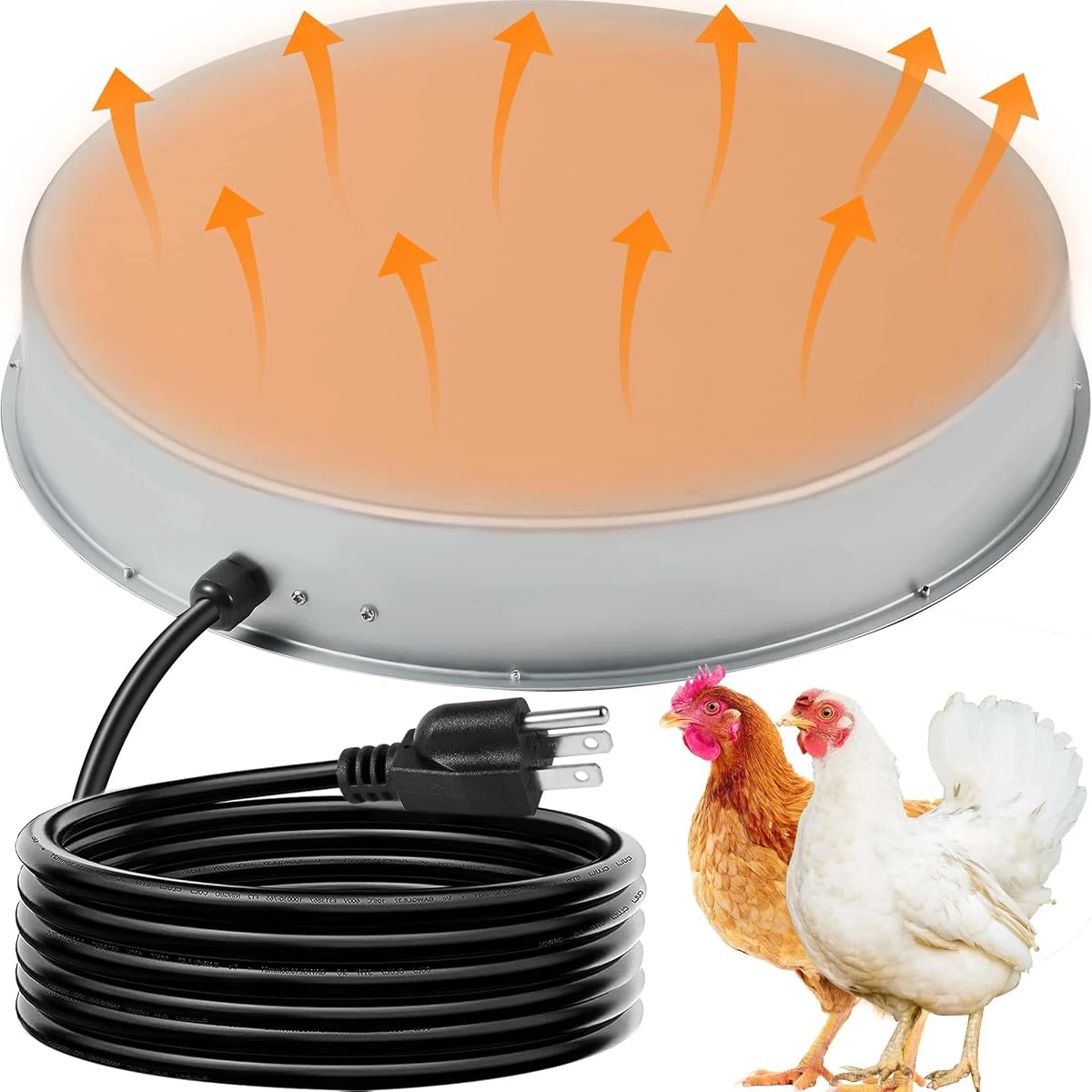


This 125W heater base earns a 4.4 rating by offering a practical way to protect water in common galvanized, plastic, and metal poultry waterers. Its 11-inch footprint is intended to support many five-gallon founts, while the automatic thermostat handles freeze protection without requiring continuous supervision.
We may earn a commission when you buy through this link, at no additional cost to you.
The strongest feature is its compatibility-focused design. A keeper who already owns a suitable waterer can add heating without replacing the entire vessel. The thermostat activates around 35°F and stops around 77°F, and the six-foot cord gives enough reach to position the waterer safely away from wet ground or a crowded connection.
The IPX5-rated sealed bottom and galvanized steel housing also make sense for outdoor use, where splashes, dirt, and changing weather are unavoidable. It is a base heater rather than a complete fountain, though, and the eleven-inch size may not fit larger or unusually shaped containers. It also cannot provide water when the existing fount has frozen solid before the heater is installed.
This is a strong choice for budget-conscious backyard chicken keepers who want a simple base heater for a compatible existing waterer. Check the base diameter, container material, and electrical access before buying. For those who prefer a complete, ready-to-fill unit, the three-gallon options may be easier to set up.
This base lets a keeper retain a suitable fount while adding automatic cold-weather heating. Its value comes from using the waterer already in the coop rather than replacing the entire setup.
The sealed bottom and galvanized housing are designed for moisture and dirt exposure. A sheltered placement still helps protect the cord and electrical connection from harsh weather.
We may earn a commission when you buy through this link, at no additional cost to you.
Farm Innovators' three-gallon heated fountain has a 4.2 rating and combines a reservoir with thermostatically controlled heating. Its hanging format is intended to reduce floor clutter and make routine filling easier in a coop, pen, run, or sheltered outdoor enclosure.
We may earn a commission when you buy through this link, at no additional cost to you.
The complete three-gallon design gives buyers more flexibility than a base-only heater. Poultry keepers can hang the fountain from a suitable support, fill it through the opening, and rely on automatic operation during cold weather. The plastic construction is designed to withstand extended use and changing outdoor conditions.
Its stated capability is preventing freezing in temperatures down to 0°F, which makes it a practical option for many winter climates. That figure is not a guarantee for every installation, however. Wind exposure, water depth, container condition, ambient temperature, and electrical placement can all affect performance. The fountain also has a fixed capacity and may be less useful if you need a larger reservoir.
Choose this model if you want a single hanging unit rather than a heater that must be paired with a separate waterer. It is especially suitable for small flocks and backyard coops where convenient refilling and a contained drinking source are priorities.
The hanging design keeps the reservoir elevated and consolidates water access in one unit. This can simplify cleaning and routine filling compared with a low waterer placed directly on the floor.
Thermostatic control means the heater operates only when necessary. That energy-conscious approach is useful for people who want fewer manual freeze-breaking chores without heating water continuously.
We may earn a commission when you buy through this link, at no additional cost to you.
This 62W base carries a 4.6 rating and stands out for its unusually broad material compatibility. It can support metal, plastic, glass, or ceramic waterers, while the thirteen-inch stainless steel base is designed to bear more than 120 pounds without cracking or shifting.
We may earn a commission when you buy through this link, at no additional cost to you.
Its temperature control is a major advantage for daily use. The sensor detects temperatures below 35°F and reheats, then stops as the water reaches approximately 68°F. That cycle helps protect against both freezing and excessive heat. The six-and-a-half-foot cold-resistant cord provides useful placement flexibility for outdoor installations.
This heater is also versatile beyond chickens, with the manufacturer identifying use with turkeys, ducks, geese, dogs, cats, wild birds, and other small farm animals. The trade-off is that it is only a base, so buyers need an appropriately sized and stable waterer. Its stated support range is for one- to five-gallon containers, and the fit should be checked before ordering.
For keepers seeking an adaptable metal base, stable construction, and automatic operation, this is the most balanced choice in the group. It offers the material flexibility to work with different fount styles while avoiding the need to purchase a complete reservoir.
Compatibility with plastic, metal, glass, and ceramic containers is unusual in this category. It makes the heater easier to pair with the fount already used in a mixed flock setup.
The thick stainless steel base is stated to support more than 120 pounds. That stability can be valuable with filled vessels and helps keep the heating element aligned beneath the water container.
We may earn a commission when you buy through this link, at no additional cost to you.
This 500W submerged de-icer has a 4.3 rating and serves a broader purpose than a typical poultry-fount base. It is designed for containers from five to 50 gallons, including livestock tanks, troughs, buckets, waterers, and winter bird baths, making it useful for properties with multiple water-holding needs.
We may earn a commission when you buy through this link, at no additional cost to you.
Cast aluminum construction is central to the design and is stated to provide better efficiency than copper and Incoloy heating elements. The black Teflon coating adds resistance to corrosion and calcium buildup, which is particularly relevant for hard-water areas and containers that may not be cleaned frequently.
Its thermostat activates as water approaches freezing and shuts off at 90°F. As a result, this is not a product for heating water to a warm drinking temperature; it is intended to preserve liquid water near freezing. Because the heater is submerged, correct placement, adequate water level, and sound electrical precautions are essential. The manufacturer specifically recommends a GFCI outlet in a weatherproof location.
This model is a better fit for larger water containers, wildlife water stations, bird baths, or keepers who want one heater to serve multiple uses. It is less convenient than a complete poultry waterer but more adaptable across different vessel types and water volumes.
The five-to-50-gallon range makes this de-icer practical for larger livestock tanks, water troughs, and outdoor bird baths. It can preserve several kinds of water containers in one household.
The Teflon coating is intended to reduce calcium accumulation and corrosion. Routine inspection and cleaning remain important, particularly in containers using hard water.
We may earn a commission when you buy through this link, at no additional cost to you.
The Farm Innovators HP-125 has a 4.4 rating and focuses on a clear purpose: heating compatible double-wall metal poultry founts. Its 125W element and automatic 35°F activation point make it a practical choice for backyard keepers with the appropriate metal waterer.
We may earn a commission when you buy through this link, at no additional cost to you.
A notable claim is freeze protection in temperatures as low as 10°F. While actual results depend on the weather, water depth, fount insulation, and placement, the double-wall metal construction gives this base a sensible foundation for limiting heat loss. The thermostat operates only during conditions that call for heating.
The protective bottom cover helps shield the heating element from dirt and debris, reducing the chance that ordinary outdoor maintenance will interfere with operation. Its limitations are equally clear: it is not a universal base for plastic, glass, or ceramic containers, and the correct fount dimensions should be verified before purchase.
This heater is best for a keeper who already owns a compatible double-wall metal fount and wants a focused, established-style heating solution. It avoids the extras found on complete waterers but may be the simplest option for someone adding winter support to an existing metal setup.
Compatibility with double-wall metal poultry founts is the defining feature. That specificity can produce a more predictable arrangement than a universal base placed beneath an unsuitable vessel.
The covered underside helps limit exposure to dirt and debris. Keeping the base clean and dry around the electrical connection supports dependable seasonal performance.
We may earn a commission when you buy through this link, at no additional cost to you.
This 125W base has a 4.2 rating and offers a notably wide 14.6-inch platform. The enlarged footprint is intended to support a five-gallon poultry waterer without tilting, making it a useful option for keepers whose founts need more stability in outdoor runs.
We may earn a commission when you buy through this link, at no additional cost to you.
The thermostat activates below 35°F and stops above 77°F. That higher cutoff adds a margin above the activation point, and the manufacturer says this arrangement supports normal drinking without making the water uncomfortably hot. A six-foot cord provides room to route the connection away from the fount.
The galvanized steel base is designed to resist rust and transfer heat efficiently to either plastic or metal waterers. One important operating condition is that a plastic waterer should not be placed on the heating base while empty. Following that instruction helps avoid direct heating of the container and improves safety.
This model is a good match for a large, stable five-gallon fount and an outdoor setting where tipping would be inconvenient. Buyers with smaller waterers should confirm that the broad base fits their intended layout, and all users should follow the stated precautions.
The enlarged base is intended to remain level beneath a filled five-gallon waterer. A stable platform helps maintain contact between the heating element and the container.
Galvanized steel construction is appropriate beneath plastic or metal poultry waterers. Always follow the instruction against operating a plastic container without water.
We may earn a commission when you buy through this link, at no additional cost to you.
This 125-ounce heated bowl earns a 4.6 rating and offers a different drinking format from conventional founts. Its large, shallow basin is accessible to chickens, geese, ducks, and other animals, including those that may prefer an open container rather than nipple drinkers.
We may earn a commission when you buy through this link, at no additional cost to you.
The thermostatic system is designed to keep water or food within an adjustable 41°F to 100.4°F range after power-up. The heating element is sealed within a BPA-free plastic casing, creating a waterproof unit that is easier to wipe and maintain than an exposed element design.
The included six-and-a-half-foot abrasion-resistant cord is suitable for standard outlets, while the large capacity can serve more than one type of animal. The trade-off is that an open bowl can collect droppings, bedding, and feed, so it requires more frequent cleaning. The manufacturer also recommends a sheltered location to protect it from wind damage and advises unplugging the bowl when empty.
This is a strong option for mixed-animal yards or keepers who want one heated vessel for poultry and other farm animals. It works especially well as a supplemental drinking station where open-bowl access is desirable and regular cleaning is part of the routine.
The broad open basin provides a familiar drinking format for ducks, geese, and poultry. It can complement a nipple system rather than necessarily replacing one.
Keeping the element inside the waterproof casing reduces its exposure to dirt and moisture. The bowl should still be unplugged when empty and positioned away from strong wind.
We may earn a commission when you buy through this link, at no additional cost to you.
The Lilyang three-gallon waterer has a 4.1 rating and combines a complete reservoir, a 250W heating plate, and flexible placement options. Its detachable heating element allows the same unit to transition from winter use to a standard waterer during warmer months.
We may earn a commission when you buy through this link, at no additional cost to you.
This seasonal adaptability is its standout feature. The heating plate activates around 35°F and stops around 70°F, focusing energy on cold conditions without trying to make the water hot. Cast aluminum construction helps protect the plastic base from excessive heat, while the waterproof design and six-and-a-half-foot cold-weather cord support outdoor use.
The removable lid is designed to reduce perching and droppings, helping maintain cleaner drinking water. The unit may stand on its included legs or hang from a suitable support, making it adaptable to different coop layouts. Its three-gallon reservoir can support approximately ten chickens or thirty chicks for two to three days, according to the product information.
The main trade-off is the relatively high 250W power rating compared with lower-wattage bases. This model is ideal for buyers who value a complete, cleanable waterer and want to use one product throughout the year rather than maintaining a separate cold-season arrangement.
Removing the heating plate turns off winter heating while retaining the same three-gallon drinking station. This reduces the need to store and switch between separate waterers.
The waterer can stand on its legs or hang from a support. That flexibility helps it fit coops with different layouts and keeps the reservoir away from damp bedding.
We may earn a commission when you buy through this link, at no additional cost to you.
The Premier 1 three-gallon waterer has a 4.3 rating and focuses on clean drinking through three recessed nipple drinkers. Its 100W heating element is controlled by a thermostat that turns on below 40°F and off at 60°F, preserving liquid water without making it hot.
We may earn a commission when you buy through this link, at no additional cost to you.
The nipple system is the primary attraction for keepers concerned about water quality. Recessed nipples help limit the introduction of litter and droppings, while three spare nipples support replacement if one becomes clogged. The quick-fill cap can be opened to admit a hose or watering can without removing the insulated lid, a useful feature during extreme cold.
A heavy-duty handle supports carrying and hanging, and the 16-foot detachable cord offers excellent placement flexibility. The detachable electrical connection also permits non-winter use. The unit has three gallons of capacity and is stated to suit up to 35 adult chickens, although its three-gallon volume may refill less often than larger systems.
This model is best for chicken keepers already comfortable with nipple drinkers or willing to train their birds. Ducks can use horizontal nipples when trained, but the manufacturer recommends providing another source where they can submerge their heads. A rubber pan beneath a hanging unit can also catch drips.
Recessed drinking nipples reduce contact with bedding and droppings compared with an open basin. Spares are included, and clogs should be checked if a nipple begins to leak.
The hinged quick-fill cap allows water to be added without removing the entire lid. That feature reduces the time the reservoir is open during freezing conditions.
We may earn a commission when you buy through this link, at no additional cost to you.
The Eggluuz five-gallon waterer has a 4.3 rating and offers the largest stated reservoir in this comparison. It is intended for keepers who want fewer refills and a drinking system that can serve a substantial flock through cold weather.
We may earn a commission when you buy through this link, at no additional cost to you.
Eight side-mounted horizontal nipples provide multiple drinking points. Their recessed, drip-free arrangement is designed to keep water flowing in cold conditions while helping limit contamination from bedding. The five-gallon capacity and foldable adjustable legs allow the unit to accommodate chickens at different stages of growth.
The built-in thermostat activates below 35°F and turns off near 77°F, preserving access to liquid water while avoiding continuous operation. A removable anti-roost cone lid helps discourage birds from perching on top and supports easier cleaning. The product is intended for coops, cages, pens, and dry or covered outdoor areas.
This is a practical choice for larger flocks and users who prioritize capacity and multiple drinking points. It requires more space than a compact bowl or three-gallon fountain, and new birds may need training to use the nipples. The anti-roost lid must also be removed before cleaning the reservoir.
The five-gallon reservoir reduces refill frequency compared with smaller systems. Eight nipples distribute access so several birds can drink without crowding around one opening.
Foldable legs let the keeper alter the waterer's height as birds grow. This flexibility makes the unit more adaptable than a fixed-height fount.
We may earn a commission when you buy through this link, at no additional cost to you.
The most useful chicken water heater is one that matches the existing waterer, withstands local winter conditions, and can be installed safely. Capacity, heating method, thermostat range, weather resistance, and ease of cleaning should guide the decision.
Heated bases warm an existing poultry fount from below, complete fountains combine a reservoir and heating system, and submerged de-icers heat water within a larger container. A base is economical when you already own a compatible waterer, while a complete fountain is easier for a new setup. A submerged heater offers the greatest flexibility for buckets, troughs, bird baths, and large livestock tanks.
Capacity affects how often the waterer must be checked and refilled. A three-gallon unit suits many backyard flocks, while the five-gallon Eggluuz model is better suited to groups needing longer intervals between refills. The Premier unit is stated to accommodate up to 35 adult chickens, but actual needs vary with weather, feed, bird size, and drinking habits. Consider whether someone can refill it safely during icy weather.
Automatic control helps save energy and reduces the need to monitor the water constantly. Activation points among the products range from below 35°F to below 40°F, while cutoffs range from 60°F to 90°F. Most are designed to keep water unfrozen rather than warm it for drinking. Confirm the stated cycle and consider whether a safety cutoff, indicator, or accessible sensor would improve your setup.
A heater base cannot be evaluated independently of the container placed above it. Check the base diameter, fount footprint, material, water capacity, and manufacturer restrictions. The 62W model accepts several materials, while the Farm Innovators HP-125 is specifically designed for double-wall metal poultry founts. Follow warnings against operating a plastic waterer on a heating base without water.
Outdoor heating requires a sound electrical plan. Use a GFCI-protected outlet in a weatherproof location, keep connections away from standing water, and route cords where birds cannot peck or pull them. Products feature cord lengths ranging from six feet to sixteen feet, giving flexibility over placement. A weatherproof cover, elevated connection, and sheltered placement can further reduce exposure to rain, snow, and wind.
Products in this guide range from a 62W base to a 500W submerged de-icer. Greater wattage does not automatically mean better performance because container insulation, water volume, ambient temperature, and placement all affect heat demand. Lower-wattage units may suit insulated small founts, while large or exposed containers can benefit from more heating capacity. Choose based on the container and climate rather than wattage alone.
The drinking format affects sanitation. Nipple systems help reduce contamination from bedding and droppings but may require training and occasional unclogging. Open bowls are intuitive for mixed animals but collect debris more quickly. Complete waterers with removable lids are easier to scrub thoroughly. A smooth surface, removable components, and accessible reservoir can make regular maintenance less of a chore.
Look for enough clearance beneath the waterer and around the electrical connection. Hanging models require a secure support, while standing models need a level, stable surface. Some products include adjustable legs, and one complete fountain can be removed from its base for cleaning. Before winter arrives, test the heater with the intended waterer, inspect the cord, confirm drainage around the setup, and establish a routine for checking water and sediment.
Begin by identifying the heater type and confirming that the waterer, base, capacity, and electrical arrangement are compatible. Clean and fill the waterer with the intended water source, position it on a stable surface or secure hanging support, and place the power connection away from wet bedding. Read the product instructions before operating any model.
Check the setup after the first cold night. Confirm that the thermostat engages, water remains liquid, the base stays level, and the cord or outlet shows no moisture or damage. Keep the unit filled as directed, especially when using a plastic fount on a heated base, and inspect it regularly for sediment, mineral scale, droppings, or obstructions.
For seasonal maintenance, unplug the unit before cleaning and never immerse a component unless its instructions explicitly permit it. Wipe sealed surfaces, remove accessible debris, and check nipples for blockage. Store the heater dry when it is not needed, inspect the cord before reuse, and replace damaged electrical parts through the manufacturer or a qualified service provider.
Most poultry water heaters are designed to preserve liquid water near freezing rather than heat it to a warm drinking temperature. Their thermostats cycle the heating element according to ambient or nearby water temperature. This limits energy use and reduces the chance of overly warm water while still helping prevent ice in cold conditions.
Several listed bases are compatible with plastic waterers, but their instructions still apply. In particular, the 14.6-inch 125W model warns against placing a plastic waterer on the heating base without water. You should also confirm that the container is stable, has a suitable base diameter, and is safe for the heater's operating temperature.
The right capacity depends on the number and size of your birds, ambient temperature, and how often you can refill the unit. Three-gallon products are common for backyard flocks, while a five-gallon reservoir can reduce refill frequency. During severe cold, a larger reservoir is useful only if you can keep it filled and inspect it safely.
Neither format is inherently safer without proper installation. A complete fountain generally keeps the electrical heating element enclosed, while a submerged de-icer requires sufficient water and careful cord placement. Both should use a GFCI-protected outlet, remain dry at the connection, and be positioned where poultry cannot damage the cord or tip the container.
Recessed nipples can reduce contact with bedding and droppings, helping keep water cleaner than an open bowl. They can still become clogged with mineral deposits or debris, so periodic inspection is important. New birds may also need guidance before they reliably use the nipples, and other animals may need a separate drinking source.
Choose a level, stable location that keeps the base beneath the waterer and the electrical connection dry. A sheltered area is preferable when possible, especially for products with exposed cords or open bowls. Avoid placing a cord where birds can peck it, and make sure the setup will not tip when the fount is full.
Thermostatically controlled models are designed to cycle on and off as conditions require, but continuous unattended use still calls for routine inspection. Check that the unit remains stable, the water supply is adequate, the cord is undamaged, and no water has reached the outlet. Unplug and service the unit if it appears irregular, damaged, or dirty.
Match the heater to the waterer's footprint rather than relying on capacity alone. Measure the base diameter, check the shape and weight of the fount, and confirm that the manufacturer supports its material. Products such as the 11-inch and 13-inch bases fit different footprints, while the 14.6-inch model is designed around a larger five-gallon waterer.
The 62W metal base is the most versatile editor's choice because it works with several waterer materials, supports a useful size range, and offers automatic temperature cycling. The 11-inch 125W base is an economical choice for compatible existing founts, while the Lilyang three-gallon waterer stands out as a premium, all-season system with removable heating.
Prioritize compatibility before power: confirm the waterer dimensions, material, capacity, and placement before choosing a heater. For complete setups, compare reservoir size and drinking style; for bases, check fit and stability; for submerged units, consider container volume, hard-water maintenance, and electrical safety.
Retailer prices and availability can change, so review the current listing, product instructions, customer feedback, and electrical requirements before ordering. The right heater is the one that fits your waterer, climate, and daily care routine while keeping fresh drinking water available through winter.