
Amazon Basics Smart Plug
4.4Editor score
No hub required
Alexa-only voice control
Compact four-pack design
Discover the best Smart Home Devices for Renters, compared across setup, compatibility, renter-friendly installation, automation, and practical apartment
Smart home devices can make a rented apartment more convenient without requiring permanent changes to walls, windows, or wiring. The best options combine quick setup, flexible control, useful automation, and renter-friendly installation, while also fitting the electrical and network requirements of a typical home.
This guide compares ten smart plugs, a curtain system, and a smart-lock gateway according to their supported platforms, installation requirements, scheduling features, safety certifications, connectivity, and suitability for temporary living arrangements. It considers both budget-friendly single-purpose upgrades and more versatile devices that support broader routines.
Each pick highlights a distinct way renters can automate everyday tasks, from switching off lamps remotely to opening curtains hands-free. Ratings, platform support, and product details can change over time, and current prices should be checked before purchasing, so readers should also consider their apartment layout, router, and preferred smart-home ecosystem.
4.4Editor score

4.5Editor score

4.6Editor score
The comparison covers each product's core control method, renter-friendly installation approach, smart-home compatibility, and practical feature set. Eight options are compact smart plugs, one is an automatic curtain system, and one bridges compatible Bluetooth smart locks to a Wi-Fi network.




The Linkind Matter Smart Plug earns a 4.4 rating and stands out as a flexible choice for renters who do not want to lock their entire setup into one ecosystem. Matter support extends to Apple Home, Alexa, Google Home, SmartThings, and the AiDot app, while its compact body avoids unnecessarily occupying an outlet.
We may earn a commission when you buy through this link, at no additional cost to you.
Its most valuable feature is offline-ready local control. Once compatible Matter devices are configured on the same local network, they can communicate directly without depending entirely on internet or cloud services. The plug also supports remote app control, voice commands, automatic shutoff timers, and daily schedules, making it suitable for lamps, fans, holiday lights, and other ordinary plugged-in appliances.
There are practical limitations. Apple Home, Alexa, Google Home, and SmartThings control require a compatible hub or controller, while the AiDot app offers an alternative without one. The plug supports only 2.4GHz Wi-Fi, which means renters may need to separate that band from a 5GHz network. A 15A, 1800W capacity is useful, but the connected appliance still must be appropriate for that rating.
This is a strong recommendation for renters who want a balance of cross-platform flexibility, local functionality, and straightforward scheduling. It is especially attractive for people who may move apartments and want equipment that can move with them and work across changing smart-home preferences. Those already committed to a single platform can instead compare the simpler Alexa-focused or ecosystem-specific options in this guide.
Matter support reduces the risk of buying a plug that becomes useless when the renter changes platforms. Its local-network operation can also preserve control when the internet connection is unavailable, provided compatible devices and the required controller are configured correctly.
Schedules, timers, voice control, and remote access cover several common rental needs. A renter can automate a bedside lamp, fan, humidifier, television, or seasonal lighting without replacing the outlet or altering permanent wiring.
We may earn a commission when you buy through this link, at no additional cost to you.
The Amazon Basics Smart Plug has a 4.4 rating and is the most approachable option for a renter who already uses Alexa. Setup can begin through the Alexa app, and the product does not require an additional smart-home hub or third-party control application. Its compact four-pack design is practical for apartments with limited outlet space.
We may earn a commission when you buy through this link, at no additional cost to you.
The useful features are clearly focused: remote app control, designated on-and-off schedules, voice commands, and routines that can be triggered at set times or around sunrise and sunset. The plug can manage lights, fans, holiday decorations, heaters, kettles, and coffee makers, giving renters a simple way to improve convenience and reduce forgotten electronics.
The main trade-off is ecosystem restriction. This model is described as working with Alexa only, so it is not appropriate for someone who wants to control it through Apple Home, Google Home, or SmartThings. A 2.4GHz connection is also required, and renters should consider whether a higher-power appliance is appropriate for the outlet. The product's convenience comes from its narrow platform focus rather than broad compatibility.
For people centered on an Alexa household, this is a sensible budget pick. It removes hub complexity, offers a streamlined setup, and provides the scheduling and remote access needed for an easier apartment routine. It is less suitable as a long-term choice for mixed-ecosystem users, but it delivers the core functions most renters want from a plug without adding unnecessary components.
The no-hub approach reduces the number of devices a renter must install and maintain. It also makes the four-pack easier to distribute between a living room, bedroom, kitchen, and a temporary holiday-light setup.
Scheduled and voice-triggered routines are especially useful in a compact home. Renters can turn off forgotten devices, prepare a lamp before waking, or activate a fan without walking to a physical switch.
We may earn a commission when you buy through this link, at no additional cost to you.
The TP-Link Tapo Matter Smart Plug Mini has a 4.5 rating and is a compact, versatile option for renters who want cross-platform control without a bulky adapter. It supports Apple Home, Amazon Alexa, Google Home, and Samsung SmartThings through Matter, while the free Tapo app provides another way to manage connected devices.
We may earn a commission when you buy through this link, at no additional cost to you.
Local Matter control is a notable advantage in a rental. Compatible devices can communicate over the local area network, allowing a switch or sensor to control a Matter bulb without relying on a particular forwarding device or cloud service. Bluetooth onboarding helps streamline initial configuration, and the 15A, 1800W maximum load accommodates many household appliances.
Renters should account for a few trade-offs. The plug connects only to 2.4GHz Wi-Fi, and using certain platforms requires their compatible infrastructure, whether physical or virtual. Its UL-certified flame-retardant construction and two-year limited warranty improve confidence, but users still need to connect appropriate loads and follow electrical guidance.
This is a particularly good fit for mixed smart-home households or renters who anticipate changing their preferred platform. Its three-pack format, small footprint, and combination of local control, app access, voice commands, and scheduling make it a polished and practical choice for apartments with several appliances to manage.
Matter's local communication can reduce cloud dependence after configuration. This is useful in shared apartments or homes with uneven internet, although users still need compatible Matter devices and a functioning local network.
The mini form factor helps preserve access to adjacent receptacles. That design is especially useful beside a bed, on a crowded kitchen counter, or in a temporary office where several devices may need to remain connected.
We may earn a commission when you buy through this link, at no additional cost to you.
The GHome Smart Plug carries a 4.4 rating and offers an adaptable mix of voice, app, schedule, and group controls. It works with Alexa and Google Assistant, while compatibility with GHome, Smart Life, and Tuya apps gives renters several ways to organize their devices.
We may earn a commission when you buy through this link, at no additional cost to you.
Bluetooth or Wi-Fi connection options can simplify onboarding, although the product still needs a stable 2.4GHz network for ongoing operation. Its app features include remote control, circular or random schedules, timers, one-tap group control, and sharing with family members. These functions are useful in a shared rental where several people may operate common lighting.
The setup order is an important limitation. The plug cannot connect directly to Alexa or Google Home; it must first be connected to the network and GHome app. That additional step is not difficult, but it means the product is not as immediately voice-focused as a model designed specifically for an assistant-first setup.
This GHome model suits renters who use both major voice platforms or maintain devices across the GHome, Smart Life, and Tuya ecosystems. Its group-sharing tools make it practical for roommates, couples, or families sharing an apartment. Those seeking a more standardized local protocol or a dedicated no-hub Alexa experience may prefer another option.
Support for GHome, Smart Life, and Tuya provides useful flexibility, though the best experience depends on the renter's existing devices. Voice-platform users should expect to complete app setup before linking the plug to an assistant.
One-tap group control is practical when a living room, kitchen, or outdoor-adjacent outlet powers several scheduled devices. Sharing access can also reduce the need to hand someone a physical remote.
We may earn a commission when you buy through this link, at no additional cost to you.
The GHome Smart Plug Mini has a 4.5 rating and offers a compact four-pack for renters who want to automate several outlets around one apartment. It supports Alexa and Google Home Assistant, provides remote app control, and can operate without a separate smart-home hub.
We may earn a commission when you buy through this link, at no additional cost to you.
Its schedule, auto-off timer, and group-control functions cover the most common needs for lights, fans, and other compatible appliances. The four plugs are designed to remain space-conscious, which is helpful beside bulky adapters or in outlets serving several rooms. ETL and FCC certification provide a clear safety-oriented design, with a 10A, 1200W, 120V rating.
Compared with higher-capacity plugs, its maximum electrical load is more modest. Renters should use it for appropriate electronics and avoid assuming it can handle every heating appliance or high-draw machine. It also cannot link directly to Alexa or Google Home; the GHome app and network connection must be configured first.
This model is a good pick for light-duty, multi-room automation where compact size and broad assistant support matter more than maximum wattage. The four-pack makes it easy to place plugs in a bedroom, office, kitchen, and living room. People planning to operate higher-power equipment should choose a model with a higher rating and verify the appliance's requirements.
Four plugs provide enough coverage for a small apartment without requiring a large installation. Their small bodies are helpful in older outlets or locations where a full-size adapter would block neighboring receptacles.
The 1200W ceiling makes this a better fit for lamps, fans, chargers, and other ordinary electronics than for high-draw equipment. Checking both the plug and appliance ratings helps renters avoid an unsuitable pairing.
We may earn a commission when you buy through this link, at no additional cost to you.
This Linkind Matter Smart Plug holds a 4.6 rating and combines a 15A, 1800W capacity with broad Matter support. That combination makes it a strong option for renters who want more electrical headroom than a basic compact plug while retaining access to Apple Home, Alexa, Google Home, SmartThings, and the AiDot app.
We may earn a commission when you buy through this link, at no additional cost to you.
The plug includes flexible scheduling, countdowns, remote control, voice operation, and offline-ready Matter communication. Once suitable devices are configured on the local network, they can communicate without relying entirely on the internet or cloud services. Its ETL and FCC certification, fire-resistant materials, and short-circuit and overload protection add visible safety features.
It is not a completely standalone solution for every platform. Apple Home, Alexa, Google Home, and SmartThings require a Matter-certified hub or controller, although the AiDot app can be used without a separate hub. The network must support 2.4GHz Wi-Fi and IPv6, which may require router adjustment in some apartments.
Among the smart plugs in this guide, it is one of the most complete for renters who want substantial load capacity and standards-based flexibility. The main question is whether the renter already has or is willing to use a compatible controller. For those who do, the combination of local control, cross-platform access, and safety features is compelling.
The 1800W maximum gives renters more latitude when choosing compatible appliances, although every connected device must still meet the plug's electrical limits. The compact enclosure helps preserve outlet access despite the higher rating.
Local Matter operation can keep compatible devices communicating when the internet is unavailable. It is a useful distinction for apartments where reliable local control matters, but the renter must build the system around compatible Matter hardware.
We may earn a commission when you buy through this link, at no additional cost to you.
The Automatic Curtain Opener with Remote has a 4.6 rating and delivers a more substantial renter-friendly upgrade than a plug. Its tool-free installation avoids drilling and rewiring, making it suitable for apartments where curtains, rather than permanent fixtures, can be upgraded without landlord approval.
We may earn a commission when you buy through this link, at no additional cost to you.
The kit includes a gateway, remote, and installation accessories. It supports Roman rods, U-shaped tracks, and T-shaped tracks, along with grommet, hook, and tab-top curtains. Users can select power mode for thick blackout curtains or a quiet mode operating as low as 25dB, a useful feature for bedrooms, nurseries, and light sleepers.
Control options are extensive. Alexa and Google Assistant compatibility provides hands-free operation, the app supports scheduling and environmental features, and the included remote works from up to 32.8 feet even without an internet connection. A light sensor and temperature control can support automatic opening and closing, although renters should understand their settings before relying on them.
The important caveat is fit. The product is designed for one curtain opening, so center-opening double curtains may require a two-pack for complete automation. The renter should also confirm the rod or track type, curtain attachment style, and available space. For a compatible window, it offers the most creative and visible improvement in this guide.
The tool-free, three-step installation is a meaningful advantage for renters. Because the system uses existing curtain hardware and offers hidden or front-facing mounting options, it can be installed and removed more easily than a hardwired or wall-mounted solution.
Silent mode, scheduled operation, a light sensor, and app control can automate curtains around sleep and waking schedules. The included remote adds a useful fallback when connectivity is unavailable.
We may earn a commission when you buy through this link, at no additional cost to you.
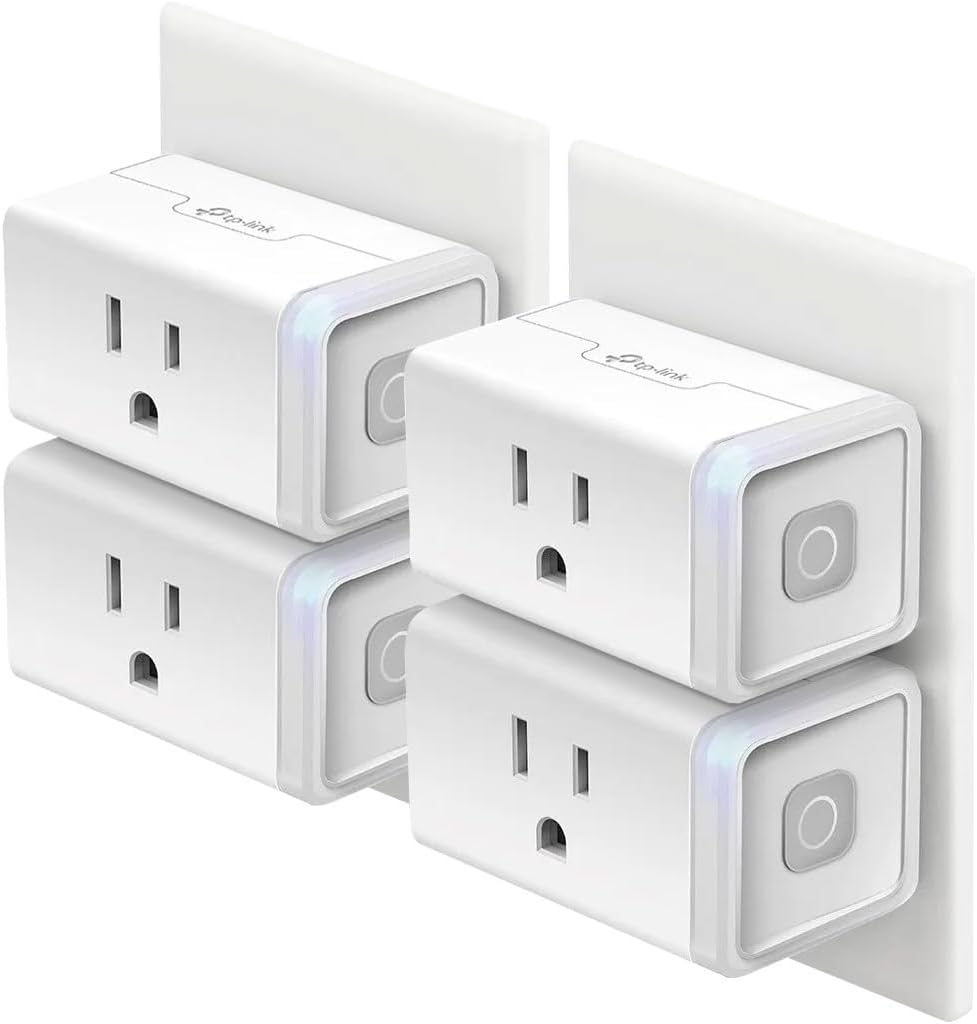
The Kasa Smart Plug HS103P4 has a 4.6 rating and offers a proven, uncomplicated way to automate apartment outlets. It works with Alexa and Google Home Assistant, allows remote control through the Kasa app, and does not require a separate hub, making it approachable for first-time smart-home users.
We may earn a commission when you buy through this link, at no additional cost to you.
A four-pack provides enough units for several common tasks, while the 15A rating gives it more headroom than lower-rated compact options. Timer and countdown schedules can automate lamps, fans, humidifiers, and seasonal lights. The product is UL certified, and the simple plug-in installation makes it easy to move when a renter changes apartments.
Its limitations are network and protocol related. Setup requires 2.4GHz Wi-Fi, and unlike the Matter products in this guide, it does not advertise local device-to-device communication or broad cross-platform standardization. A renter who values a simple established ecosystem setup may not mind, but someone seeking future flexibility should compare Matter alternatives.
Kasa is a strong recommendation for users who want straightforward Alexa or Google control, reliable app management, and a four-pack at a sensible level of complexity. The missing advanced features are not drawbacks for many apartments; they simply make the product better suited to people who want automation without building a large, interconnected Matter system.
The setup process centers on plugging in the device, opening the Kasa app, and following the instructions. No separate hub is needed, reducing both cost and the amount of equipment renters must install.
A multi-pack works well for distributed routines: a bedside lamp, a desk fan, living-room lighting, and seasonal decorations. Scheduling reduces unnecessary standby power and makes the apartment feel more consistently automated.
We may earn a commission when you buy through this link, at no additional cost to you.
The GHome Smart Plug has a 4.4 rating and offers a straightforward way for renters to add voice and app control to compatible appliances. It supports Alexa and Google Assistant, with app compatibility for GHome, Smart Life, and Tuya, giving users several paths for managing the device.
We may earn a commission when you buy through this link, at no additional cost to you.
Bluetooth and Wi-Fi setup options make initial connection more flexible. Once connected to a stable 2.4GHz network, the plug can be controlled remotely, included in schedules, and set to turn devices on or off at recurring intervals. These functions suit lamps, fans, humidifiers, and seasonal lights, particularly in apartments where a tenant wants to reduce forgotten electronics.
As with the other GHome plugs in this list, the smart plug cannot be linked directly to Alexa or Google Home. It must first be connected through the GHome app, and a 2.4GHz network is required. These are meaningful constraints for people with newer routers that combine both bands or those expecting immediate voice setup.
This is a practical option for a renter who wants essential automation without the extra features of a Matter device. It suits a single outlet, a starter smart-home setup, or a household already using GHome-compatible applications. For broader ecosystem flexibility or local device communication, the Matter-capable choices provide a more advanced path.
Timers, schedules, voice control, and remote access cover the essential functions most renters seek. They can make a room feel more intentional without requiring a permanent modification to the apartment.
Because only 2.4GHz Wi-Fi is supported, renters should verify that their router provides that band and can connect the plug. Keeping the device on a stable network is especially important for scheduled and remote operation.
We may earn a commission when you buy through this link, at no additional cost to you.
The GHome Smart G2B WiFi Gateway has a 4.1 rating and serves a different purpose from the other picks: it connects compatible GHome Bluetooth smart locks to a Wi-Fi network. This lets renters add remote access, remote unlocking, real-time notifications, activity logs, and voice-control features without replacing an existing compatible lock.
We may earn a commission when you buy through this link, at no additional cost to you.
The gateway is particularly relevant to short-term or flexible rental arrangements because it adds connectivity to existing hardware without wiring or professional installation. Through the GHome and Tuya apps, compatible locks can be locked or unlocked remotely, passcodes can be managed, and access can be granted to family members, guests, renters, or service providers. Lock status and battery levels are also viewable remotely.
Its usefulness depends on hardware compatibility. The gateway is designed for compatible GHome Bluetooth smart locks and selected Tuya Bluetooth smart-home devices, so it cannot upgrade an arbitrary lock. Voice features also require a compatible lock and an appropriately linked assistant. The 4.1 rating is the lowest in the guide, warranting a closer look at device compatibility before buying.
This is the right choice for a renter who already owns a supported GHome smart lock and needs remote access. It is not a general smart-home controller and does not replace the need for a compatible lock. For everyone else, one of the plug or curtain options offers a more immediately applicable upgrade.
The gateway bridges supported Bluetooth locks to the home network, preserving the existing lock while adding remote functions. That can be valuable when replacing the physical lock would be inconvenient or undesirable in a rental.
Temporary access management may help renters accommodate guests, cleaners, maintenance personnel, or another household member. Activity logs and notifications provide visibility into when compatible locks are accessed.
We may earn a commission when you buy through this link, at no additional cost to you.
The best choice depends on the renter's ecosystem, apartment layout, electrical limits, and willingness to install accessories. Compatibility, reversibility, networking, safety, and useful automation deserve attention before selecting a device.
Start by identifying the platforms already used in the home. Some plugs are designed around Alexa, while others support Alexa, Google Home, Apple Home, SmartThings, or Matter. The renter should verify every required service, controller, app, and account rather than relying on a broad compatibility label. Voice-assistant support can make daily control effortless, but it is only useful when the chosen ecosystem is one the resident already uses and can access.
Plug-in smart devices are among the easiest upgrades because they do not alter wiring. A curtain opener is also renter-friendly when it installs without drilling and uses existing rods or tracks. Before installing anything substantial, renters should check their lease and discuss permitted modifications with the property manager. Temporary-looking hardware can still create issues if it damages trim, blocks access, or interferes with normal window operation.
Many smart plugs support only the 2.4GHz Wi-Fi band. That network usually has broader reach, but it must be enabled and properly secured. The GHome Smart G2B WiFi Gateway supports both 2.4GHz and 5GHz, while most listed plugs require 2.4GHz. A stable home network, reasonable router placement, and separation from incompatible frequencies can prevent frustrating disconnections and failed schedules.
Maximum wattage and amperage determine which appliances a plug can safely handle. The Linkind Matter models and Tapo Matter plug support up to 15A and 1800W, while the GHome Smart Plug Mini is listed at 10A and 1200W. Consumers should examine both the device and appliance ratings, avoid overloading the outlet, and use certified products. A compact design can also prevent one adapter from blocking neighboring receptacles.
Matter offers a common communication standard across major smart-home platforms, while local control can allow compatible devices to operate without an internet or cloud connection. These features are useful for renters who may change platforms or want core automations to remain responsive during an outage. They are not universal conveniences: compatible controllers, local network configuration, and other Matter hardware may still be required.
The most useful schedules correspond to real household routines, such as turning off a desk lamp after work, running a fan before bedtime, or activating seasonal lights. Countdown timers help when a device should stop after a set period rather than at a fixed time. Remote access is valuable during travel or when a renter wants to check whether an appliance is still on. A product with clear scheduling and grouping functions can handle more than a single manually controlled outlet.
A renter should consider whether the app supports sharing, user access, and group control. These features are helpful in shared apartments where multiple people need to operate lights or fans. Voice assistants add another convenient layer, but the app remains important for detailed configuration, schedules, shared permissions, and troubleshooting. A platform that is already familiar to everyone in the home may work better than one with a longer learning curve.
Smart-home usefulness depends on physical fit. Check the plug dimensions against crowded outlets, the charger or appliance dimensions against the plug, and curtain dimensions against the opener's supported track system. The remote, app, and voice controls should all make sense for the intended routine. A larger, more capable device can be worthwhile if it solves a persistent household task, while a compact plug is often better for occasional control.
Begin by confirming that the device is compatible with the renter's router, assistant, app, and account. Plug it into an appropriate outlet or install the curtain system in accordance with its instructions, then connect it to a stable 2.4GHz network when required. For products that support Bluetooth onboarding, keep the phone close to the plug during the initial pairing step. If Matter is used, complete the required controller configuration before testing voice commands.
Create routines that reflect the household rather than enabling every available feature at once. Start with a useful schedule, such as switching off a living-room lamp at a set hour, and confirm that the automation performs correctly before adding more devices. For a curtain opener, test the manual, app, remote, and voice controls, then adjust the timing, quiet mode, light sensor, and temperature settings based on the room.
Care for the equipment by keeping plugs dry, vents unobstructed, and connected appliances within their electrical ratings. Avoid overloading outlets or daisy-chaining power strips in ways that could create overheating. Wipe exterior surfaces with a dry or lightly damp cloth after disconnecting power where appropriate, and do not use harsh liquids. Before moving out, remove batteries where practical, unpair accounts, delete the device from the app, and reset it to factory settings to prepare it for its next home.
Plug-in smart devices are generally the easiest because they require no permanent wiring and can be moved between outlets. Renter-friendly curtain openers can also be simple when they install without drilling and use an existing rod or track. Before adding any hardware, check the lease and ask the landlord if more permanent installation is involved.
Several products in this guide work without a separate hub, including the Amazon Basics plug, Kasa HS103P4, and the GHome options. Matter products may still require a Matter-certified controller for Apple Home, Alexa, Google Home, or SmartThings, although the Linkind models can be controlled through the AiDot app without a separate hub. Check the exact platform requirements before installation.
Yes, Matter is designed to support certified smart-home platforms such as Apple Home, Amazon Alexa, Google Home, and Samsung SmartThings. The renter still needs compatible hardware and, for many platforms, a Matter-certified controller. Setup should be completed in the appropriate controller or manufacturer app before voice operation is tested.
Many compact smart plugs use the 2.4GHz band because it provides broad indoor coverage and is widely supported by routers and phones. The device may not appear or connect if that band is disabled, hidden, or set to a newer mode. Updating the router settings and placing the plug within a strong signal area can usually resolve the issue.
The Automatic Curtain Opener with Remote is the dedicated curtain option in this guide. It supports Roman rods and U- and T-shaped tracks, offers app, voice, and remote control, and includes a quiet mode for sensitive sleeping spaces. Renters should confirm the track type, curtain attachment style, and whether a center-opening pair requires two units.
The GHome Smart G2B WiFi Gateway can add remote features to compatible GHome Bluetooth smart locks. It supports remote locking, remote unlocking, passcode management, notifications, and activity logs through the appropriate app. It cannot connect an arbitrary lock, so compatibility should be confirmed before purchasing the gateway.
Lamps, fans, humidifiers, holiday lighting, and other compatible electronics with modest power requirements are typical examples. Check the plug's maximum amperage and wattage against the appliance rating, and do not use a smart plug with unsuitable high-draw or heating equipment. The outlet itself must also remain within its own electrical limits.
Some Matter-based products can communicate directly over the local network after configuration, and the curtain opener's included remote can operate without an internet connection. Other products and most remote app or voice features may still depend on internet access. Local functionality should be tested before relying on it as a backup.
The TP-Link Tapo Matter Smart Plug Mini offers the strongest balance of compact design, cross-platform support, local Matter communication, and easy configuration. The Amazon Basics Smart Plug is a simple budget choice for Alexa-centered households, while the Automatic Curtain Opener with Remote provides the most distinctive renter-friendly upgrade through tool-free window automation.
For most renters, platform compatibility and reversible installation should come first. Matter is attractive when future flexibility matters, a no-hub design is better for simplicity, and a curtain system is worth considering when mobility, light, privacy, or daily convenience cannot be handled well by a smart plug alone. Electrical ratings, Wi-Fi requirements, and household routines should narrow the field before the final purchase.
Ratings, platform requirements, features, and current prices can change, so confirm the latest product details before ordering. Check the compatibility list, network band, load rating, installation method, and return terms, and compare current prices across sellers. The most suitable choice is ultimately the device that solves a real rental problem without creating a permanent modification or a complicated setup.